Heat Pump Alabama

Why your heat pump keeps short cycling in Alabama

Step 1 of 3: Equipment

Why does my heat pump keep short cycling?

Your heat pump turns on, runs for a few minutes, then shuts off and starts again before the house has cooled or warmed. With Alabama summers as muggy as they are and most homes here running on electric heat too, a unit that cycles like this all day isn't keeping up, and on an electric bill that's already high, it's running up costs while it struggles.

Short cycling usually means the unit is overheating, iced up, or oversized for the job

A dirty filter or a low refrigerant charge makes the system work harder than it should, and it shuts itself off to protect the compressor before it overheats. In summer, a frozen outdoor coil does the same thing. A failing thermostat or a bad sensor can also tell the unit to stop long before the house actually reaches the set temperature. Sometimes the problem goes back to installation. A heat pump sized too large for the house satisfies the thermostat fast, shuts off, then has to start again almost right away. In Alabama's humidity, a unit that keeps shutting off early also isn't running long enough to pull much moisture out of the air, so the house can feel damp even while the system keeps cycling on.

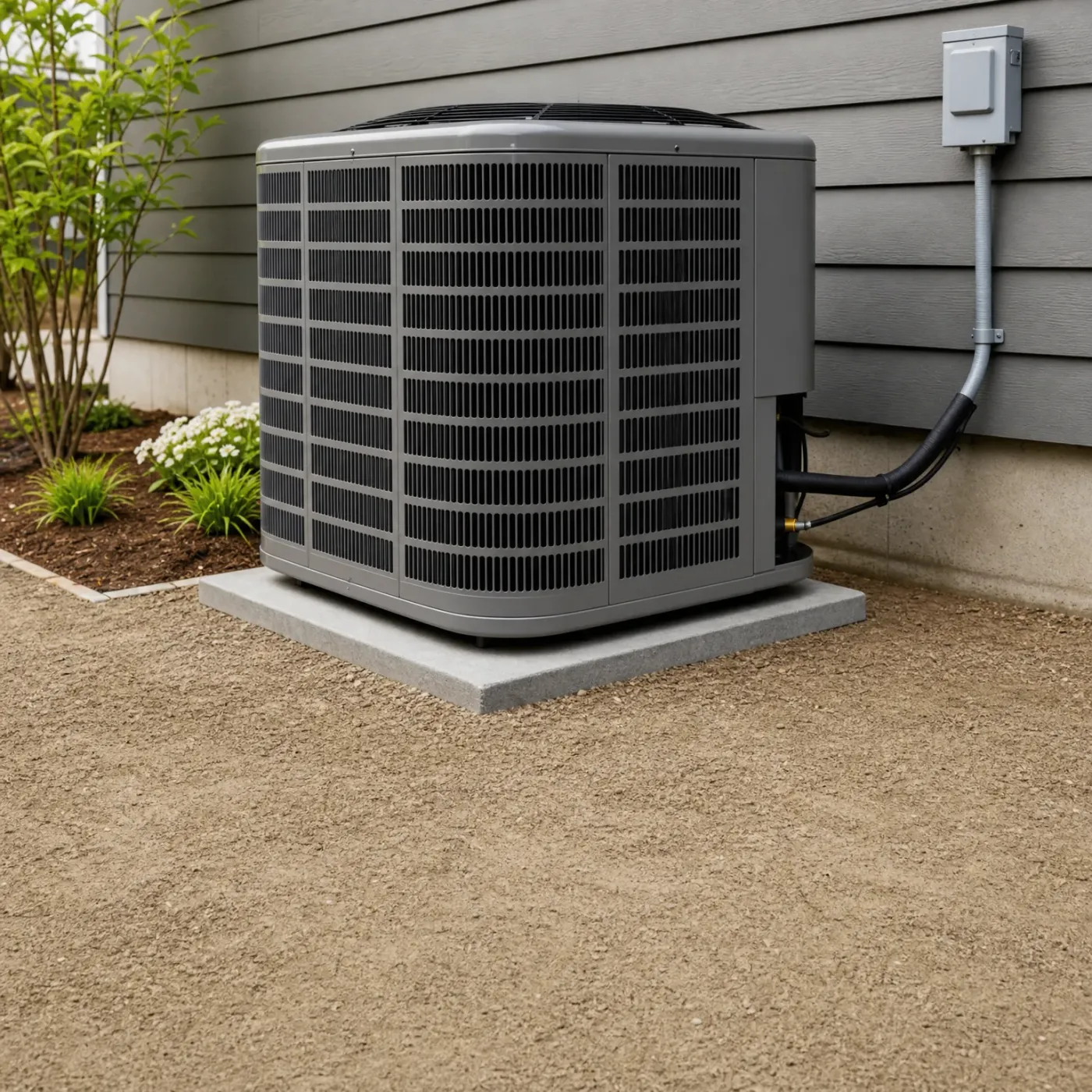
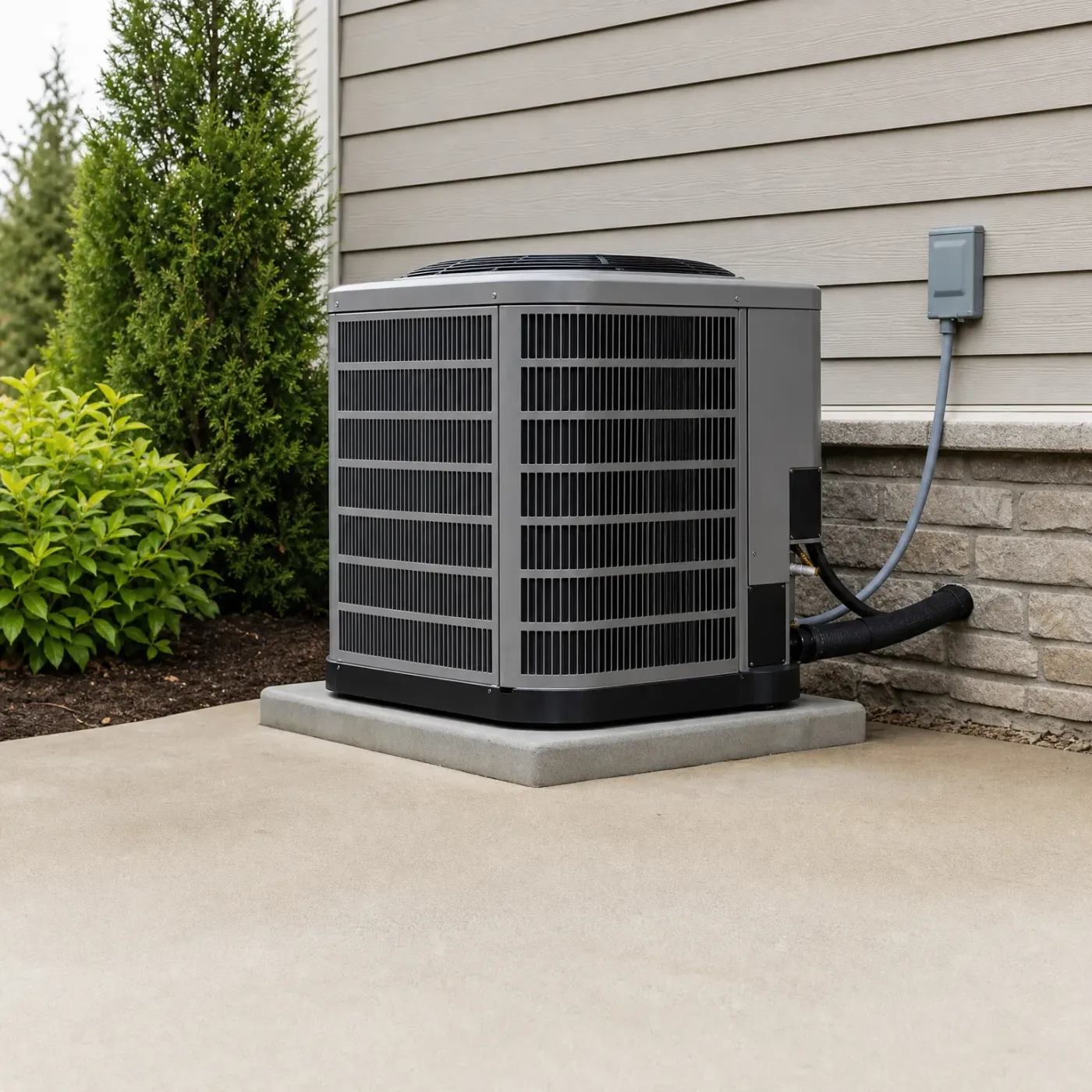
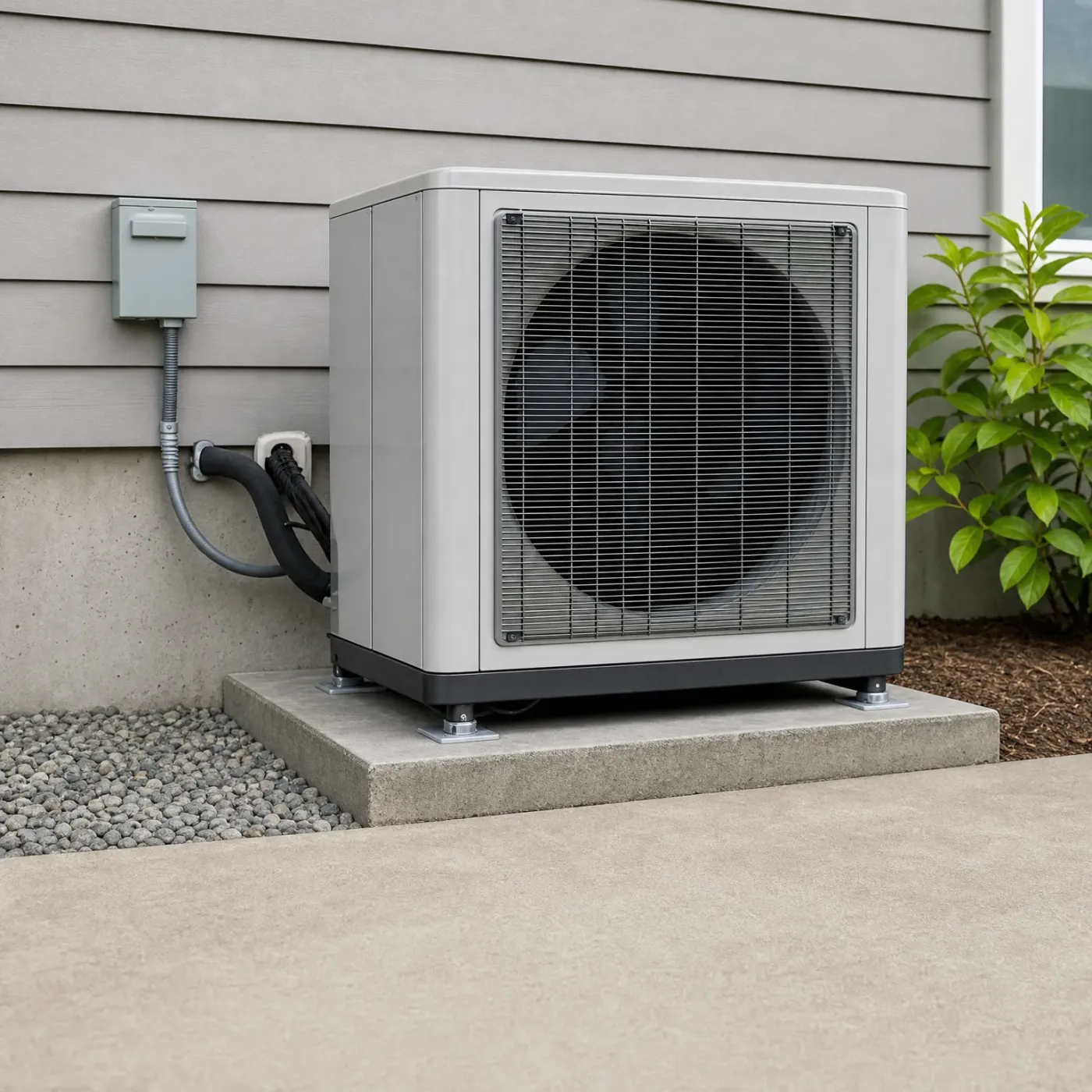
A light gray outdoor heat pump unit mounted on a concrete pad beside a house with horizontal lap siding, with refrigerant lines and conduit running to a wall-mounted electrical box, gravel and a leafy shrub nearby.

Running the way it should

A heat pump that's cycling right will run a long stretch, often fifteen minutes or more, before it shuts off. The outdoor unit stays clear, the airflow around it is open, and the coil underneath that grime can do its job pulling heat out of the air or putting it back in.
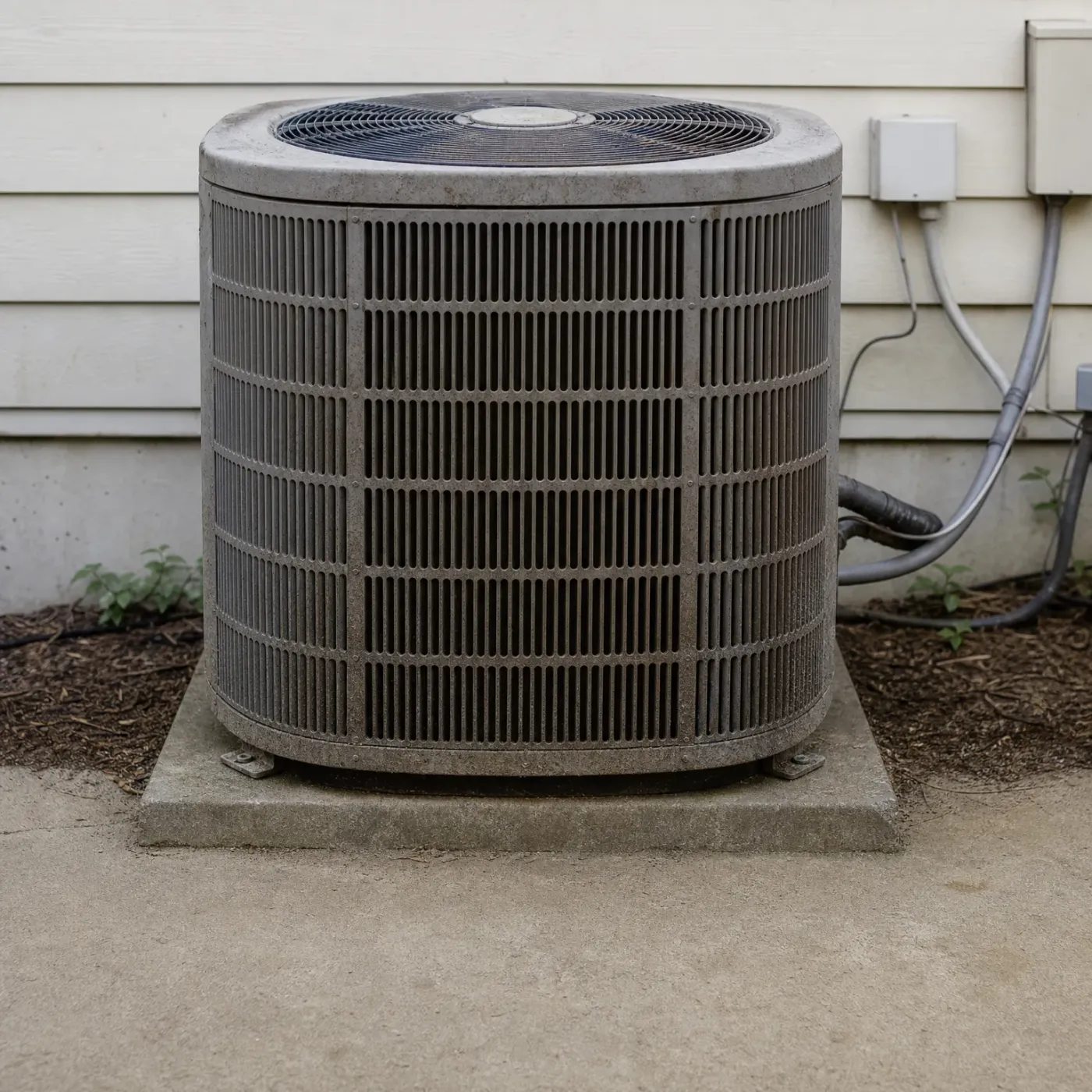
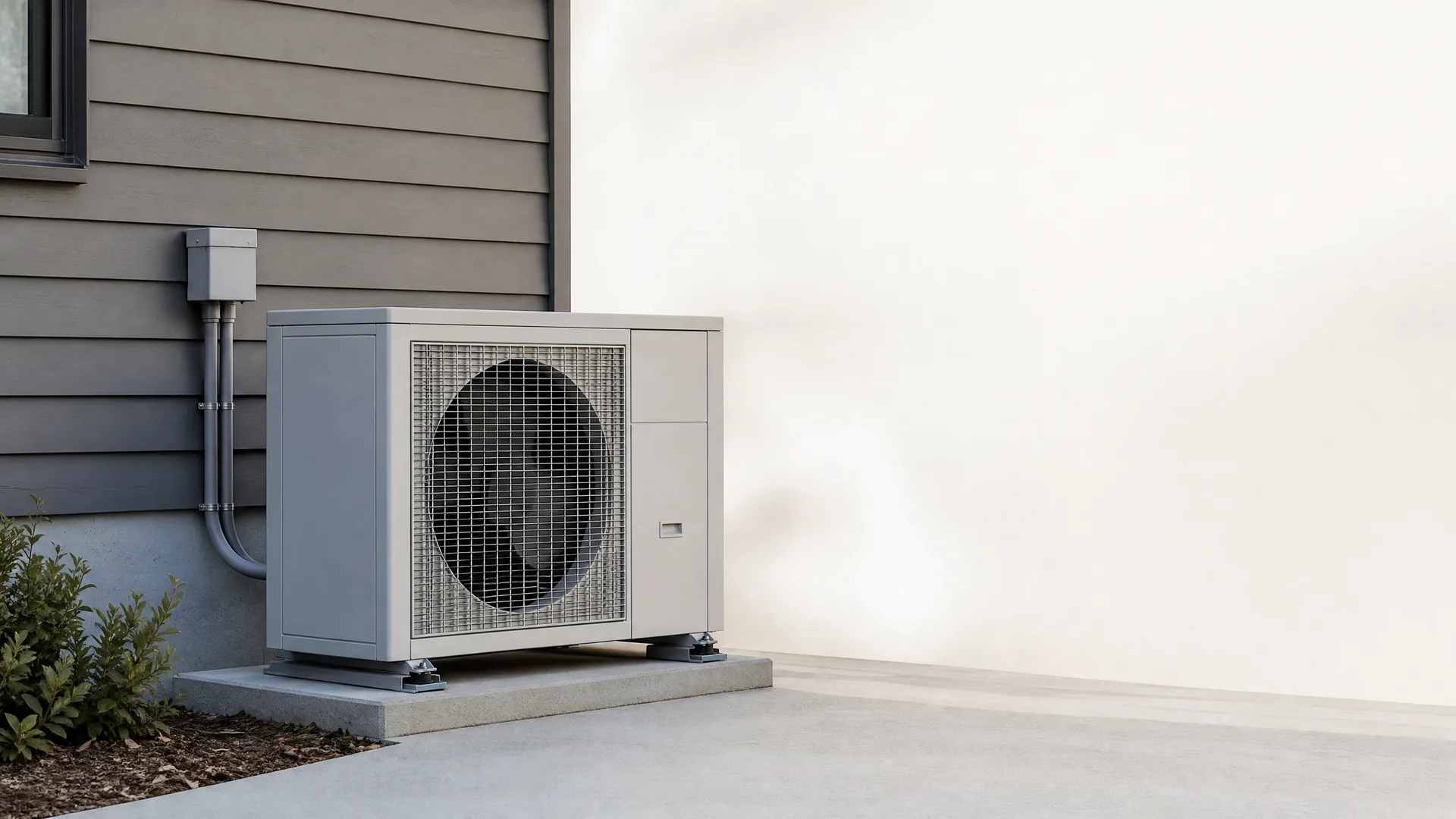
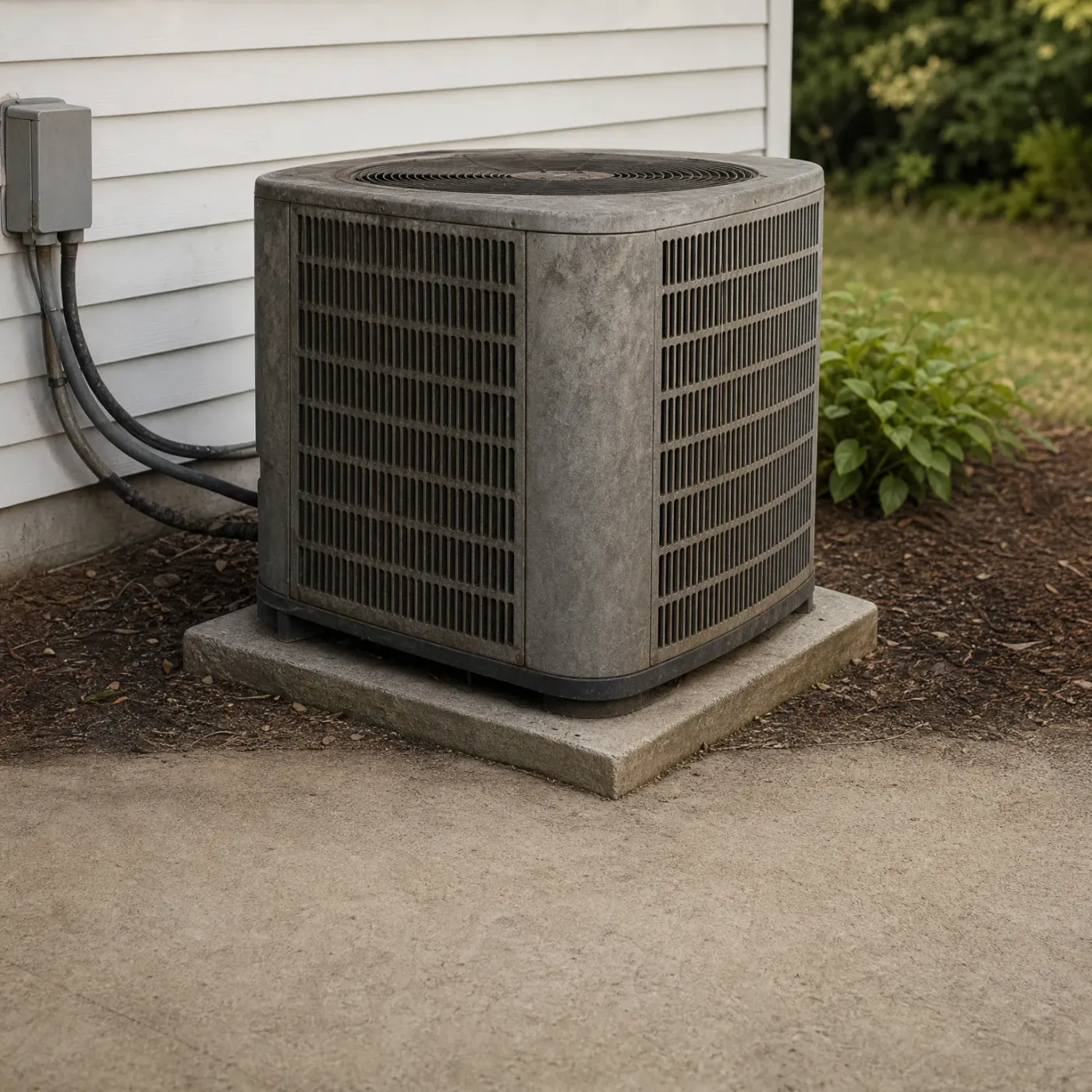
An outdoor air conditioner condenser unit on a concrete pad beside a house with horizontal siding, with conduit, cables and an electrical box on the wall and mulch beds at either side.

Short cycling and struggling

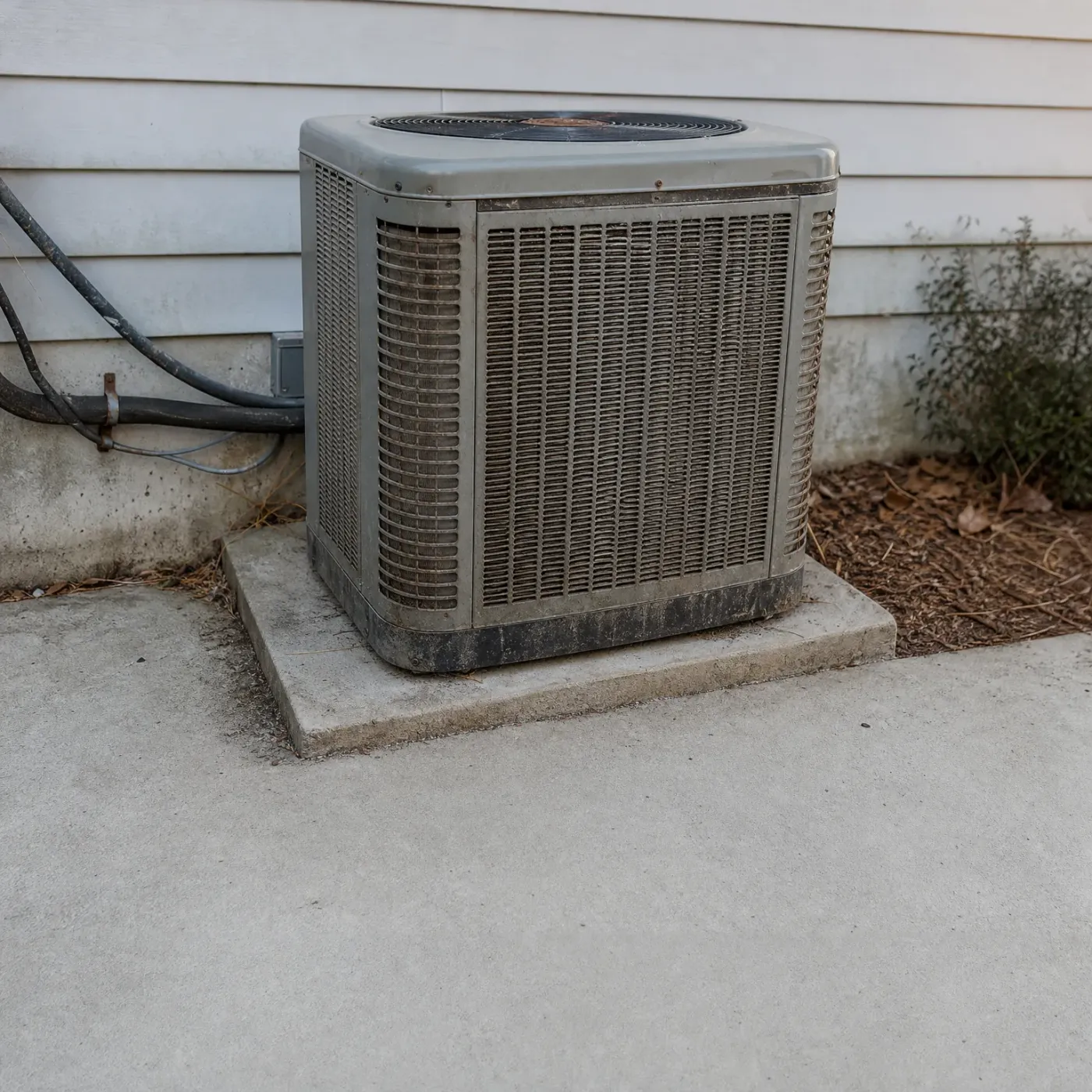
Dust and grime like this coat the coil and block the airflow the unit needs to run a full cycle. The system shuts off early, kicks back on a few minutes later, and keeps doing that all day. It's working harder for less heating or cooling, and your power bill shows it.

Is this costing you money right now

A heat pump that keeps stopping and starting is running the compressor hardest, over and over, which is the part of your system that uses the most power. You'll notice the house never quite feels right, a room that stays sticky in July or never warms up on a cold morning, even though you can hear the unit kicking on constantly. Your electric bill moves the wrong way because the system is working without getting anywhere. Left alone, the start and stop wears on the compressor itself, and that's the most expensive part to replace in the whole unit.

A gray outdoor heat pump unit on a concrete pad beside a house with gray horizontal siding, with conduit and an electrical box on the wall and a shrub at left.

What short cycling does to the compressor

Every time the compressor stops and starts, it draws a hard pull of current just to get going again. That surge is harder on the motor and the windings than running steady ever is. A heat pump that cycles every few minutes is asking the compressor to take that hit over and over, all day. Over time that wear adds up faster than normal use would, and the compressor is the most expensive part in the outdoor unit to replace.

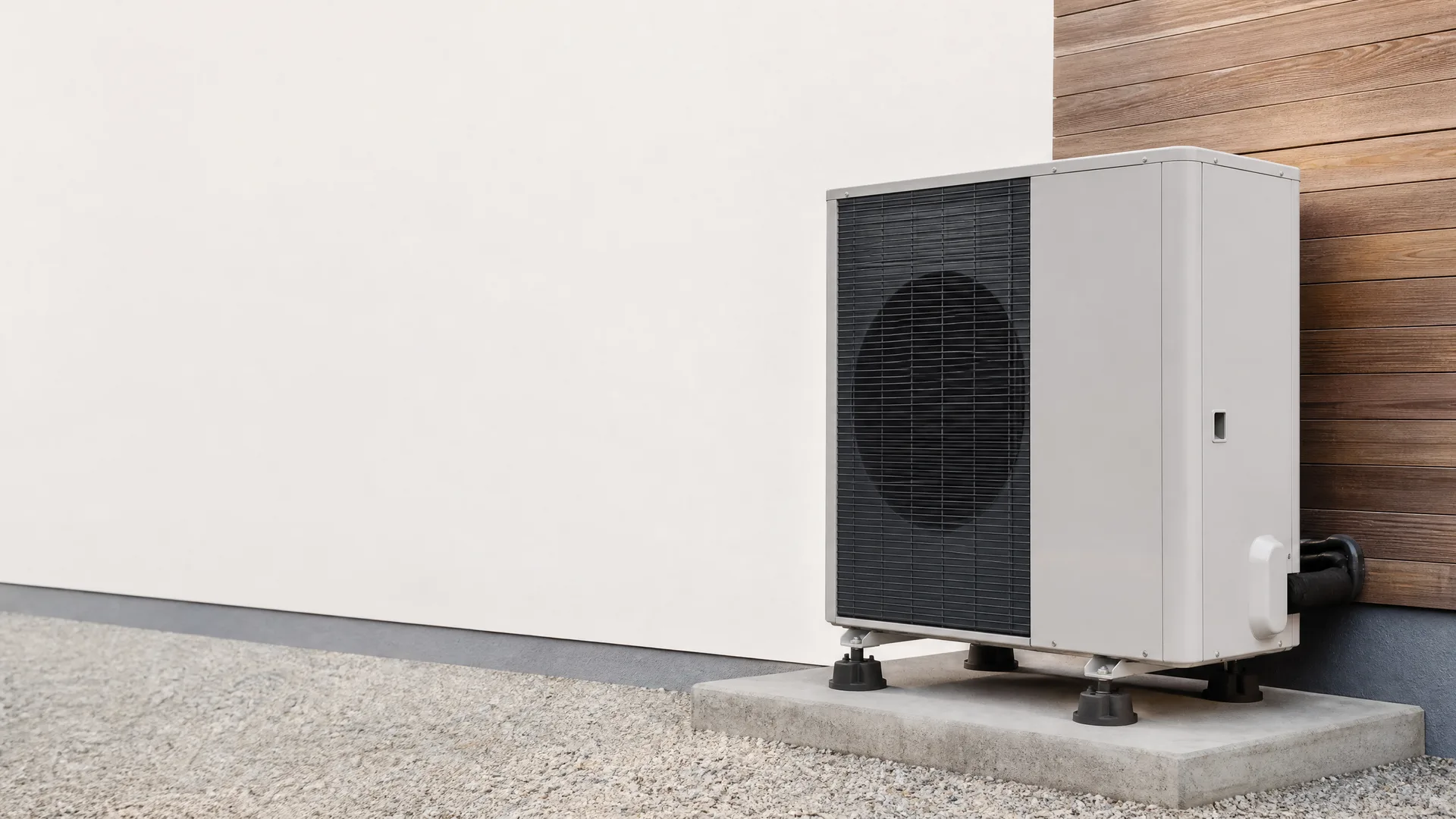
An outdoor air-source heat pump unit with a dark grille stands on a concrete pad beside a white wall and wood-clad facade, surrounded by gravel.

Low refrigerant shows up as frost

If the charge is low, the coil can't absorb heat the way it should, and the refrigerant inside gets too cold too fast. That shows up as frost or ice on the coil or the lines running to it, even in July. A tech checks the charge against the system's rated amount, not a guess, because too much refrigerant causes the same short cycling as too little.

A woman in a cream sweater and jeans stands in the open doorway of a white stucco house, holding the dark door, while a man in a dark quilted jacket seen from behind walks toward the entry past potted plants.

How the system decides when to stop

A heat pump shuts off because a sensor told it to, not because it finished the job. The thermostat reads the air near it and signals the control board once that reading hits the set point. If the return air is uneven, or the unit is low on refrigerant and can't push enough heat or cold through the coil, that sensor sees a change faster than the rest of the house does. The board cuts the compressor off, the air stops moving as fast, the reading drifts back, and it kicks on again a few minutes later. None of this shows up from looking at the thermostat. It takes someone checking the charge, the airflow, and the control board itself to see which one is cutting the run short.

That's usually where a homeowner gets stuck. You can watch it happen every few minutes and still not know if it's the refrigerant level, a dirty sensor, or a board that's failing. A contractor who works on heat pumps through Alabama summers sees this pattern often enough to know where to check first, and once you're matched with one, they're the one who comes out, not a rotation of different companies calling about the same job.

A living room corner with a beige sofa and cushion, a round wooden coffee table holding a pale ceramic vase of eucalyptus stems and a wooden bowl, and a curtained window with a potted plant above a latticed radiator cover in the background.
  1. Thermostat calls for heating or cooling to start

  2. Outdoor unit kicks on and begins the cycle

  3. Low refrigerant or airflow makes the coil freeze fast

  4. Pressure or temperature trips a safety switch early

Call someone or check it yourself first

Call for repair now

  • A licensed contractor can check refrigerant charge and airflow with gauges and a meter, not a guess from the thermostat screen.
  • If the coil is icing up, someone has to find out whether that's low refrigerant, a dirty filter, or a failing blower before it freezes again.
  • Alabama summers put long hours on the compressor, and a short cycling unit is already straining the part that costs the most to replace.
  • Waiting through another month of short cycles on electric heat or cooling means paying for start after start instead of one steady run.
  • A local contractor who services heat pumps all season knows which parts fail first in this climate and can usually spot the cause quickly.

Wait and watch

  • If the cycling just started and the thermostat setting was recently changed, it may settle on its own once the house catches up.
  • A single short cycle after a power blip or a breaker reset isn't the same as a pattern that repeats every few minutes.
  • Checking the outdoor unit for leaves, grass clippings, or anything blocking the coil costs nothing and sometimes solves it outright.
  • Swapping a dirty filter for a clean one is simple enough to try before calling anyone, and it rules out one common cause.
  • Waiting too long on a compressor that's struggling can turn a repair into a replacement, especially with how hard Alabama summers run the system.
A gray-haired man in a dark sweater sits on a light gray sofa in a living room, looking toward a sunlit window with trees outside.
A gray-haired man in a dark blue sweater sits on a light gray sofa in a sunlit living room, looking off to the side, with a potted plant, shelving unit, and large glass doors behind him.
A bearded man with graying hair in a dark green sweater sits on a sofa in a living room, looking off to the side, with a sliding glass door and a dim kitchen doorway behind him.
A gray-haired man in a dark knit sweater sits on a light gray sofa in a living room, looking toward a sunlit window, with houseplants, a lamp, and framed art in the background.

A pro who works on heat pumps

Your request goes to one pro, not a list of companies.

You only hire the pro if you want to.

A gray outdoor condenser unit on a concrete pad beside a house with horizontal lap siding, with an electrical disconnect box and insulated refrigerant lines on the wall, gravel in the foreground and a planting bed at left.

Clear and open

The condenser sits clean on its pad, fins open to the air, the disconnect box and lines running neat up the wall. Air moves through it the way it was built to. That's what lets the system run its full cycle instead of tripping early.

A weathered gray outdoor condenser unit sits on a concrete pad beside a house with horizontal siding, with refrigerant lines entering the wall at left and a mulched shrub bed at right.

Choked and struggling

This unit is caked in dirt across the fins and base. With that buildup, the coil can't move heat the way it needs to, and the system trips off long before the cycle finishes. Grime like this is something a contractor checks for first.

A middle-aged woman with shoulder-length dark hair, wearing a gray cardigan over a cream top, sits in an upholstered armchair and looks toward a sunlit window, with a shelf holding framed pictures and a plant behind her.
A woman with her hair in a bun holds a sleeping young child against her chest, both wrapped in a textured beige knit blanket on a sofa in a dimly lit room with a lamp, framed picture, and bookshelf behind them.

What's actually behind the stop and start

  • A reversing valve stuck or slow to shift between heating and cooling can trip the same pressure switch that cuts a cycle short.
  • The defrost control board in winter can call for a cycle to end early if its sensor misreads the outdoor coil temperature.
  • A thermostat mounted too close to a supply vent reads air that cooled or warmed faster than the rest of the house.
  • An oversized heat pump satisfies the thermostat's sensor within minutes because it moves more air than the space needs.
  • Low refrigerant charge drops the suction pressure enough to trip the low pressure switch before the compressor finishes a normal run.
  • A failing run capacitor can let the compressor start, stumble, and shut down within the same few minutes, over and over.

A heat pump is more complicated than a straight air conditioner because it has to run two directions, and the part that switches it between them is the reversing valve. When that valve sticks partway or moves slower than it should, the system can trip a pressure switch meant to protect the compressor, and the cycle ends before it should. In winter there's another layer: the defrost board watches the outdoor coil and calls for a defrost cycle when it reads ice forming. If that sensor is reading wrong, it can end a heating cycle that didn't need to stop at all. Sizing matters too. A heat pump that's too big for the house moves enough air to satisfy the thermostat's sensor in a few minutes, long before the rooms away from the thermostat have actually caught up. Where the thermostat sits matters for the same reason. Mounted too close to a supply vent, it reads air that's already cooled or warmed, not the air in the rest of the house, and shuts the system down early. Some causes are simpler. A run capacitor that's failing can let the compressor start, hesitate, and cut out within the same few minutes, again and again, which looks like short cycling but is really a part on its way out. And low refrigerant charge drops suction pressure enough to trip the low pressure switch before the compressor ever gets to finish a normal run. Each of these needs gauges or a meter to tell apart from the others.

Power costs 16.09 cents per kilowatt-hour statewide

At 16.09 cents a kilowatt-hour, a compressor that's hitting hard starts and stopping all day isn't just wearing out early, it's pulling a surge charge every few minutes instead of running steady. Short cycling turns that rate into a bigger number on your bill before anyone's fixed the actual problem.

EIA-861 2025 statewide residential average

An outdoor air conditioning condenser unit sits on a concrete pad beside a white horizontal-siding house, with a gray electrical disconnect box and insulated refrigerant lines on the wall, mulch and green shrubs to the right, and a concrete slab in the foreground.
Before you get your heat pump repair
A gray outdoor air conditioner condenser unit on a concrete pad beside a house with horizontal lap siding and a stone veneer base, with a conduit running to a wall-mounted disconnect box and shrubs and evergreen trees to the left.
After you get your heat pump repair
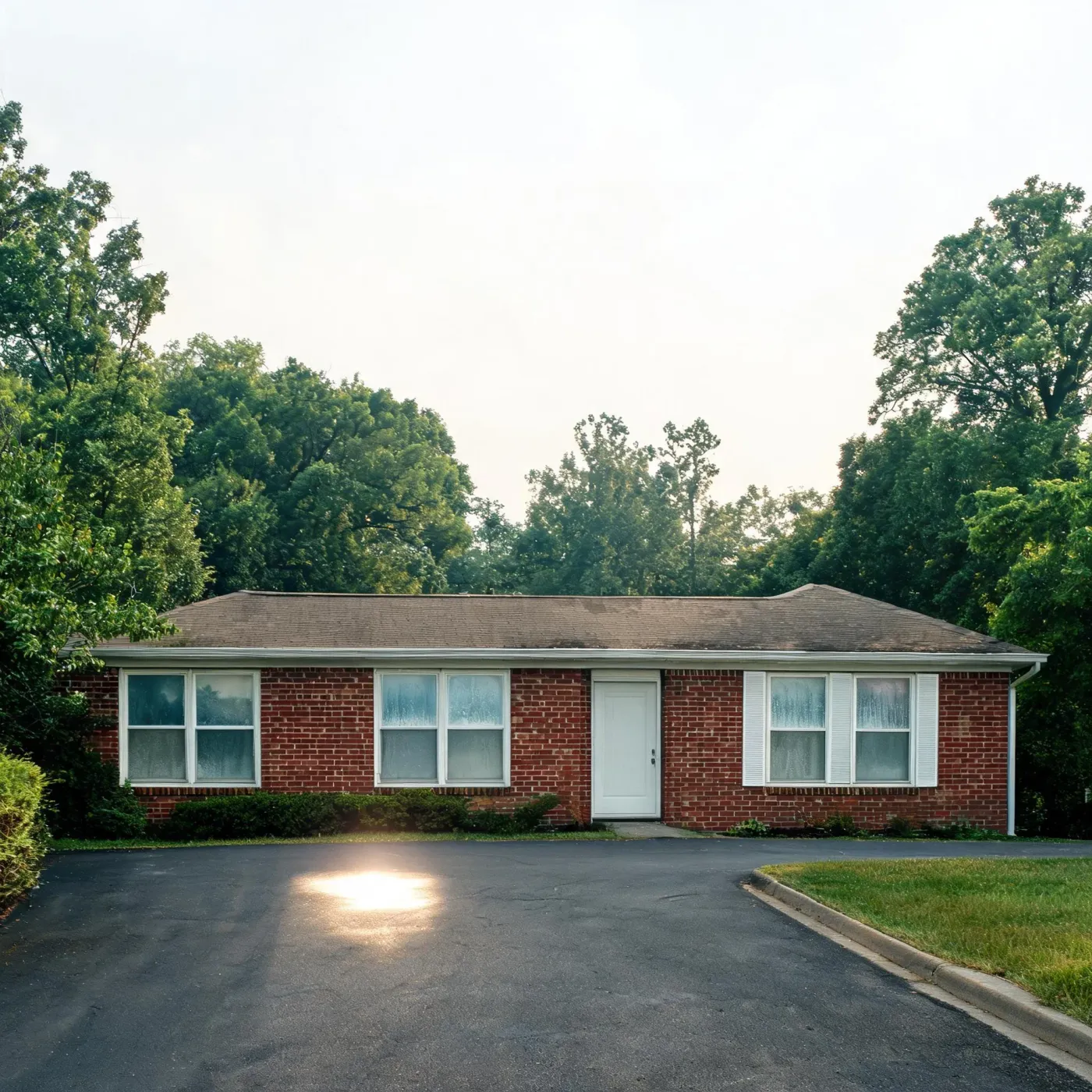
A single-story red brick ranch house with a white door, white-trimmed windows and a shingled hip roof, fronted by a wide asphalt driveway with sunlight glare, surrounded by green deciduous trees under a pale sky.

Summer dew points in Alabama average 69°F across June, July and August, according to NOAA climate data. Air that heavy means the coil has to pull more moisture out before the house feels right, and a heat pump that's already struggling to finish a full cycle never gets the chance to catch up. You'll feel it as stickiness that lingers even when the thermostat says the room hit its set point. That extra load on the coil is also what pushes a weak or dirty system into short cycling in the first place, since it's working against air that won't give up its moisture easily.

NASA POWER T2MDEW county cells weighted by homes

A heat pump that short cycles is telling you something specific failed, and the fix is finding which part it was, not waiting it out. Left alone, it keeps pulling hard-start surges on a system already working against Alabama humidity, and that shows up on a power bill at over sixteen cents a kilowatt-hour. The contractor who takes this call works heat pumps in Alabama all year, through the humid starts and stops of summer and the defrost cycles of winter, and knows the usual list: low refrigerant, a dirty coil, a failing sensor, a stuck reversing valve. You get matched with one licensed local contractor, not a handful of companies competing for your callback, so the person who shows up already has a sense of what to check first. Once that part is found and fixed, the system runs its full cycle again, the way it was built to. That's where you want to end up, and it starts with someone who can actually look at the charge and the airflow instead of guessing from the thermostat.

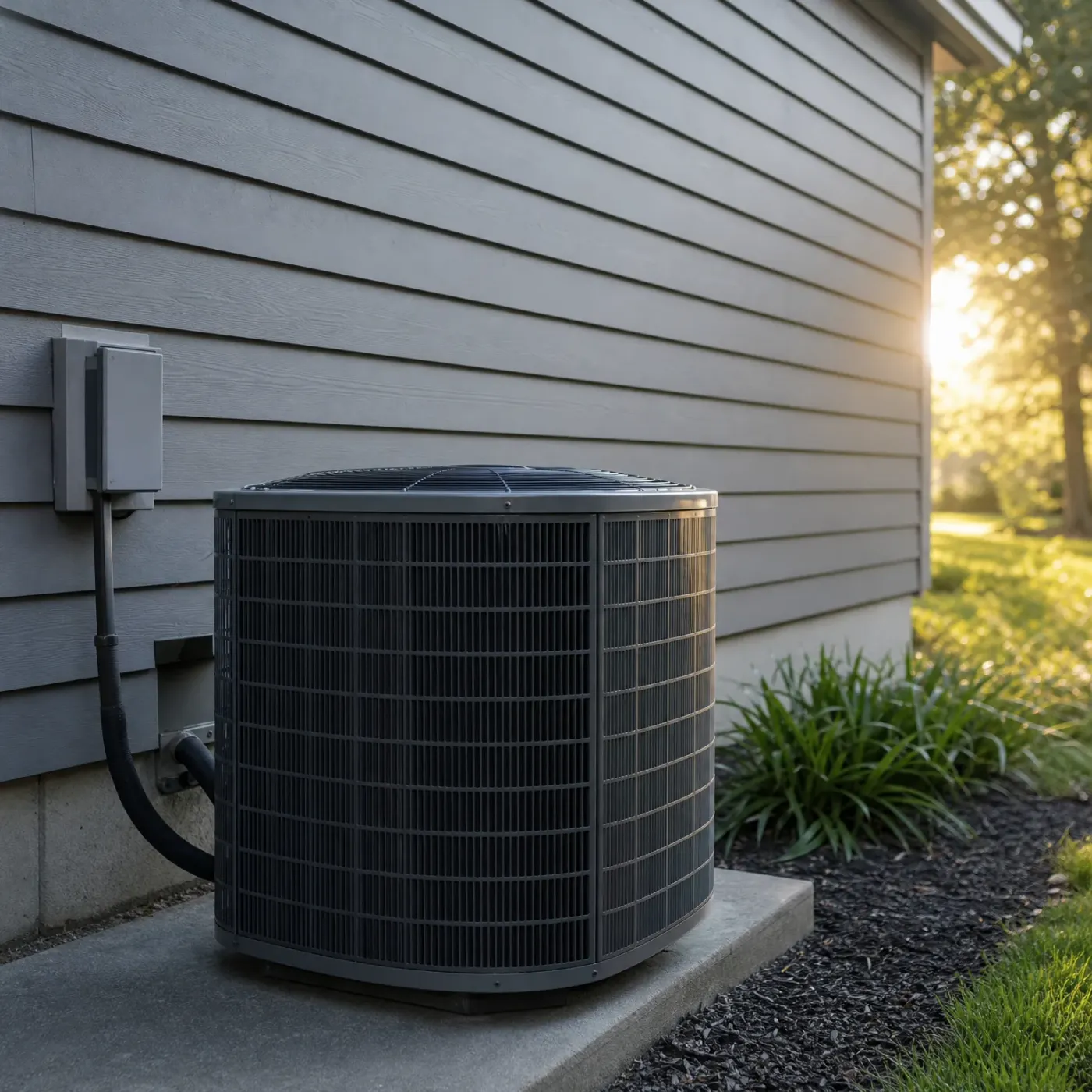
An outdoor air conditioner condenser unit on a concrete pad beside a gray horizontal-lap-sided house, with an electrical disconnect box and refrigerant line on the wall, grass, shrubs and a tree with low sun behind.

Get your heat pump to the right pro

Find a licensed heat pump pro

The pro who reaches out is licensed in Alabama.

Asking costs nothing, and the choice to hire stays yours.