Why your heat pump bill jumps in an Alabama winter

Step 1 of 3: Equipment

Your heat pump bill climbs in winter because the colder it gets outside, the harder the unit works to pull heat from that cold air, and below a certain outdoor temperature it leans on backup electric resistance heat to keep up. That backup strip heat draws a lot more power than the heat pump running on its own. Alabama winters bring enough cold nights for this to kick in more than people expect, and since most homes here heat with electricity, that extra draw shows up directly on a power bill that is already not cheap. If your system is cycling on that backup heat more than it should, or struggling to keep the house warm without it, something is off: low refrigerant, a worn-out component, or a thermostat setting working against you. A heat pump that is running right shouldn't need backup heat constantly just to hold a normal winter temperature.

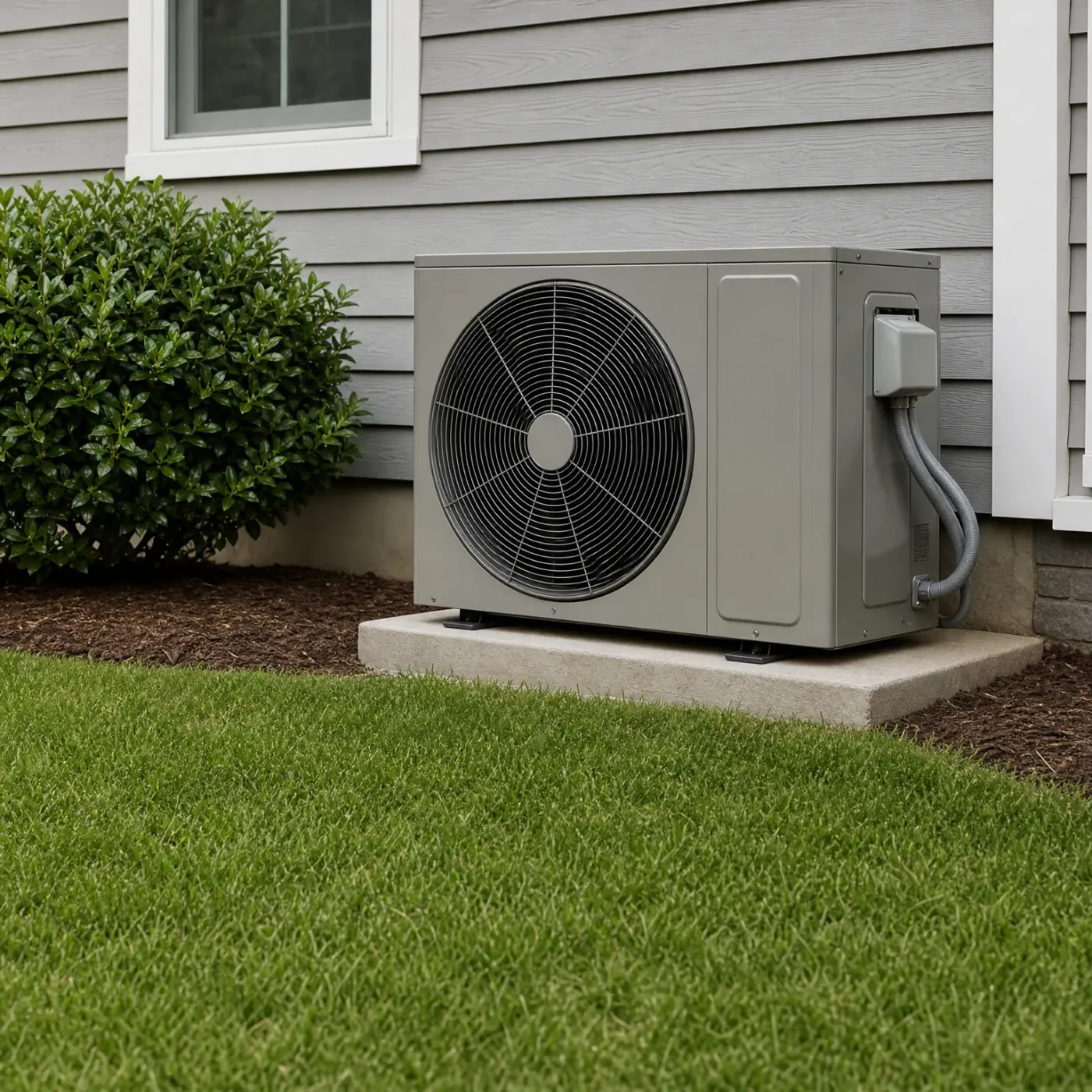
A gray outdoor heat pump unit with a large fan grille sits on a concrete pad beside a house with horizontal lap siding, next to a green shrub, mulch bed, and lawn.

Running clean, keeping up on its own

A heat pump with clear coils and a clean filter moves heat the way it's supposed to. It can pull what it needs from the outside air without calling on backup strip heat so often, even on a cold Alabama morning. The bill still rises some, but the unit isn't fighting itself to do it.
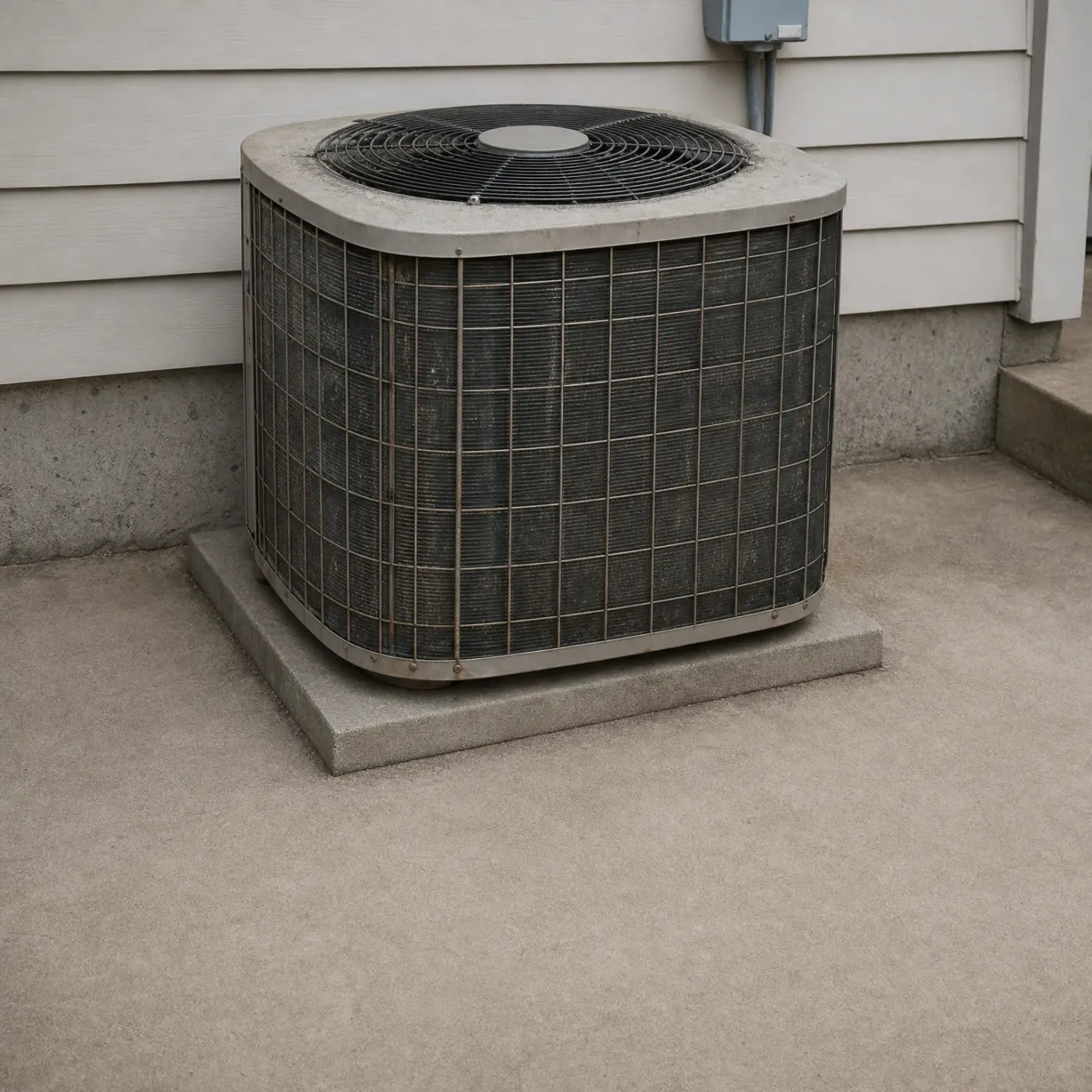
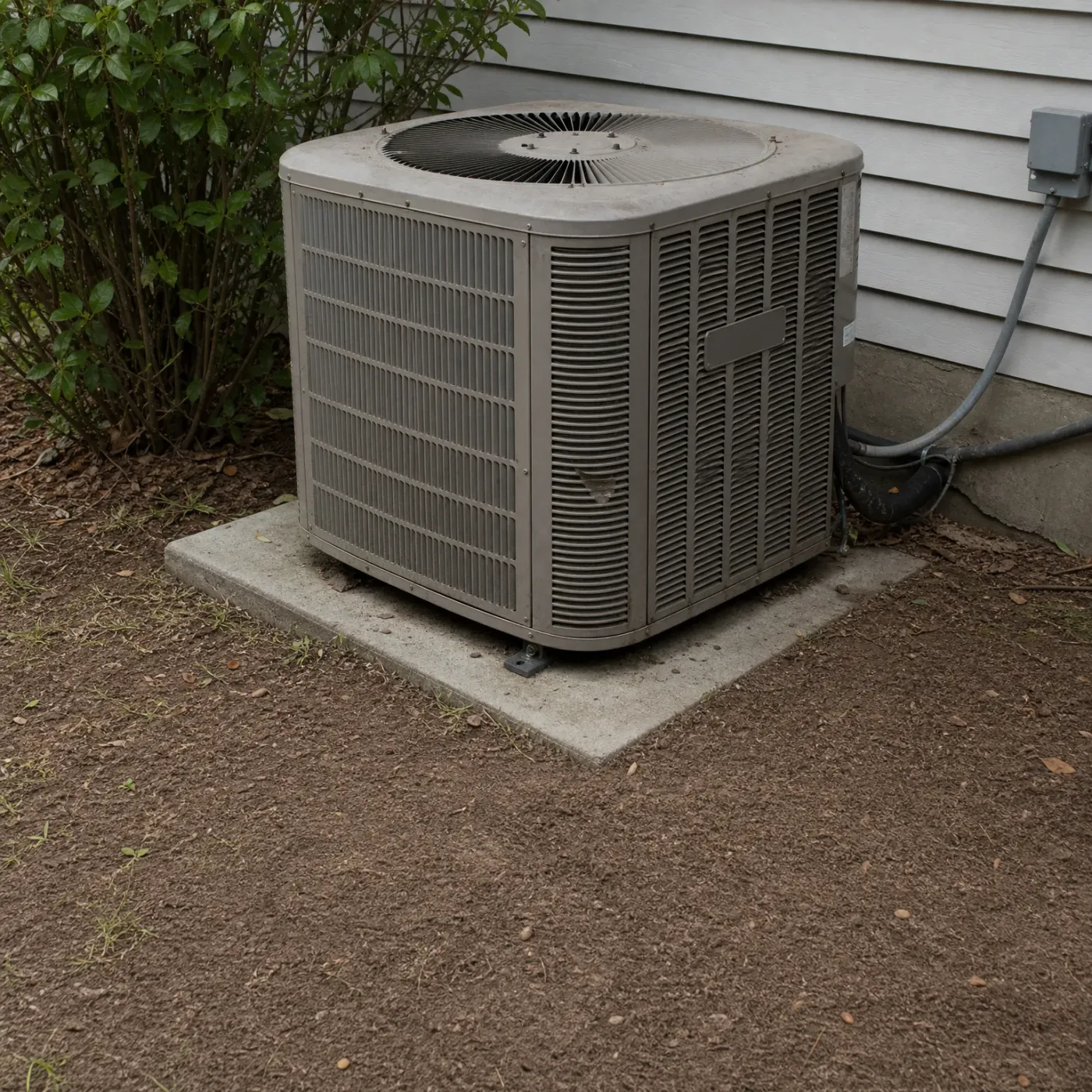
An outdoor air conditioning condenser unit with a top fan grille sits on a concrete pad beside a house with horizontal siding and a concrete step.

Caked coils, more strip heat, more cost

Dirt and dust on the coil fins block the heat exchange the unit depends on. It has to lean on backup heat sooner and more often to hold the temperature you set, and that backup heat is what drives the bill up fastest. A dirty unit struggling like this is a repair call, not a wait-and-see.

An outdoor air conditioner condenser unit on a concrete pad beside a house with horizontal lap siding, with a shrub to the left, bare dirt in front, and conduit and a metal disconnect box on the wall.
Before you get your heat pump repair
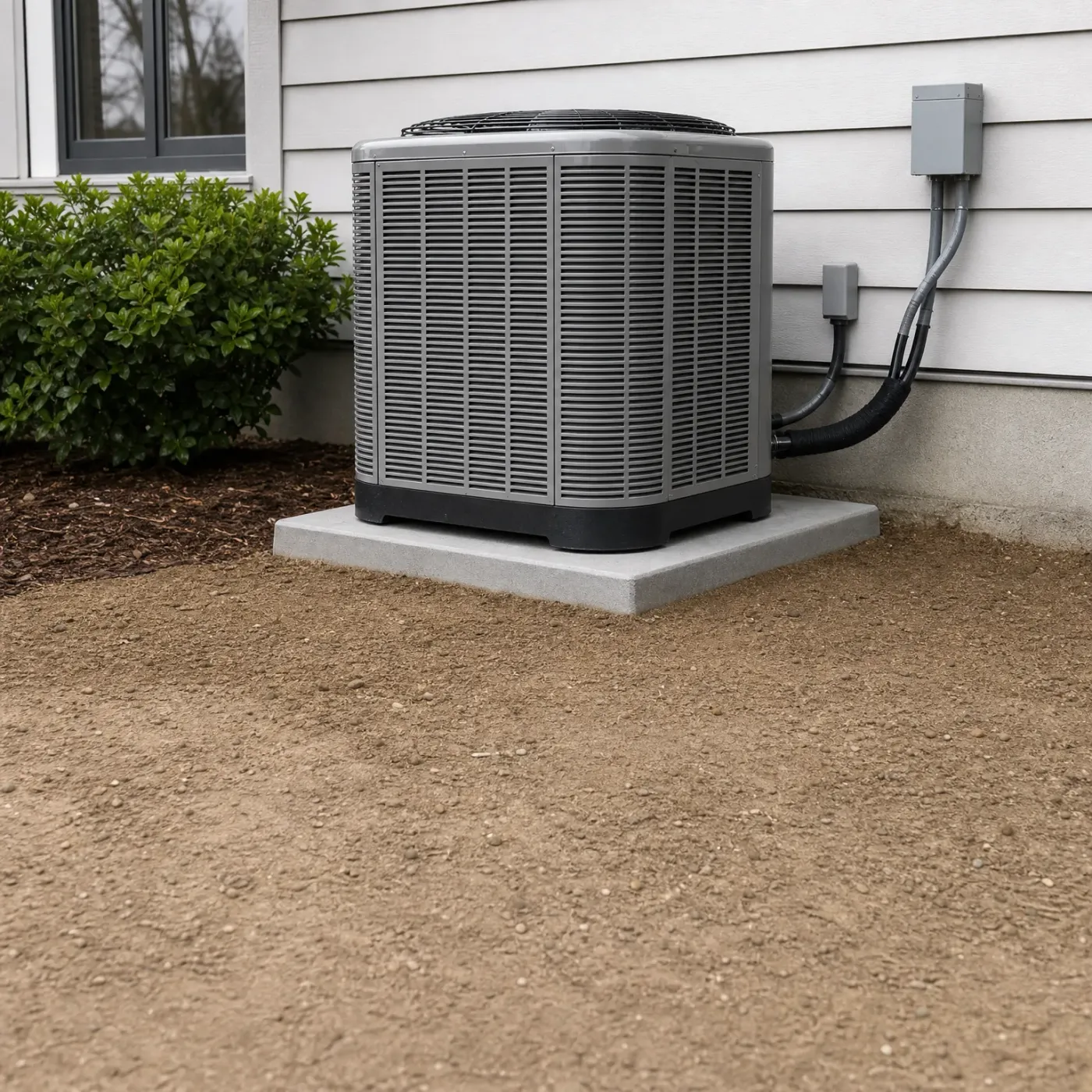
A gray outdoor condenser unit on a concrete pad beside a white horizontal-siding house, with refrigerant lines and conduit running to a wall-mounted disconnect box, bare soil in front and a green shrub at left.
After you get your heat pump repair

A heat pump works harder for every degree the temperature drops, and strip heat can pull several times what the compressor alone uses to produce the same warmth.

That's why a stretch of nights in the 30s shows up on the bill fast, and why a unit that's behind on refrigerant or airflow leans on that backup heat even sooner.

A smiling man in a dark navy sweater sits on a light sofa in a living room, with a glass bowl of popcorn on a wooden coffee table and bookshelves behind him.
A smiling man in a dark green sweater sits on a tan leather sofa in a dimly lit living room, with a bowl of popcorn in the foreground and a kitchen area blurred behind him.
A smiling middle-aged man in a dark shirt sits on a gray sofa in a living room, with a bowl of popcorn on a side table and shelves, a window and kitchen area behind him.
A smiling bearded man in a dark gray t-shirt sits on a gray couch in a living room, with a large glass bowl of popcorn on a wooden table in the foreground.

How your heat pump actually heats

  • The outdoor unit has a reversing valve that switches it between cooling and heating by changing which coil acts as the condenser.
  • A defrost cycle runs when frost builds on the outdoor coil, and it briefly reverses the system and runs strip heat so cold air doesn't blow inside.
  • The thermostat calls for backup heat in two ways: a temperature balance point it crosses on its own, or an emergency heat setting you turn on by hand.
  • A dirty outdoor coil or a low refrigerant charge makes the compressor run longer to pull the same heat, which calls up strip heat sooner.
  • The indoor air handler has its own heat strips, separate from the outdoor compressor, and they draw power straight off the electric panel.
  • A failing defrost control board can leave the unit stuck in defrost mode or running strip heat when it doesn't need to.

A heat pump doesn't make heat the way a furnace does. It moves heat from outside air into your house, using a reversing valve to switch the outdoor coil between absorbing heat and releasing it. That works fine down to a point. Once the outdoor temperature drops low enough, frost forms on the outdoor coil, and the system has to pause and run a defrost cycle to clear it, briefly reversing itself and firing the indoor heat strips so you don't feel cold air blowing through the vents. That's normal. What costs you is how often the strips come on outside of defrost. Your thermostat is set to call for them automatically once the outdoor temperature crosses a balance point, and separately, someone in the house may have switched on emergency heat by hand, which runs the strips full time. Either way, those strips sit in the indoor air handler, apart from the outdoor compressor, and pull power directly off your electric panel. A dirty outdoor coil or a refrigerant charge that's run low makes the compressor work longer to pull the same heat out of the air, which pushes the system past that balance point sooner and calls up strip heat more often than it should. A defrost control board that's starting to fail can get the timing wrong too, leaving the unit stuck running strips or cycling defrost when the coil doesn't need it.

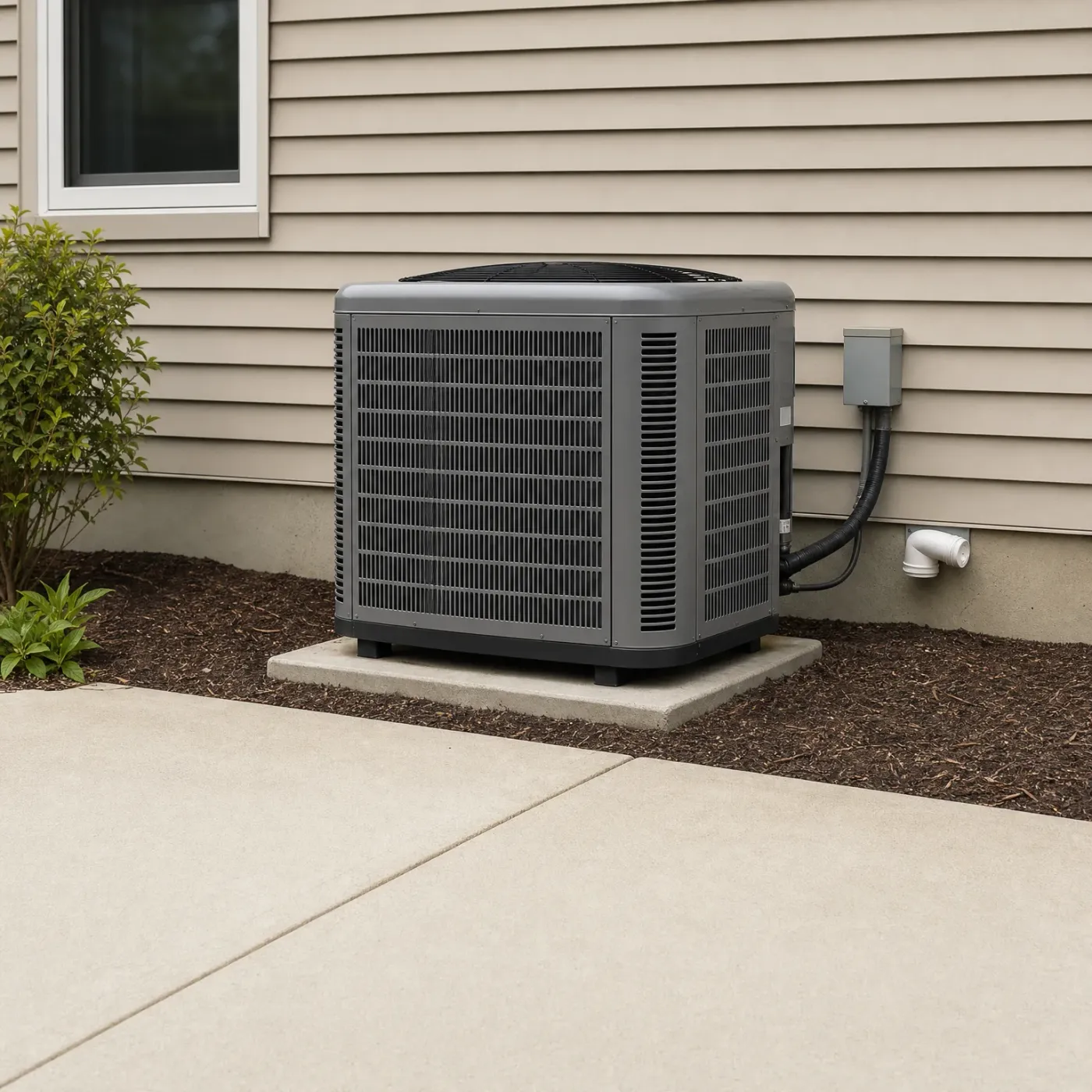
A gray outdoor condenser unit on a concrete pad beside a beige vinyl-sided house, with a wall-mounted disconnect box, flexible conduit, mulch bed, shrubs and a concrete walkway in front.
A clean outdoor unit like this one can still pull heat from cold air on its own, so strip heat only kicks in when the night really earns it.
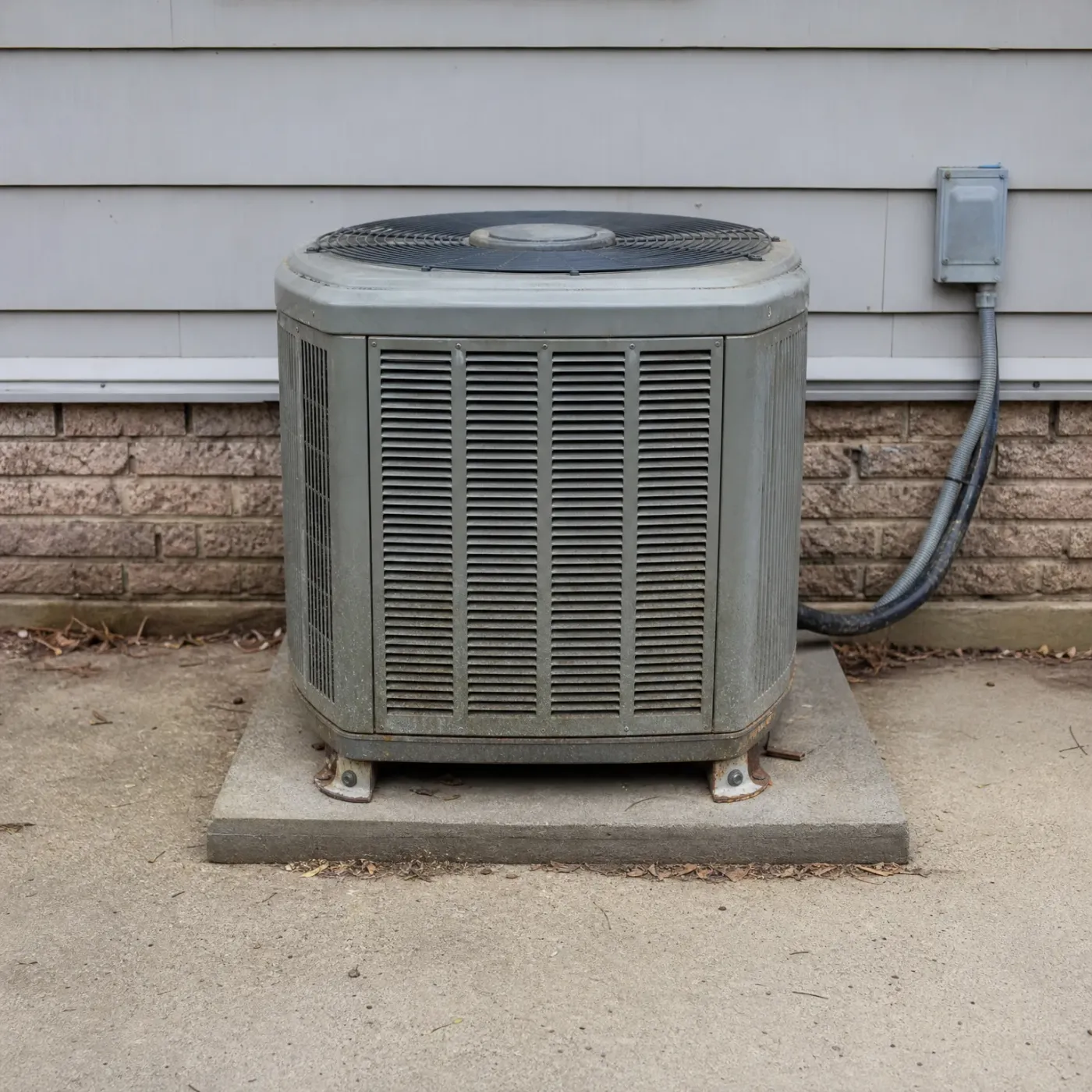
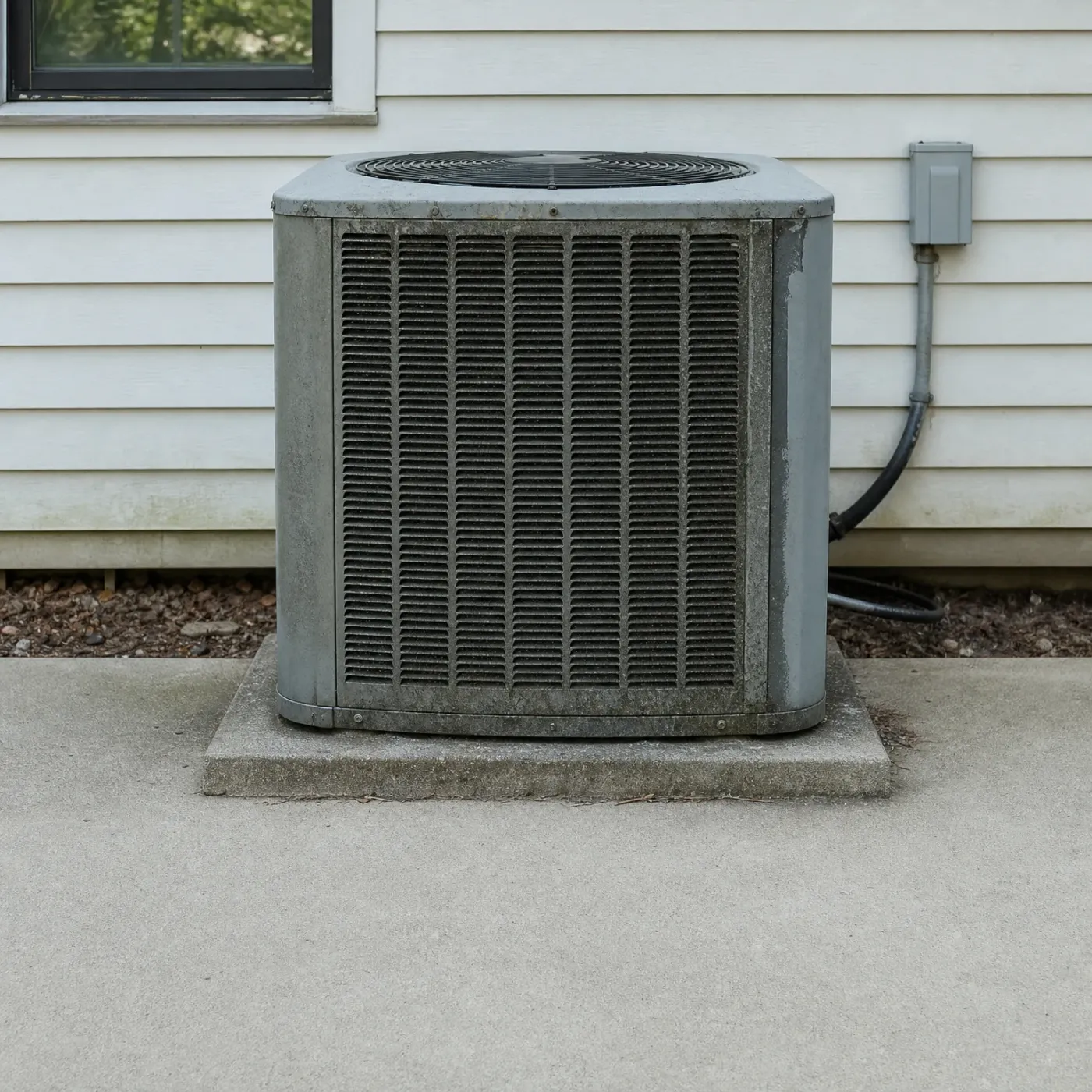
An outdoor air conditioning condenser unit on a concrete pad beside a house with horizontal siding above a brick foundation, with a flexible conduit running to a wall-mounted disconnect box.
Dust and grime packed into the coil like this make the unit lean on strip heat sooner, and that's what pushes the bill up.
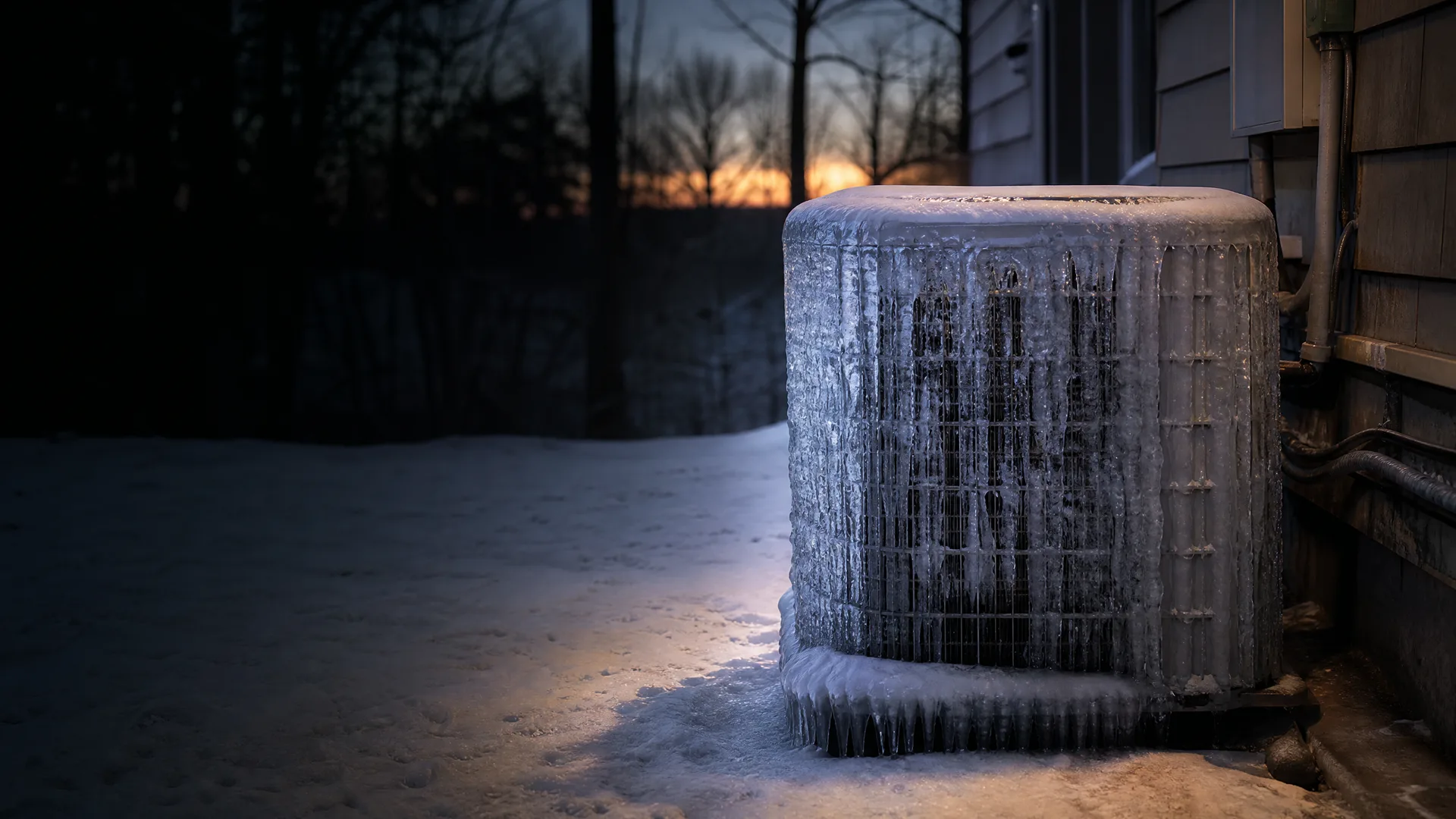
An outdoor condenser unit encased in thick ice stands on snow beside a house with horizontal siding and exterior pipes, with bare trees and a sunset glow in the background.

You go out for the paper a little after seven and the unit is sitting there crusted over, a half inch of ice wrapped around the coil like it froze mid-breath. The grass around it is white too, that hard January frost that doesn't burn off until nine or so. You crouch down and touch it and your finger just slides on the ice. Inside, the air coming out of the vents feels cool, not warm, and the thermostat is still calling for heat. You can hear the unit running, working at it, but nothing about it looks right. You go back in, rub your hands by the stove, and figure you'll call someone before you leave for work.

Hand off the heat pump problem

Fill out one short form instead of calling around.

There's no charge for the request.

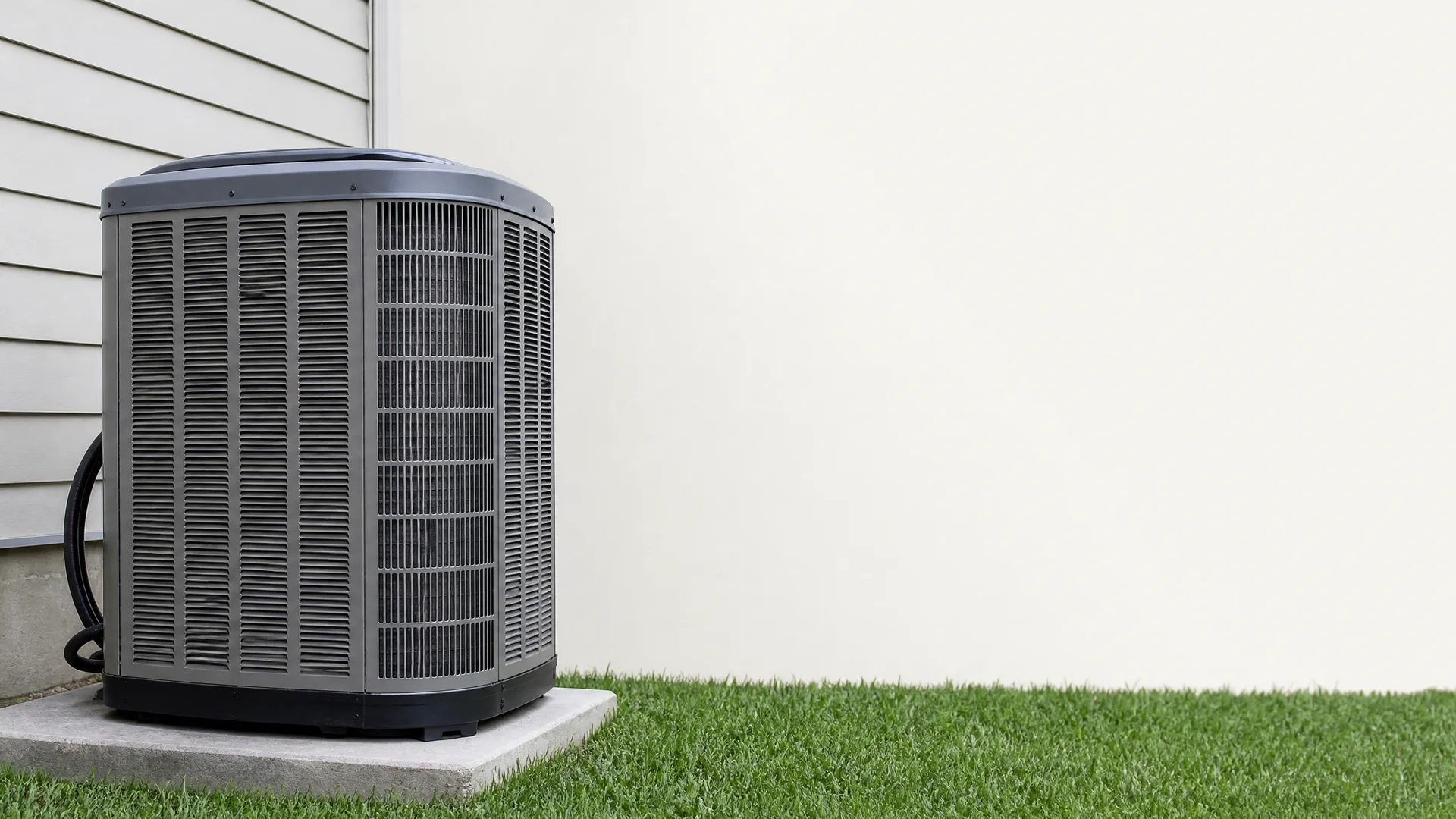
A gray outdoor air conditioning condenser unit on a concrete pad beside a house with horizontal siding, next to a green lawn and a plain light-colored wall.

A mild stretch in Birmingham

Highs in the 50s mean the heat pump handles things alone. The compressor pulls what warmth it needs from the outside air and the indoor coil puts it out through the vents. Strip heat stays off. You might not hear the outdoor unit working hard at all, just the low hum of a system doing what it was built to do. On nights like this the bill reflects one thing: a compressor running, nothing more.

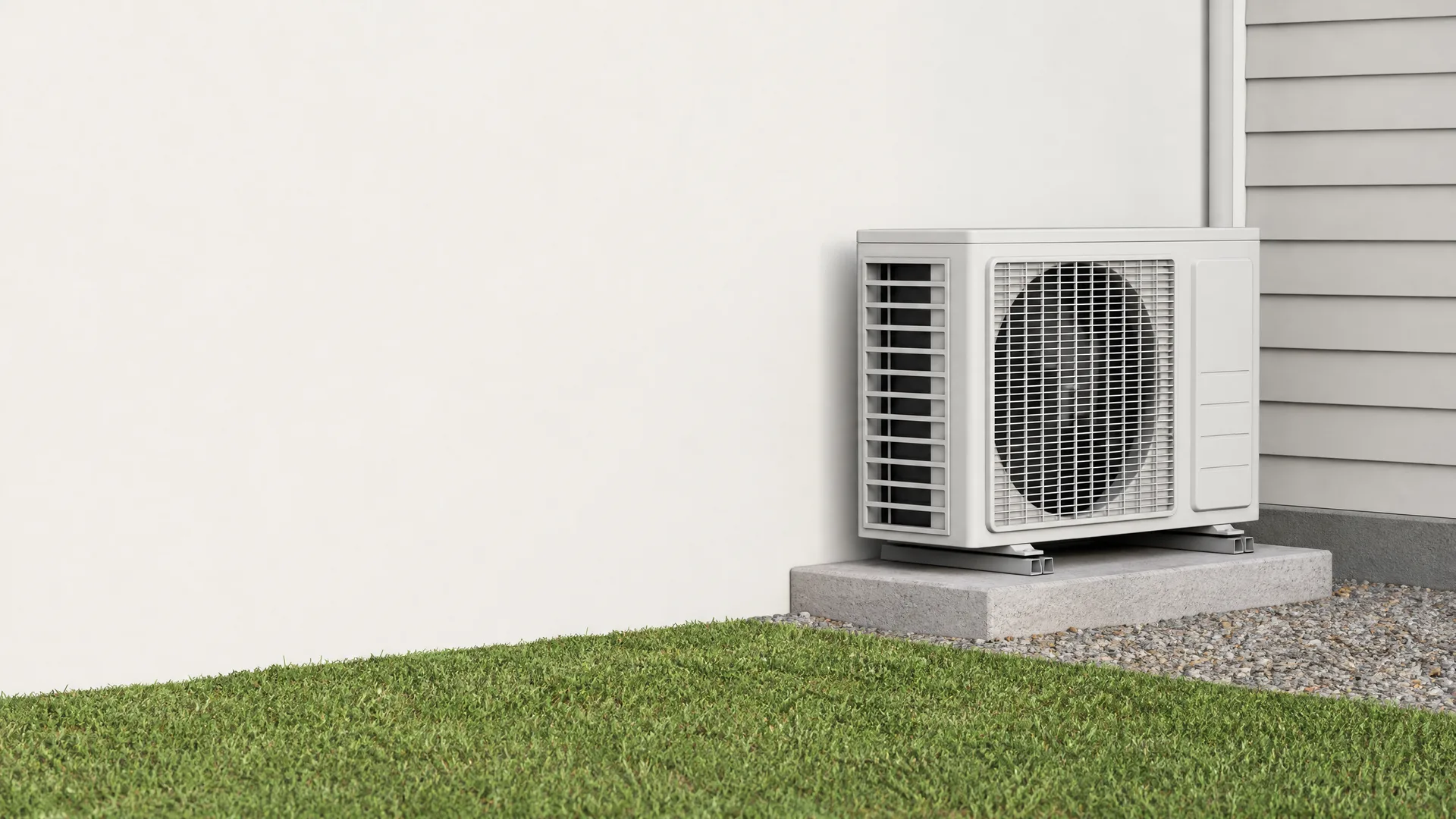
A white outdoor heat pump unit on a concrete pad beside a plain light wall, with gravel and mowed grass in front.

A cold snap in Huntsville

Drop into the 20s overnight and the compressor alone can't keep the house at temperature. Strip heat switches on to cover the gap, and it draws far more power to produce the same warmth. If the unit is also icing over and running defrost cycles to clear it, strip heat kicks in during those too. A few nights like that in a row, and the jump shows up on the next bill whether the equipment is working right or not.

Leave It Alone or Get It Fixed

Keep running as is

  • If strip heat is kicking on most cold nights, that part of your bill won't come down on its own.
  • A unit that's icing over wrong or short cycling will keep pulling more power than it should all winter.
  • You're still looking at calling around, explaining the problem to more than one contractor, and comparing what each one quotes.
  • Nothing about the system changes until someone gets a look at what's actually making it lean on backup heat so much.

Get it repaired

  • A tech can check the reversing valve, the defrost control and the charge, the things that decide how often strip heat runs.
  • Once those are working right, the unit can pull more of its heat from the outside air instead of the backup strips.
  • Send the form and the search for who to call is off your plate.
  • You explain the problem once, not again to every contractor you ring up.
  • It still won't tell you the night it'll get fixed, but you stop being the one hunting down who can do it.
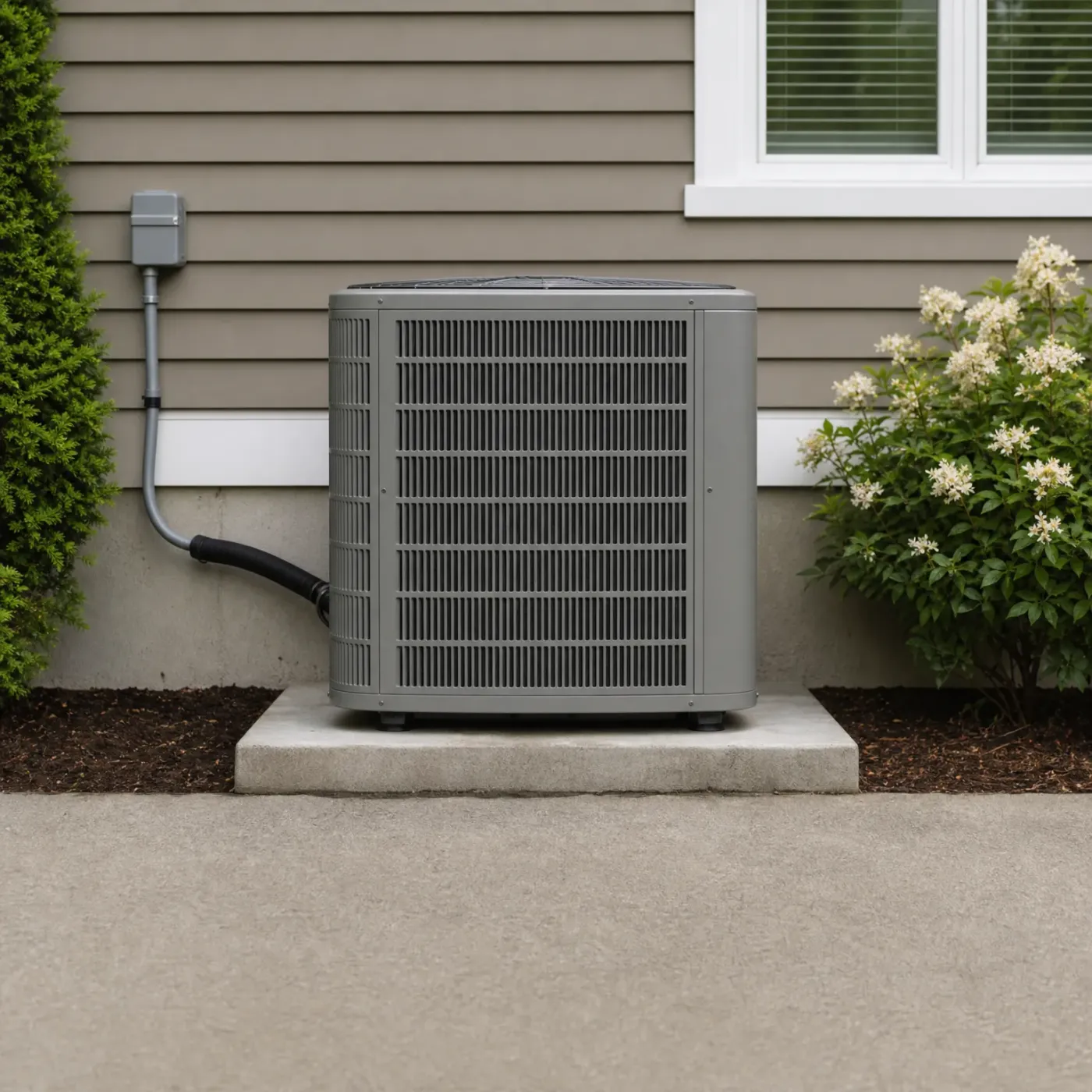
A gray outdoor condenser unit on a concrete pad beside a house with horizontal lap siding, a conduit and disconnect box on the wall, a shrub with white flowers at right and evergreen foliage at left.

Working the way it should

This unit sits clean on its pad, coils clear, lines intact. A heat pump like this pulls heat from the outside air on its own through most of an Alabama winter, calling on strip heat only when a night turns genuinely cold. The power bill tracks the weather, not a problem underneath.

A gray outdoor air conditioning condenser unit on a concrete pad beside a house with light vinyl siding, with a gray electrical disconnect box and conduit on the wall to the right.

Fighting the cold instead

Grime packed into the fins like this slows the coil down before the first cold front even arrives. It can't pull heat the way it's built to, so it leans on strip heat sooner and more often. That's extra electricity going out every night it runs this way.

A woman with dark hair in a bun reclines on a sofa with her eyes closed, wrapped in a cream fleece blanket, a closed blue hardcover book resting in front of her, with a lit lamp and a vase of dried flowers in the background.
A smiling bearded man in a navy sweater sits at a candlelit dinner table with a glass of red wine, a bowl of salad, and plates of food in the foreground.
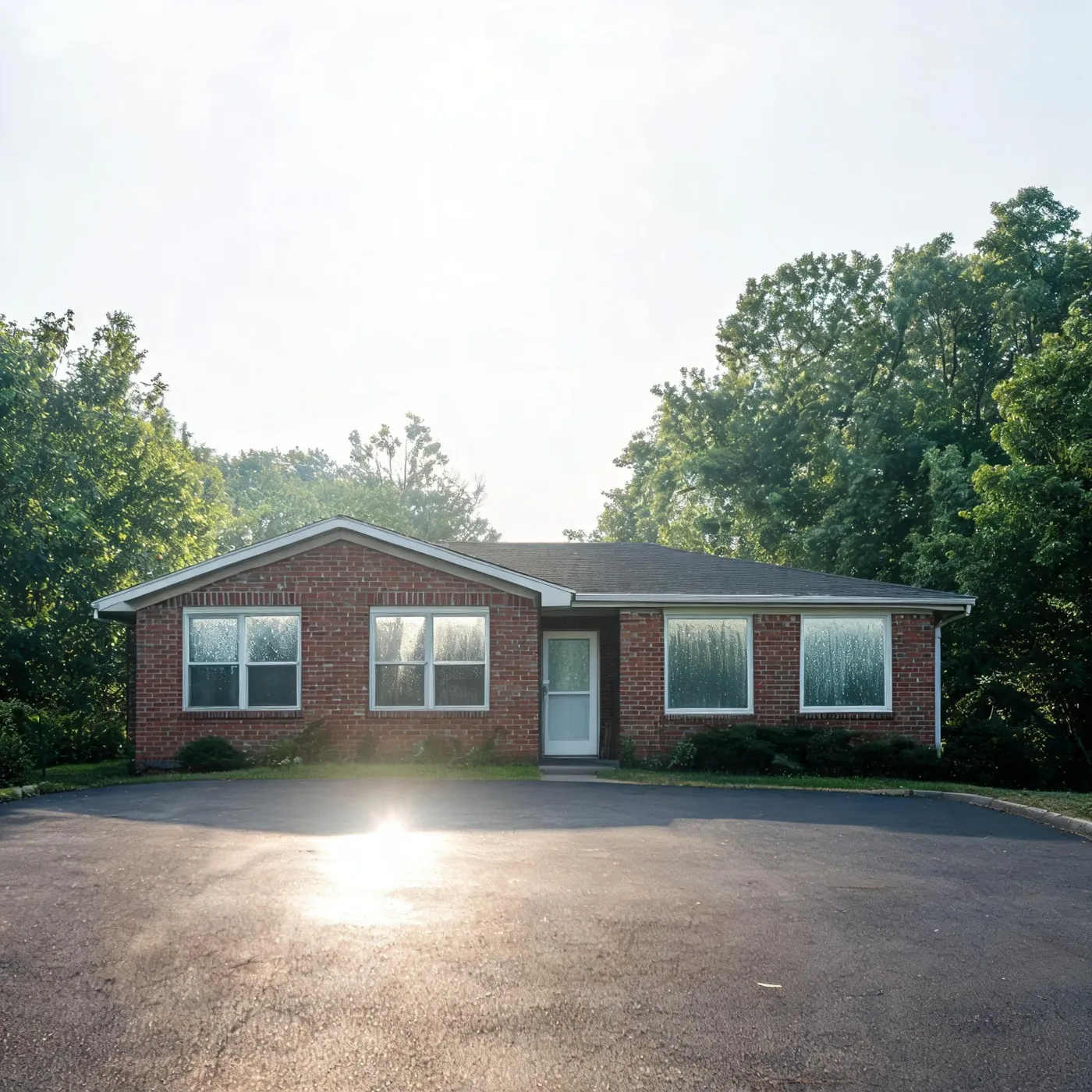
A single-story red brick ranch house with white-framed windows and a white storm door, fronted by a large asphalt parking area and backed by leafy green trees under a bright hazy sky.

That same humid air that sits over Alabama all summer, averaging a dew point of 69°F across June, July and August, works against your heat pump again come winter, just from the other direction. Summer humidity means the coil fights moisture and heat together to cool your house. Winter cold means that same coil has to pull warmth out of air that barely has any, and strip heat picks up the rest. The unit doesn't get an easy season. It's either shedding humidity or hunting for heat, and both show up on the bill.

NASA POWER T2MDEW county cells weighted by homes

Why is this month's bill so much higher

You check the unit outside and hear it running almost nonstop, even in the middle of the afternoon. Inside, the vents are blowing but the air feels cooler than it should for how long the system's been on. Maybe you've noticed the outdoor coil looks frosted more mornings than not, or the whole thing cycles off and on in short bursts instead of settling into a steady run. Any of those means strip heat is doing more of the work than the compressor was built to do, and that's the part of your bill you're feeling. Left alone through a full winter, it also means more wear on a system that's working past what it should have to.

  1. Indoor and outdoor thermostats sense the air is colder than the setpoint allows.

  2. The compressor pulls heat out of the outdoor air and sends it inside.

  3. Below a set outdoor temperature, the thermostat calls for backup strip heat.

  4. Strip heat warms the air directly, drawing far more power than the compressor.

Power costs 16.09 cents per kilowatt-hour statewide

At 16.09 cents per kilowatt-hour, every hour strip heat runs costs you more than the compressor alone ever would. A unit leaning on that backup heat most cold nights turns a normal bill into a rough one fast.

EIA-861 2025 statewide residential average

A closed laptop and a cream mug of coffee on a coaster sit on a dark wooden table, with a potted plant at left and a kitchen counter, tiled backsplash and shelf of ceramics in the background.

A heat pump that's working right won't need strip heat as often

The bill jumps when the unit can't pull enough heat from the cold air on its own and falls back on strip heat to make up the difference. That's the whole answer. A dirty coil, a low charge, a defrost cycle that isn't ending when it should, any of those will push a unit toward strip heat sooner than it needs to, on nights that didn't call for it.

Once that's fixed, you're not left to sort it out alone. No calling around to find someone who works on heat pumps, no explaining the icing and the noise and the high bill to three different companies, no sitting with quotes trying to guess which one is honest. Send the form and that part is off your plate. What's left is a unit that pulls its own weight through an Alabama winter, and a bill that reflects that instead of a system quietly leaning on backup heat every cold night.

A living room corner with a beige upholstered armchair holding navy and striped cushions, a small round wooden side table with a carved bowl and a potted green plant, a framed landscape picture on a pale wall, built-in shelving, and a curtained window.
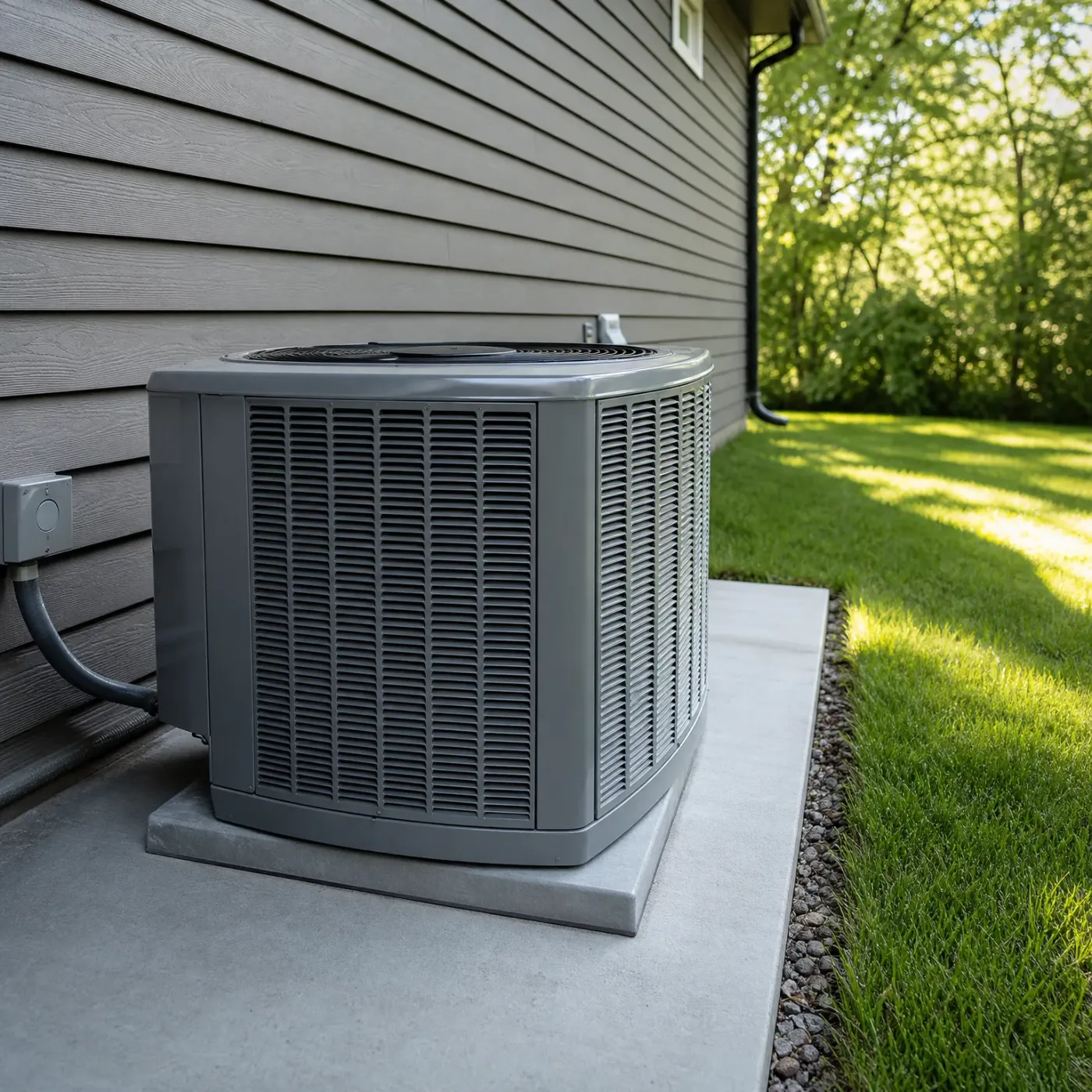
A gray outdoor air conditioner condenser unit on a concrete pad beside a house with horizontal lap siding, with an electrical disconnect box and conduit on the wall, a downspout, gravel edging and a green lawn with trees to the right.

Send one request and you're done looking

Send my request

Explain the job once and skip repeating it on every call.

You only hire the pro if you want to.