

Heat Pump Alabama

When to replace a heat pump in Birmingham, AL

Your request goes to a Jefferson County pro who takes heat pump jobs.

Get a local pro

How do I know when to replace my heat pump in Birmingham?

A heat pump in Birmingham runs most of the year, cooling through the long muggy stretch and then switching over to carry the mild winter too. When it starts breaking down or the power bill creeps up, it's hard to tell if that's a one-time fix or the start of the end. You want a straight answer before you spend money on another repair.

Replace it once repairs get frequent or the unit is past 10 to 15 years old

A heat pump in Jefferson County works harder than most, running the compressor nearly year round between the long cooling months and the mild winters when it still has to carry the heat. That extra runtime wears out parts sooner than in places where a furnace handles winter alone. Once a unit passes 10 to 15 years, the compressor and reversing valve have logged a lot of cycles, and a breakdown at that age usually isn't the last one. If you're calling for a repair more than once a year, or your power bill keeps climbing even though the unit runs constantly, that's the system telling you it's losing efficiency faster than it can be nursed back.

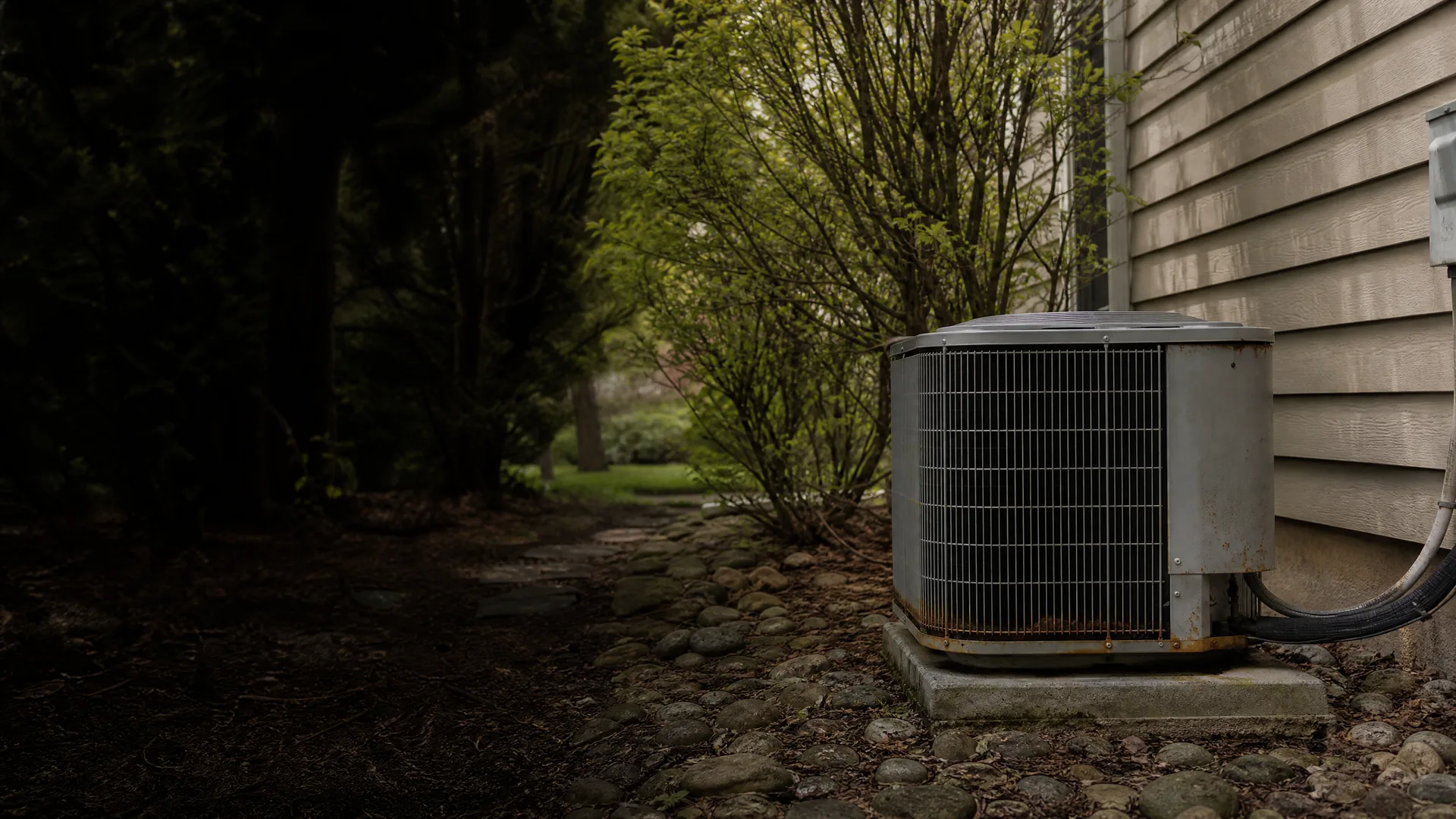
An outdoor air conditioning condenser unit on a concrete pad beside a house with horizontal lap siding, surrounded by rocks, shrubs and trees.

You go out to the side yard on a spring morning to turn on the unit before the heat sets in. The grass is still wet. Rust has crept along the base of the cabinet, flaking where the metal meets the ground, and one of the corners has started to soften. You crouch down and press the panel and it gives a little under your thumb. It starts up fine when you flip the breaker. The fan turns, the compressor kicks on. But you stand there a minute longer than you meant to, looking at that rust line, doing the math on how many more summers this one has in it before you're out here again some morning finding it didn't start at all.

How hard does a heat pump work in Birmingham?

  • Winter nights average 35°F

    Winter nights average 35°F, mild enough that a struggling heat pump can still limp through instead of failing outright.

  • Heat runs November through March

    Heat runs November through March, so a unit on its way out gets five straight months to show you what it can't do.

  • Cooling runs May through September

    Cooling runs May through September, the long stretch that puts the most hours and the most strain on the compressor each year.

NOAA nClimDiv 1991-2020

What's Actually Failing Inside the Unit

  • A heat pump that short cycles, shutting off a few minutes after starting, is usually losing refrigerant or struggling with a failing compressor.
  • Reversing valve failure means the unit gets stuck in one mode, heating when you need cooling or the other way around.
  • Defrost board problems in winter leave ice building up on the outdoor coil instead of melting off every so often.
  • A compressor pulling hard at startup draws a surge of power that shows up as a spike on your bill before the unit ever fails outright.
  • Outdoor coils caked with dirt or bent fins force the compressor to work harder to move the same amount of heat.
  • A unit that keeps running past when it should shut off is usually losing its charge slowly rather than all at once.

Most heat pump failures start as something smaller that gets worse. Short cycling, where the unit shuts off within minutes of starting, usually means the refrigerant charge is low or the compressor is struggling to keep up. Neither fixes itself. The compressor is the most expensive part in the cabinet, and once it starts pulling hard at startup, you'll see it before you hear it: a spike on your power bill from the surge it draws just to get going. A reversing valve stuck in one position will leave you with a unit that only heats, or only cools, no matter what the thermostat says, which matters here since the same system has to switch between carrying you through summer and keeping the house warm come winter. In the cold months, watch the outdoor coil. If a defrost board fails, ice builds up on that coil instead of melting off on schedule, and the unit loses its ability to pull heat from the air outside. Dirt caked on the coil or bent fins do something similar year round, forcing the compressor to push harder for the same result. And if the system runs longer than it used to before shutting off, that's often a slow refrigerant leak rather than a sudden failure. None of these show up all at once. They show up as small changes you can catch if you know where to look, which is the difference between a repair now and a replacement later.

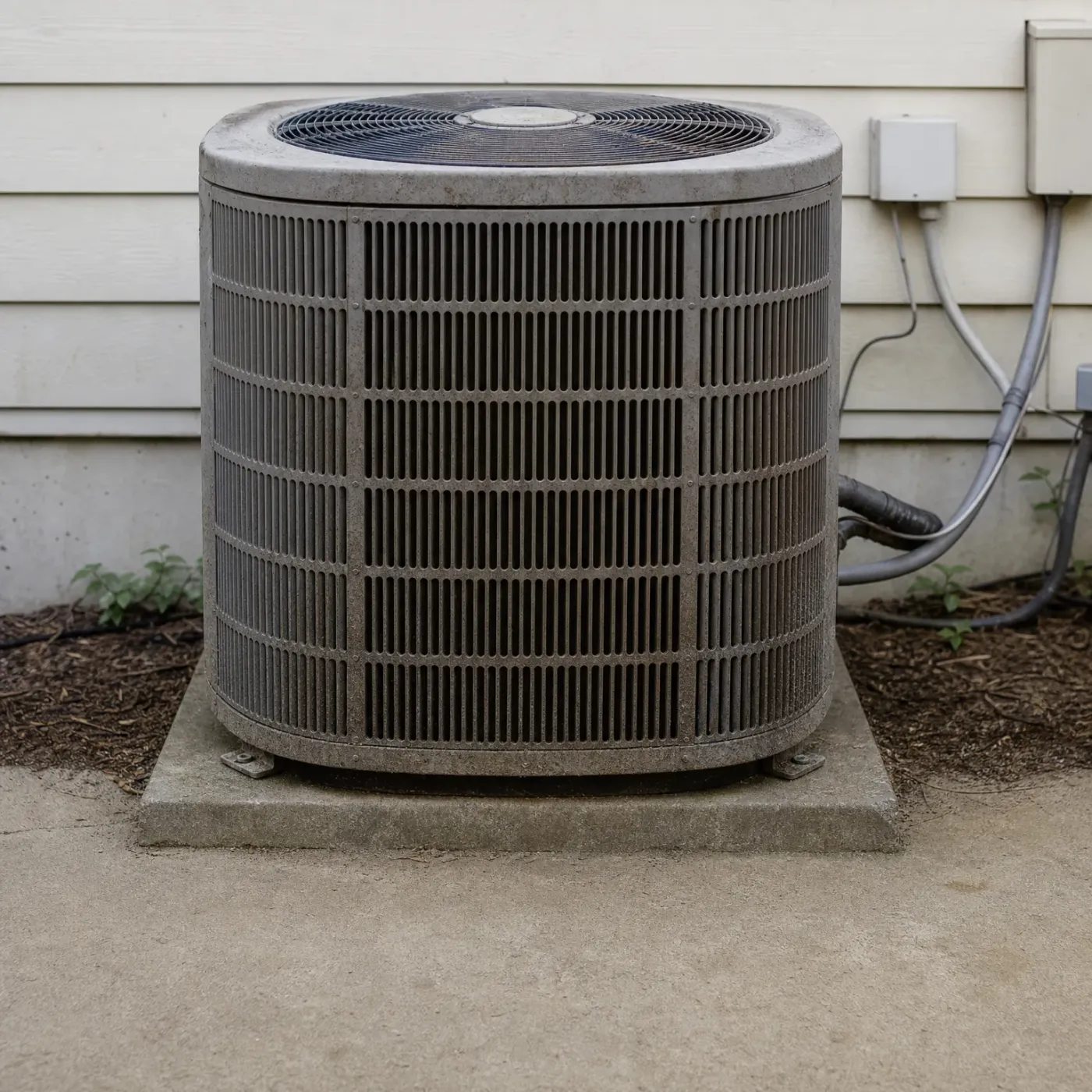
An outdoor air conditioner condenser unit on a concrete pad beside a house with horizontal siding, with conduit, cables and an electrical box on the wall and mulch beds at either side.
Before you get your heat pump installation
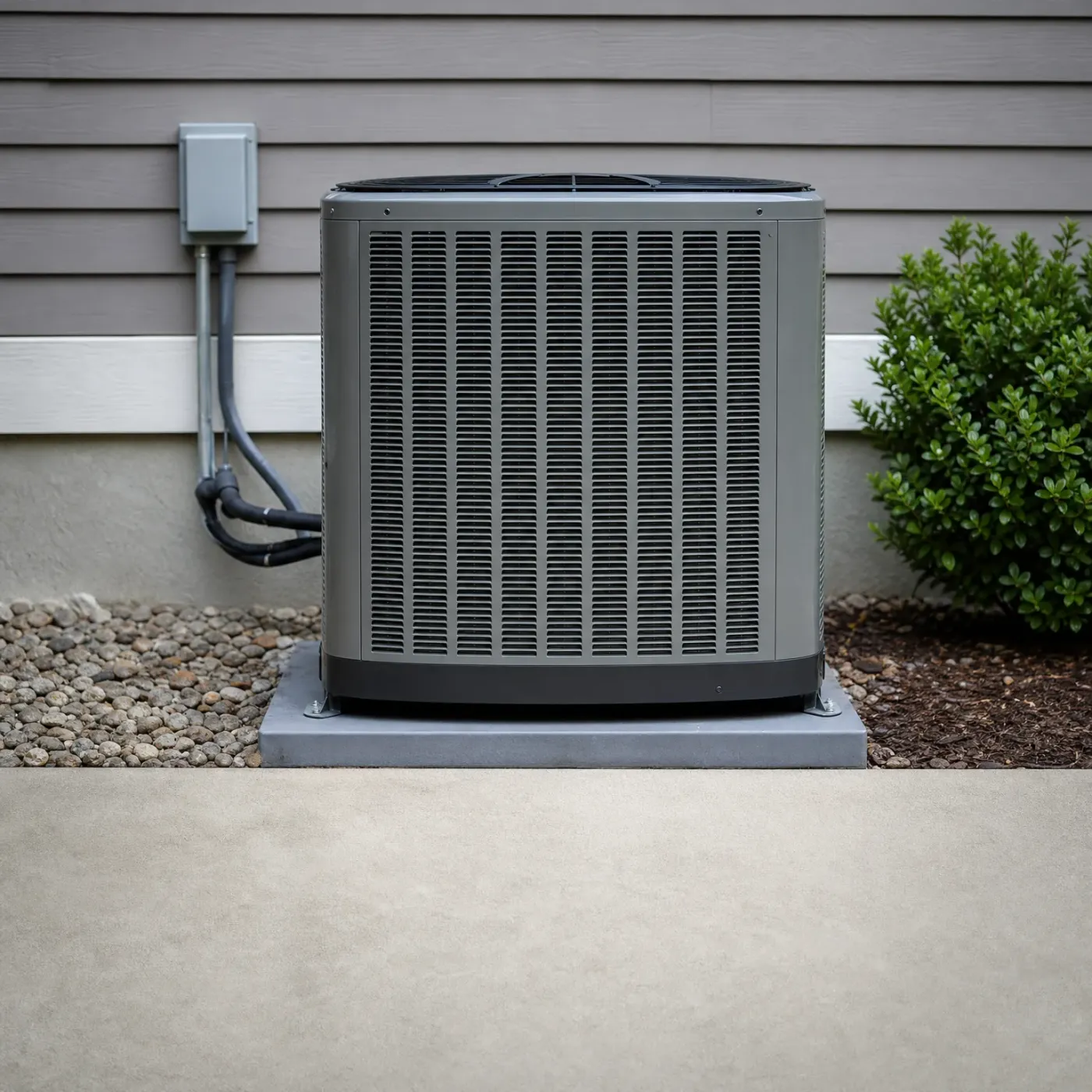
A gray outdoor condenser unit on a concrete pad beside a house with horizontal lap siding, with a metal disconnect box and refrigerant lines on the wall, river rock and mulch to the sides, and a green shrub at right.
After you get your heat pump installation

Get matched with a heat pump pro in Jefferson County

Describe your heat pump job once, to one pro.

Asking costs nothing, and the choice to hire stays yours.

Why it runs year round here

A heat pump has no separate furnace to take over in winter. The same outdoor unit that cools your house in July is what heats it in January, so it never gets an off season to coast through. In most of the country a furnace shoulders the cold months and gives the compressor a rest. Here, with winter lows averaging in the mid 30s, the outdoor unit keeps cycling on through the night, all winter, same as it does in August.


What that does to the parts

Running both sides of the year means the compressor, the reversing valve, and the outdoor fan motor log more hours than they would in a split system. More hours means the wear that ends a compressor's life or sticks a reversing valve shows up sooner, not later. A unit rated for fifteen years elsewhere may not get there in Jefferson County, because it never truly shuts down for a season. That is worth knowing when you are deciding whether a repair is worth it or whether the unit is closer to the end than its age alone suggests.

A woman in a cream knit sweater sits in an armchair indoors, eyes closed and smiling, beside a window showing yellow and orange autumn foliage, with a mug on a wooden side table and shelves holding vases behind her.
A gray-haired man in a blue quarter-zip sweater sits in an armchair with his eyes closed, beside a large window with bare trees outside and a potted plant and lamp nearby.

Repair the unit you have

A heat pump that is still cooling in summer and holding heat in winter can often be fixed instead of replaced. A new capacitor, a recharge of refrigerant, a new contactor, these are the kind of repairs that buy years back from a unit that is otherwise sound. The cabinet is solid, the compressor still starts, and the coil is clean enough to transfer heat the way it should. Repairing makes sense when the problem is one part failing, not the whole system wearing out together. It costs less up front, and if the unit is under ten years old it is usually the right call. The tradeoff is that you are still running the same compressor and the same coil, and the next failure could be something else.

Replace before it fails for good

A heat pump that breaks down more than once a season, or that has started costing more to run than it used to, is telling you the repairs are no longer the cheaper path. Rust through the cabinet, a compressor that struggles to start, a coil caked with years of buildup, these point to a system wearing out as a whole rather than one part giving up. Replacing it means a unit sized and matched for how hard Jefferson County runs a heat pump, cooling through the long muggy summer and carrying the mild winter too. It costs more at the start than a single repair does. What you get instead is a system built for the next stretch of years, not a patch on the last one.

Power here costs 17.78 cents per kilowatt-hour

At 17.78 cents a kilowatt-hour, a heat pump running flat out in July or straining on a cold January night shows up fast on your bill. An aging unit pulling more power each month to do the same job costs you more every billing cycle it stays in service.

EIA-861 2025

A heat pump nearing the end of its life can still run, but it runs scared: short cycling, tripping its breaker, freezing up on a mild January night when it has no business freezing at all.

A heat pump past replacing doesn't announce it. It just costs more every month to do less, until the morning it doesn't start and you're calling around for someone who can look at it today.

A woman with long gray hair wrapped in a checked blanket sits on a sofa by a window with yellow autumn foliage outside, with a lamp, framed picture and plant in the background.
An older woman in a cream knit sweater sits on a sofa by a window, looking out at sunlit trees with yellow and orange autumn leaves, with a bookshelf and lamp behind her.
A woman with gray shoulder-length hair in a dark knit sweater sits on a cushioned seat by a window, looking out at yellow autumn foliage, with a living room, armchair, houseplant and framed picture behind her.
An older woman with gray hair in a bun, wearing a cream knit sweater, sits on a sofa with a gray blanket and looks out a large window toward yellow-green autumn trees, with a lit table lamp and dark armchair behind her.

Before

You're the one checking the breaker, calling around for quotes, and explaining the same rust and rattle to every contractor who picks up.

Skip the calls

After

You're matched with a contractor who knows Birmingham heat pumps and reaches out to you. No more sorting through quotes on your own.

Skip the calls

A heat pump in Birmingham either holds up through the next muggy summer and mild winter or it doesn't, and by now you have a sense of which one yours is. Rust at the base, short cycling, a breaker that trips for no clear reason, a power bill that climbs while the house stays the same temperature: those are the signs, and they don't reverse on their own. Some of what's wrong can be repaired. Past a certain point, replacing it is what actually saves you money and keeps you from losing heat or cooling on the one week you can't afford to. You don't have to work out which side of that line you're on by yourself, and you don't have to spend an afternoon on the phone finding out, calling around, explaining the rust and the noise to one contractor after another, and sorting through quotes to see who actually knows this unit. Get matched with a contractor who works on Birmingham heat pumps, and let them tell you, from what they see in your side yard, whether yours is worth fixing or worth replacing.

A modern two-story house with dark siding and stone base at dusk, with lit soffit lights, a path of large rectangular pavers set in dark gravel, planting beds, a lawn, and an orange and blue sunset sky above distant trees and water.

Heat Pump Installation

The right pro for this job

Step 1 of 3: Equipment
  • A brown leather and wood armchair with a cream knit throw sits in a corner beside a woven basket holding a dark cushion, under a framed mountain photograph, with a wood-trimmed window showing yellow and green foliage.
    • Get matched with a pro who works on heat pumps in Jefferson County.
    • A local installer who puts in heat pumps gets your project.
  • A dark wood dresser against a pale wall holds a ceramic vase of eucalyptus branches, a stack of books with a wooden bowl, and a woven basket, with a framed landscape painting above and a woven basket holding a knit blanket on the floor beside a window.
    • Send the form and stop researching installers for the new heat pump.
    • One request ends the search for a heat pump installer.
  • A window seat with beige linen and brown textured cushions, a chunky knit blanket, and an open book, beside a window showing blurred yellow autumn foliage.
    • Explain the job once and skip repeating it on every call.
    • Skip searching for a heat pump pro and answer a few questions instead.
  • A cream upholstered armchair with a rust-colored pillow and knit fringed throw sits beside a window with a ceramic vase of orange-leafed branches on the sill, overlooking autumn trees and leaf-covered ground.
    • A licensed pro who works in Jefferson County gets your request.
    • A licensed installer who works in Jefferson County gets your project.