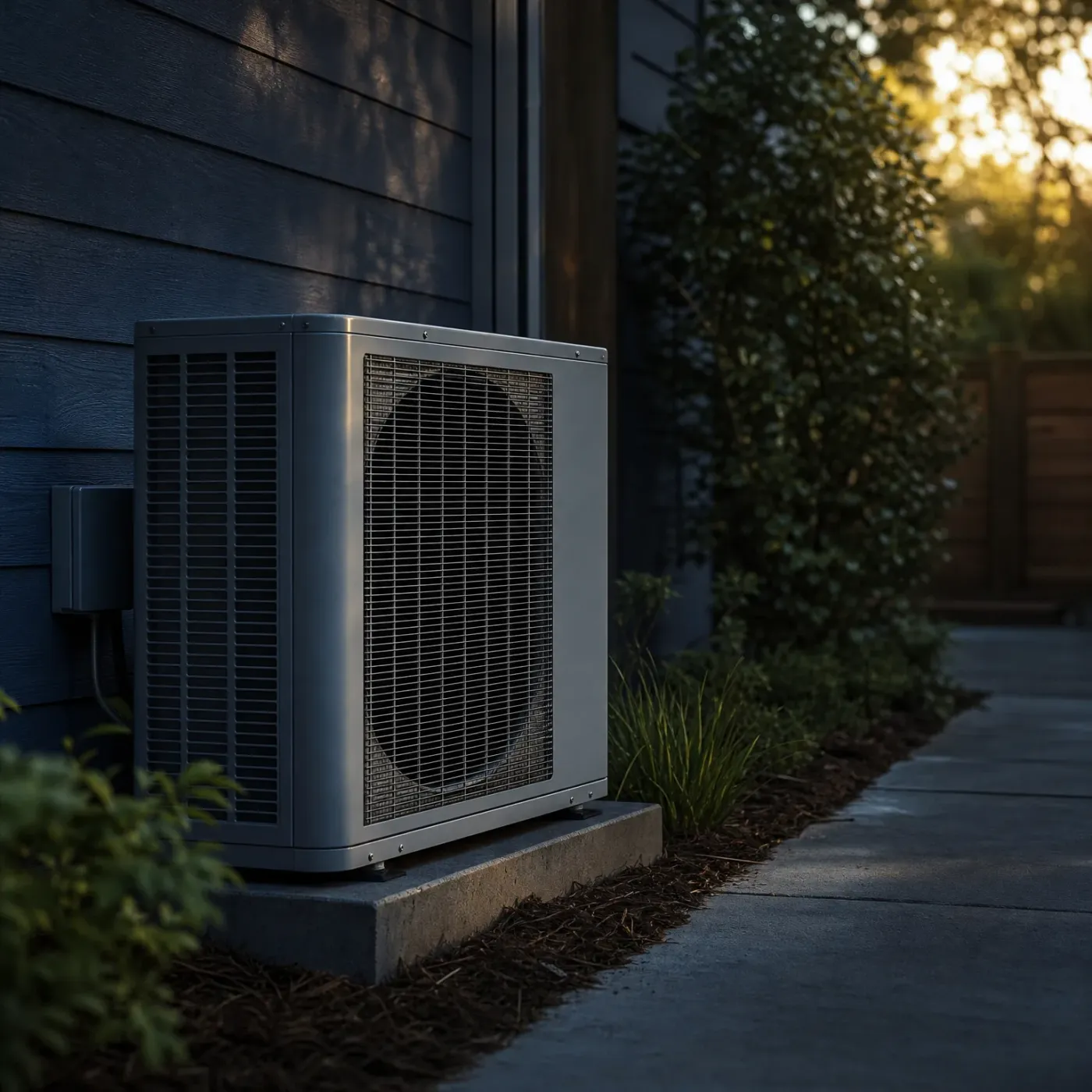





A gray outdoor heat pump unit on a concrete pad beside a dark horizontal-siding wall, with a small electrical box on the wall, shrubs and a concrete walkway to the right at dusk.

Hand off the search today

What emergency heat means on an Alabama heat pump

Your heat pump's thermostat has an "emergency heat" setting, and it came on, or you're wondering when to use it. It usually means the outdoor unit has stopped pulling heat from the air and the backup electric heat is running instead. That's worth sorting out quickly in an Alabama winter. This page walks through what's likely going on and gets you to someone who can look at it.

I'm done searching

Emergency heat means your heat pump has stopped pulling heat from the outside air, and the system has switched to its backup electric heat strips to keep the house warm. On the thermostat, you either see "EM HEAT" lit up on its own, or you've switched it there yourself because the outdoor unit isn't running right. The backup strips work, but they heat by brute force, like a space heater, instead of moving heat the way the heat pump normally does. That costs more to run, and with power priced the way it is in Alabama, you'll feel it on the next bill if it stays on for more than a day. A heat pump that's working right almost never needs you to force emergency heat yourself. If yours is stuck there, something outside, often the outdoor fan, a frozen coil, or a refrigerant problem, is stopping it from doing its job, and that's worth getting looked at before the strips carry the whole house through a cold snap.

A smiling man in a dark blue T-shirt sits on a light gray sofa in a living room with a wooden shelf and window behind him, with a laptop edge visible in the foreground.
A bearded man in a plaid flannel shirt stands indoors looking out a frost-covered window, with a steaming dark blue mug on the wooden sill and snow-covered trees outside.

Your heat pump runs on two sources. The outdoor unit pulls heat from the air using a reversing valve and an outdoor coil, and that's the main source, even in cold weather. Electric strips inside the air handler are the backup. They heat like a toaster, with no outside moving parts, so they still work when the outdoor unit can't. That outdoor unit is where things go wrong. Ice can build on the coil, the compressor can fail to start, or the outdoor fan can stop spinning. Any of those and the system falls back to the strips to keep the house warm. You'll see the strips kick in on their own sometimes too, for a few minutes during a defrost cycle. That's normal and not a reason to switch to EM HEAT. The EM HEAT switch on your thermostat does something different. It bypasses the outdoor unit on purpose and runs the strips alone, which is what you'd use if you already know the outdoor unit is down and don't want the system trying to use it.

How emergency heat actually works

  • Your heat pump has two heat sources: the outdoor unit moving heat from the air, and electric strips inside the air handler as backup.
  • A reversing valve and outdoor coil do the work of pulling heat from outside air, even when it's cold, and that fails before the strips ever kick in.
  • The thermostat has an EM HEAT switch that bypasses the outdoor unit entirely and runs the strips alone, which is what you turn on by hand.
  • A defrost cycle will sometimes bring on the strips for a few minutes on its own, and that's normal, not a sign you need EM HEAT.
  • If the outdoor unit is iced over, the compressor won't start, or the fan outside isn't spinning, the system falls back to strip heat to keep the house warm.
  • Electric strips heat like a toaster, with no moving parts outside to fail, which is why they still work when the heat pump itself can't.
A smiling man in a gray long-sleeved shirt stands in a kitchen looking to the side, with open shelves of dishes, a white mug on the counter, a potted plant, and a view through a doorway into a living room.
A smiling bearded man in a green sweater sits at a white marble kitchen island with a mug, potted plant and bowl of fruit, in a bright white interior with open shelving and an arched doorway.
A smiling man with dark curly hair and a beard, wearing a dark green knit sweater, stands at a white marble kitchen counter with a dark blue mug, with open shelving, pendant lights and a houseplant behind him.
A smiling man in a green ribbed sweater stands behind a wooden table holding a ceramic mug of coffee in a kitchen with white subway tile, shelves of potted plants, and a bowl of fruit.

Emergency heat runs every strip in the air handler at once, the same heat a 100-amp electric furnace would use, just to warm the house.

That's why the bill jumps fast when it runs for more than a day. Alabama power rates make backup heat the most expensive way to stay warm in the house.

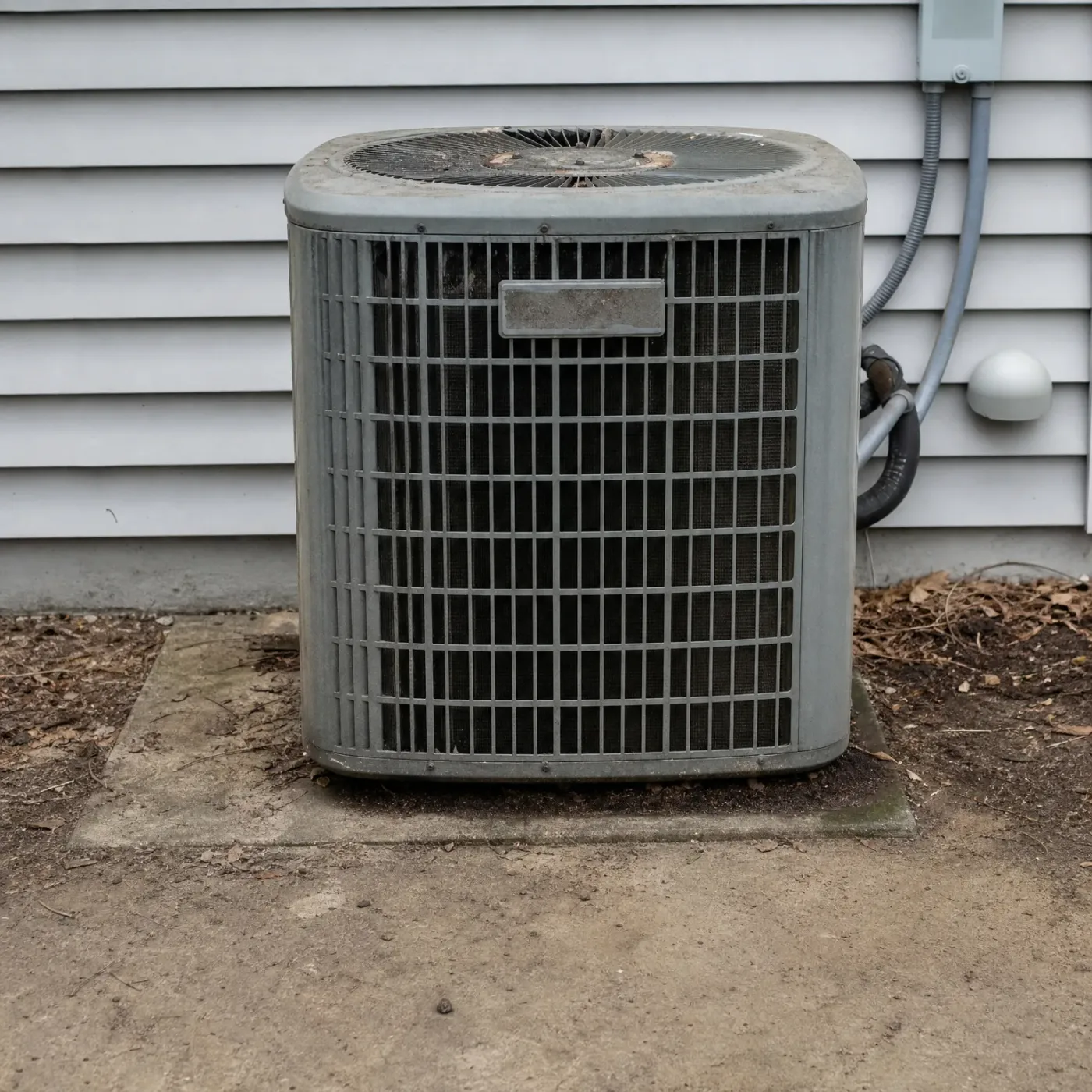
A weathered gray outdoor condenser unit on a concrete pad beside a house with horizontal vinyl siding, with conduit, refrigerant lines, and an electrical disconnect box on the wall behind it.
Before you get your heat pump repair
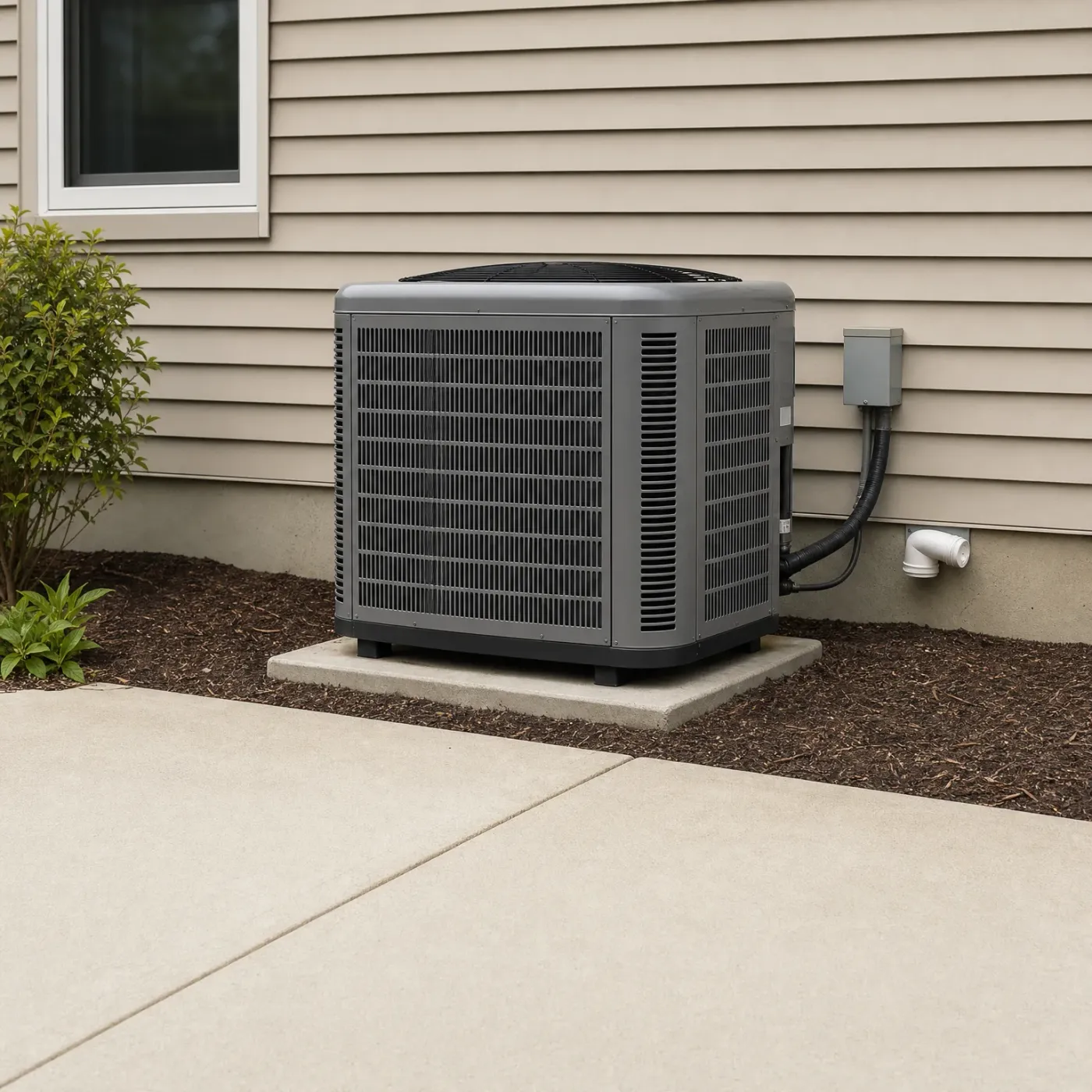
A gray outdoor condenser unit on a concrete pad beside a beige vinyl-sided house, with a wall-mounted disconnect box, flexible conduit, mulch bed, shrubs and a concrete walkway in front.
After you get your heat pump repair

Hand off the heat pump problem

A heat pump that's stuck on emergency heat in January isn't going to fix itself, and every day it runs that way costs you more on the power bill than the repair will. Most of the time the problem is in the outdoor unit, a reversing valve stuck in the wrong position, a compressor that won't start, a frozen coil that never defrosted. That's work for someone who services heat pumps all year here, not just when it's cold, and knows these failures because they see them every Alabama winter. Send the request and it goes to one contractor, licensed and local, not a batch of strangers calling you back one after another. You stop tracking down who's available and who isn't. The strips in your air handler will keep the house warm in the meantime, but they're not meant to carry the whole load for long, and the sooner the outdoor unit is back doing its job, the sooner your bill stops climbing.

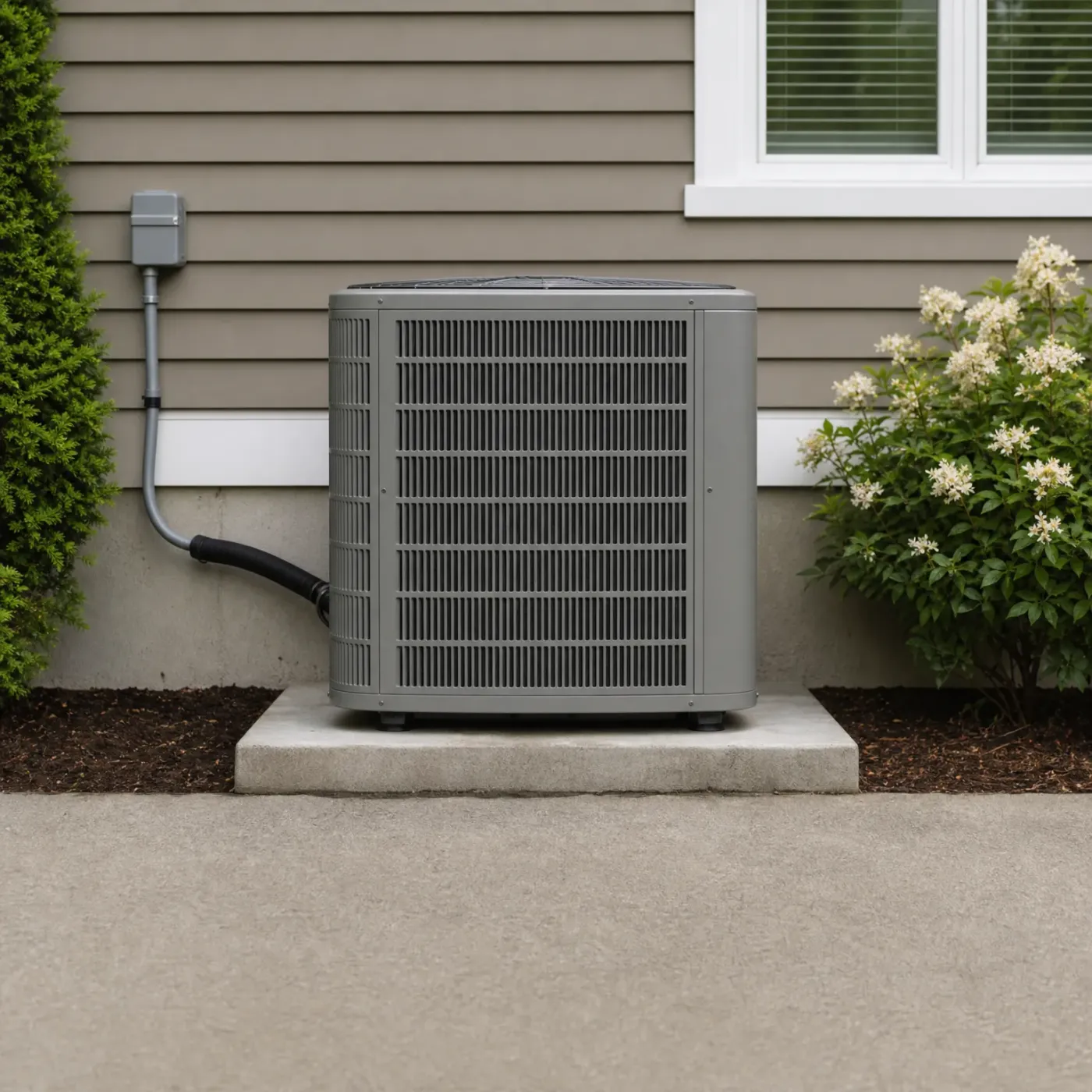
A gray outdoor condenser unit on a concrete pad beside a house with horizontal lap siding, a conduit and disconnect box on the wall, a shrub with white flowers at right and evergreen foliage at left.

Heat pump running normally

The outdoor unit sits there quiet, coil fins clean, running on its own to heat the house. No strips, no jump in the power bill. This is what it looks like when the reversing valve and outdoor coil are doing their job pulling heat from the air outside.
An outdoor air conditioning condenser unit with a top fan grille sits on a concrete pad beside a house with horizontal siding and a concrete step.

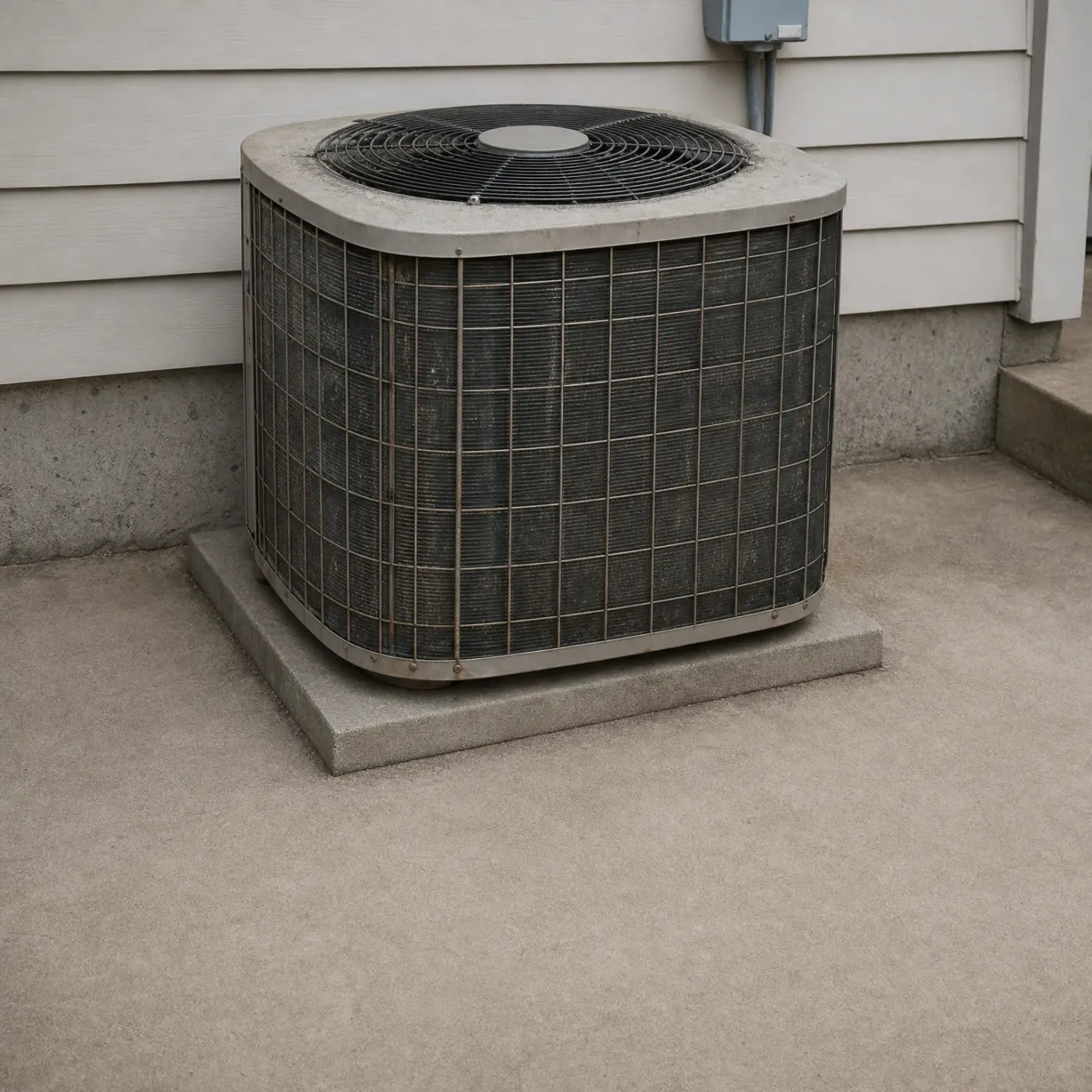
Heat pump stuck on backup heat

Dirt and debris packed into the coil fins can keep the outdoor unit from pulling heat the way it should, and that's one way you end up on emergency heat. The thermostat shows EM HEAT, the strips carry the load, and the bill climbs for as long as it stays that way.

Power costs 16.09 cents per kilowatt-hour statewide

At 16.09 cents a kilowatt-hour, running on strips alone costs real money fast. A heat pump moves heat for a fraction of that price, so every day it sits stuck on emergency heat instead of pulling from the outdoor unit, you're paying the higher rate on the whole house.

EIA-861 2025 statewide residential average

Emergency heat, settled and sorted

  • Emergency heat on your thermostat means the outdoor unit stopped pulling heat from the air and the electric strips took over.
  • A stuck reversing valve, a frozen or failed outdoor coil, or a tripped breaker on the outdoor unit usually causes it.
  • The longer it runs on strips alone, the more it shows up on your power bill at Alabama's rates.
  • A licensed local contractor who works on heat pumps all winter can check the outdoor unit and reversing valve and get the system pulling heat from the air again.
  • Sending one request means one contractor familiar with this equipment follows up, not a string of calls from several companies.
  • Once you send the request, finding someone to look at the outdoor unit is off your plate.

Emergency heat tells you one thing: the outdoor unit quit pulling heat from the air, and the electric strips picked up the job. That's not a setting to leave running. A stuck reversing valve, a frozen or failed outdoor coil, or a tripped breaker outside are the usual reasons it switched over, and none of them clear up on their own. Every day it stays on strips is a day you're paying Alabama's electric rates for heat you'd normally get for less, straight from the outdoor unit.

Getting the outdoor unit looked at is what gets you off emergency heat and back to normal. A contractor who works on heat pumps all winter has seen this before. They know a stuck reversing valve when they find one, they know what a frozen coil looks like versus one that's actually failed, and they know to check the breaker before anything else. That's the kind of familiarity that gets a heat pump back to pulling heat from the outside air instead of leaning on the strips.

Send one request and one licensed local contractor follows up. Not three companies calling within the hour, not a list to sort through. Just someone local who handles this equipment regularly, looking at your outdoor unit. Once that request is sent, the job of finding someone is off your plate. You've already done the part that matters: you know what emergency heat means, and you know it's worth fixing rather than living with.

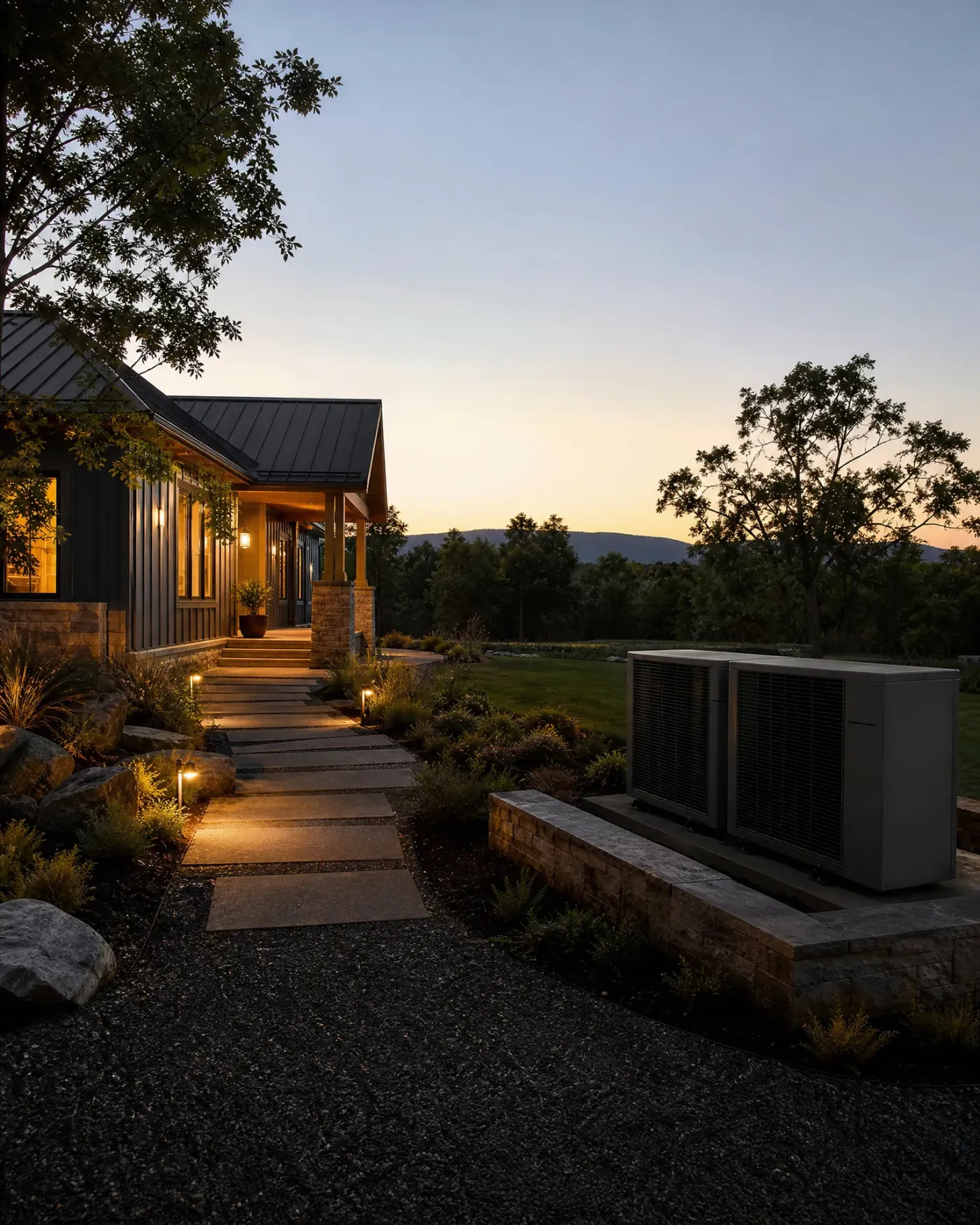
At dusk, a dark board-and-batten house with a standing-seam metal roof and lit entry walkway of stone pavers, with two large outdoor heat pump units on a stone-walled pad at right and trees and hills in the background.

Heat Pump Repair

Let someone else find the pro

Step 1 of 3: Equipment
  • A ceramic vase holding leafy green branches and a shallow wooden bowl sit on a wooden window ledge beside a sunlit window, with a cream upholstered chair and knit throw in the foreground.
    • Tell a local repair pro what your heat pump is doing.
    • Describe your heat pump job, and a local pro who handles it gets in touch.
  • Sunlit living room corner with a beige upholstered sofa, a round wooden side table holding a ceramic vase of olive branches, linen curtains at a window, a floor vent in the baseboard, and a woven jute rug on hardwood flooring.
    • Get the heat pump repair search off your mind today.
    • Once you send the form, finding a pro is off your list.
  • A wooden side table with a single drawer holds a shallow carved wood bowl and a white ceramic vase of green eucalyptus stems, beside a window and an upholstered chair draped with a cream knit throw.
    • Describe what your heat pump is doing once, in one form.
    • Answer a few questions instead of calling shop after shop.
  • Corner of a house with horizontal siding, a white-framed window and stone veneer base, beside a covered entry with wooden steps, a potted plant, mulched beds of green shrubs and a flagstone path.
    • Only one pro gets your request, so you hear from one company.
    • Your request stays with one local pro.