



Heat Pump Alabama

What a heat pump tune-up covers in Alabama

Send the form and the heat pump tune-up stops being something to remember.

Hand it off

A heat pump tune-up covers the things that keep it moving warm or cool air efficiently in both directions, since your unit works year round in Alabama. A technician checks refrigerant charge, cleans the outdoor coil, tests the reversing valve that switches between heating and cooling, and checks the defrost cycle that clears ice off the outdoor unit on cold mornings. They also check electrical connections, the thermostat's communication with the system, and airflow through the indoor coil and ducts. Since most homes here heat with electricity and power costs add up fast, a unit that has to work harder because of a dirty coil or low refrigerant shows up on your bill before it shows up as a breakdown. Catching a worn part or a weak connection in a tune-up means it gets fixed on a schedule you choose, not on the coldest night of the year when the system just stops.

  1. Technician checks the thermostat calls for heat and cool correctly

  2. Refrigerant charge gets measured against what the system needs

  3. Outdoor coil gets cleaned so it can release and absorb heat

  4. Reversing valve gets tested switching between heating and cooling modes

A closed silver laptop and a glazed ceramic mug on a wooden table, with a blurred kitchen counter, potted plant, cutting board and window in the background.

What a skipped tune-up costs you in your own house

A heat pump that's low on charge or running a dirty coil works harder to hold the house at the same temperature. In Alabama, where most homes run on electric heat, that shows up on the power bill before it shows up as a breakdown. The reversing valve is the part that lets one machine heat you in January and cool you in July, and if it's sticking, you might notice the system blowing cool air when you called for heat, or just running longer than it used to.

Finding someone qualified to look at a heat pump, as opposed to a standard AC unit, usually means a few calls before you reach someone who services both sides of it. Send the form once and that search is done. No sorting through quotes, no repeating the same explanation to three different companies. Someone who works on heat pumps gets matched to your house.

Interior corner of a dining room with a round wooden table, a ceramic vase holding olive branches, a dark spindle-back chair near a curtained window, and a sideboard with a lamp against beige walls.
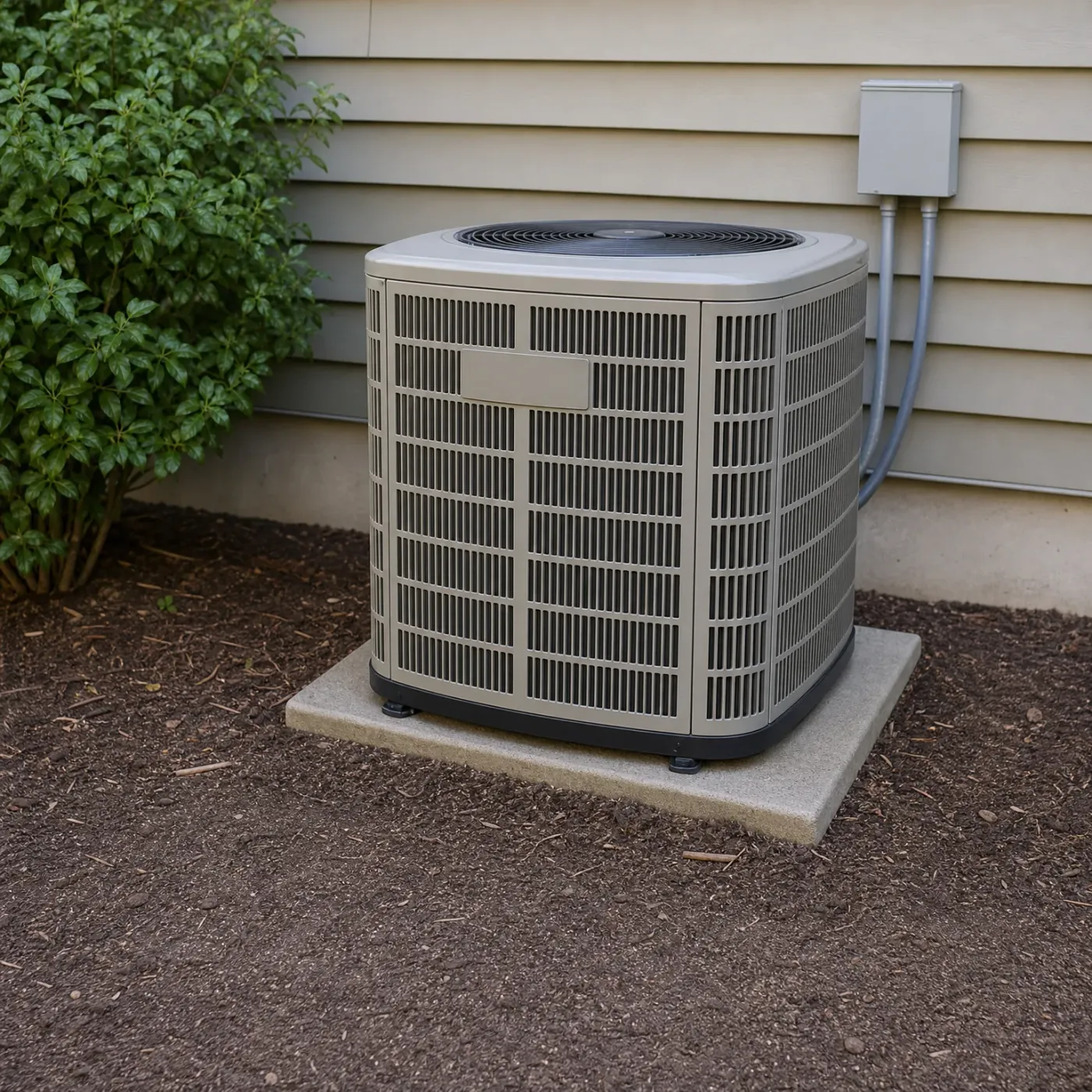
A beige outdoor air conditioning condenser unit on a concrete pad beside a house with horizontal vinyl siding, with refrigerant lines and a disconnect box on the wall, surrounded by dark mulch and a green shrub at left.

Running the way it should

This is a heat pump holding its charge and cycling the way it was built to. The pad is clear, the conduit to the disconnect is intact, and the coil behind it stays clean enough to release heat in summer and pull it in come winter. A unit kept up like this just runs.
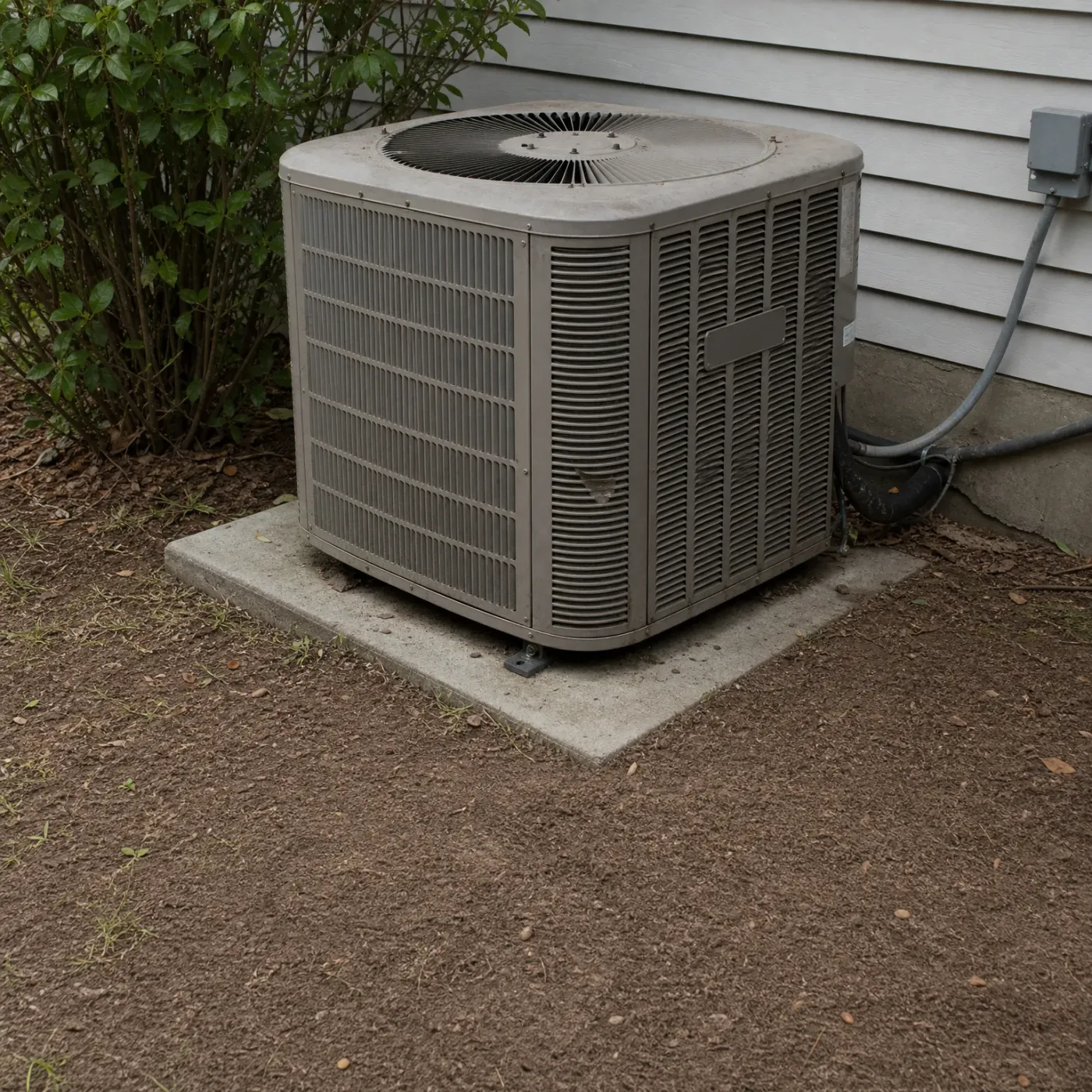
An outdoor air conditioner condenser unit on a concrete pad beside a house with horizontal lap siding, with a shrub to the left, bare dirt in front, and conduit and a metal disconnect box on the wall.

Running into trouble

Nothing here looks wrong from the outside, and that's the problem. A reversing valve stuck mid-switch or a coil caked with pollen won't show on the cabinet. It shows in a house that won't quite cool, or a bill that climbed with no change in the weather.

What does the technician actually check on the reversing valve?

You've heard the reversing valve is what lets a heat pump switch between heating and cooling, and the steps above mention it gets tested. That's not much to go on when you're trying to picture what actually happens during the visit, or why it matters for a system that has to run both ways all year in Alabama.

The technician switches it both directions and checks it holds

The reversing valve has a coil on top that gets energized to shift a slide inside, sending refrigerant one way for heat and the other for cooling. A technician forces that switch with the thermostat, then checks that the valve actually moves and seats fully in each position. A valve that's stuck or slow to shift can leave the system blowing cool air when it should be heating, or running backward for a few minutes before it corrects itself. That's the kind of failure you'd notice on a cold morning here, not in July. Checking it now, before winter, catches a weak valve while it still switches, instead of after it stops switching at all.

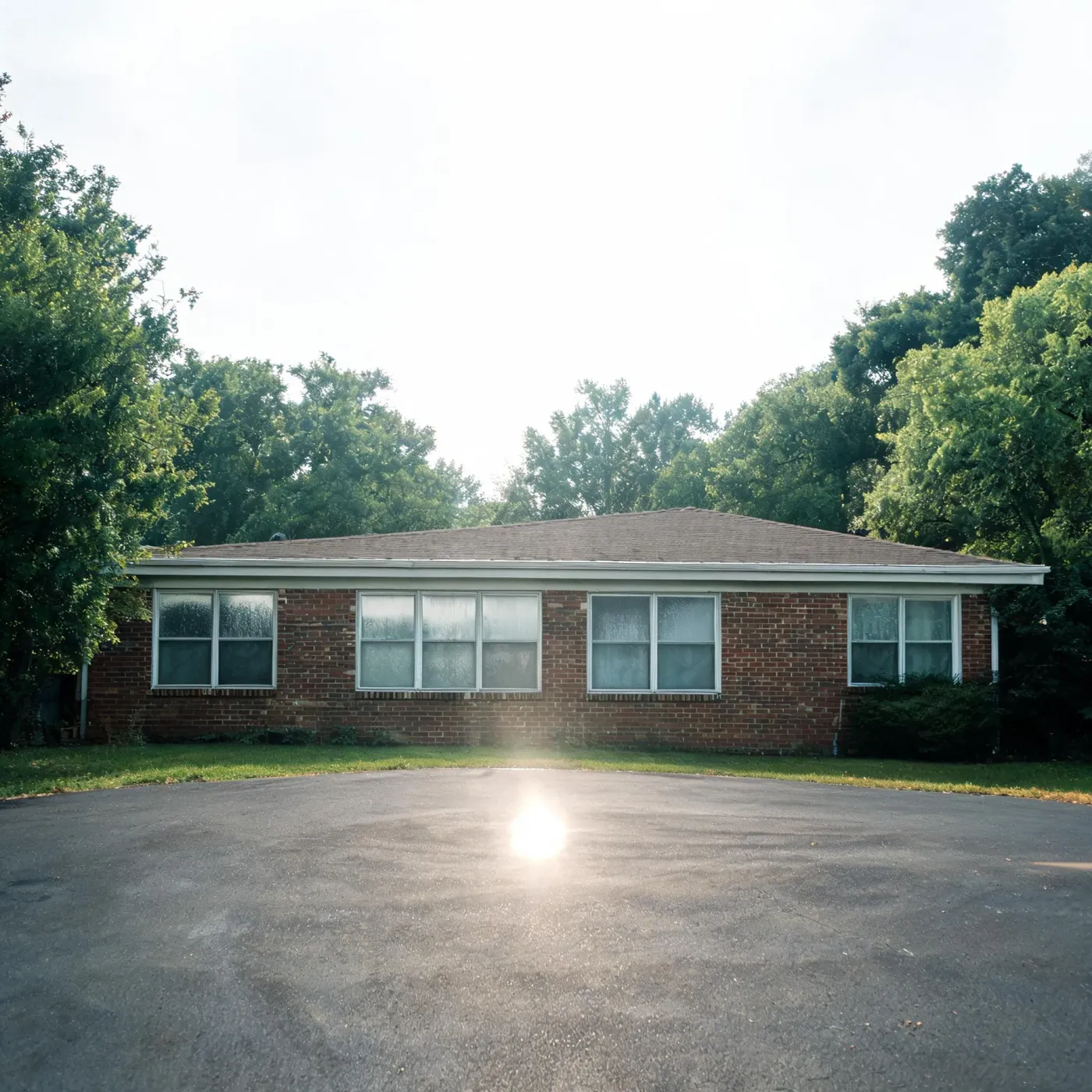
A single-story red brick building with a hipped shingle roof and several white-framed windows, fronted by a large empty asphalt lot with sun flare, surrounded by green trees under a bright hazy sky.

A summer dew point averaging 69°F across Alabama, per NOAA climate data, is the kind of heavy, sticky air that makes your heat pump work on two fronts at once: pulling heat out of the house and wringing the moisture out of it. A dirty coil or a low charge makes that second job harder, and you feel it as a house that stays clammy even when the thermostat says it hit the set temperature. That's the air a tune-up is checked against here, not some drier climate's average. Send the form and the search for someone qualified to check it is done. No calling around, no repeating the same story to three different contractors.

NASA POWER T2MDEW county cells weighted by homes

One request and it's handed off

Fill out one form instead of calling around for a heat pump tune-up.

Sending the form costs nothing.

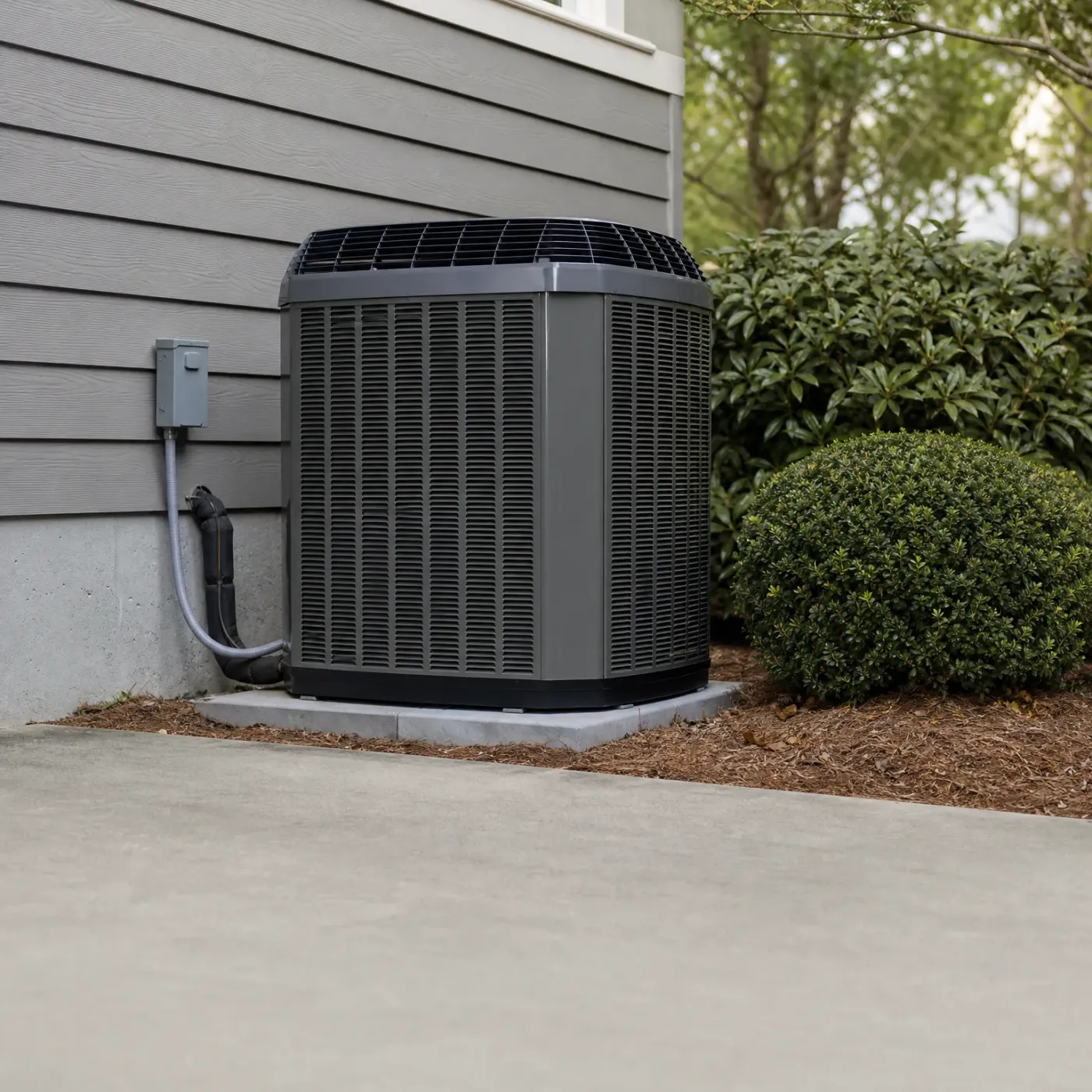
An outdoor condenser unit on a concrete pad beside a gray lap-sided house, with an electrical disconnect box and conduit on the wall and shrubs with mulch to the right.

Maintained unit

This is a heat pump that's been looked after. The pad is clean, the conduit to the disconnect is secure, and the lines running to the house are intact. A unit like this moves heat both directions without fighting itself to do it.

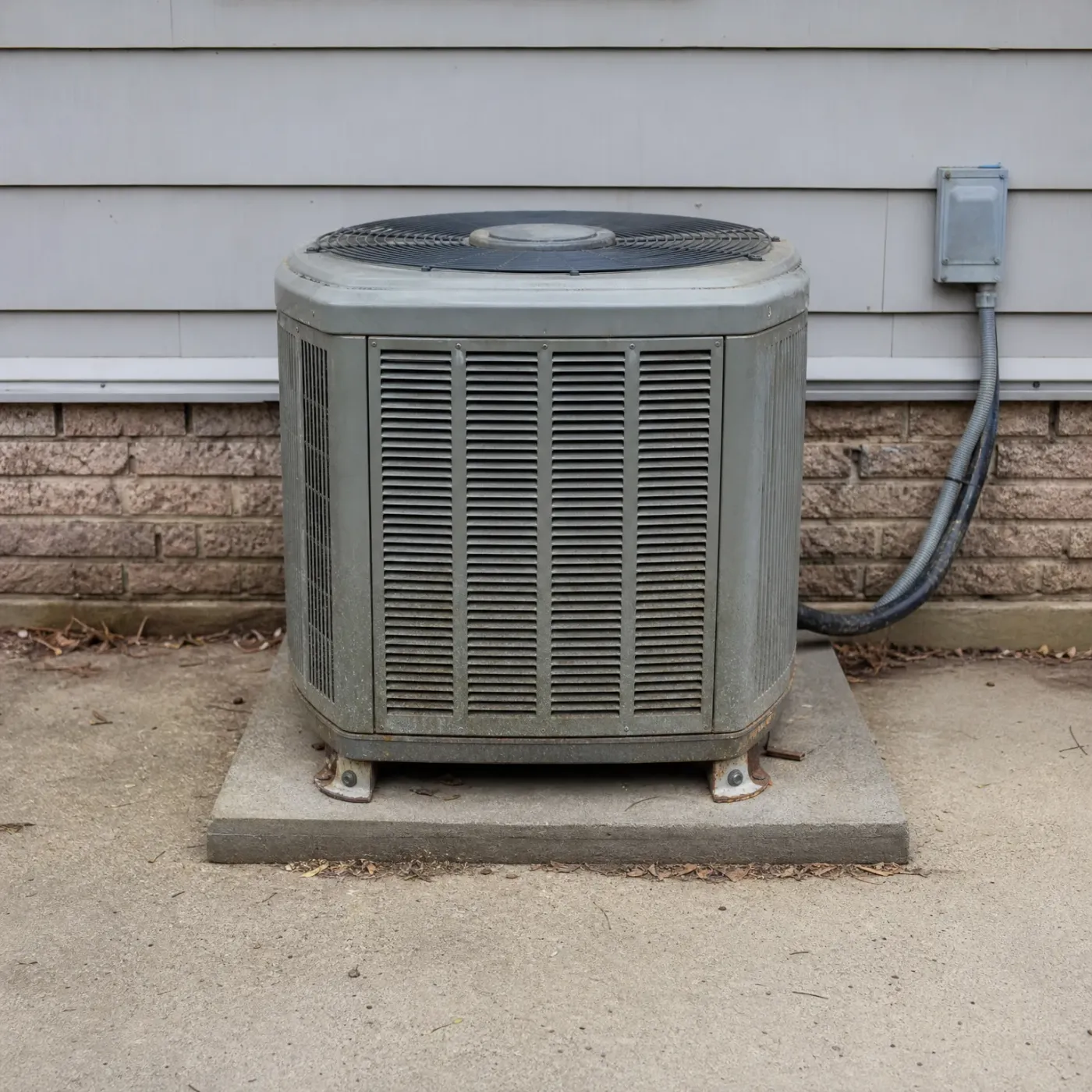
An outdoor air conditioning condenser unit on a concrete pad beside a house with horizontal siding above a brick foundation, with a flexible conduit running to a wall-mounted disconnect box.

Neglected unit

Dust has built up across the cabinet and the louvers are caked with it. Airflow through a unit like this is restricted on both the intake and the exhaust side, so it works harder to move the same amount of heat, winter or summer.

Tune-Up Done vs. Tune-Up Skipped

Tune-up done

  • Refrigerant charge matches what the system needs, so the compressor isn't pulling harder than it has to.
  • The outdoor coil is clean, which means it releases heat in summer and pulls it in come winter without extra strain.
  • The reversing valve switches cleanly between heating and cooling, so the system responds when the thermostat calls for either.
  • Electrical connections at the disconnect and conduit are checked, cutting down the odds of a failure on the hottest or coldest day.
  • The thermostat is calling for heat and cool correctly, so the unit isn't running longer than the house actually needs.

Tune-up skipped

  • A low charge or dirty coil makes the system work harder to hold the house at the same temperature, and that shows up on the power bill.
  • A reversing valve that's never tested can stick, leaving the house stuck in one mode when the season turns.
  • Loose or corroded connections at the disconnect go unnoticed until the unit trips or won't start at all.
  • A thermostat that's miscalling cycles keeps the unit running past what the house actually needs, all year, in both directions.
  • Small issues like these tend to surface first in Alabama's muggy summers or during the stretch of electric heat in winter, when the system is already working hardest.
A man in a navy sweater reclines with closed eyes in a beige armchair in a living room, with a lamp, wooden cabinet, bookshelf, potted plant, and a side table holding a newspaper and mug nearby.
A man in a blue henley shirt reclines on a leather chair with his eyes closed, beside a window, a houseplant, a side table with a newspaper and a dark mug.
A man in a gray sweatshirt reclines with his eyes closed in a dark leather chair, with a bookshelf behind him and a side table holding folded newspapers, a mug, and a potted plant by a window.
A man in a blue sweater leans back on a brown leather chair with his eyes closed and a slight smile, in a room with bookshelves, framed pictures, a potted plant by a window, a folded newspaper and a dark mug on a table.

Power costs 16.09 cents per kilowatt-hour statewide

At 16.09 cents per kilowatt-hour, every bit of strain on your heat pump shows up on the bill fast, since most Alabama homes heat with electricity. A unit that's low on charge or fighting a dirty coil pulls more power to do the same job, month after month.

EIA-861 2025 statewide residential average

What the tune-up comes down to

  • A heat pump tune-up checks refrigerant charge, the outdoor coil, the reversing valve, and the thermostat calls.
  • Each of those parts affects how hard the unit works to move heat in both directions, all year.
  • A unit running low on charge or fighting a dirty coil pulls more power to hold the same temperature.
  • That extra draw shows up on the bill, since most homes in Alabama heat with electricity.
  • Skipping the check doesn't break the unit outright, it just lets small problems cost more every month they go unfixed.
  • A technician who runs through all of it leaves you with a system that's actually been verified, not just assumed fine.

A heat pump tune-up in Alabama comes down to four things: the charge, the outdoor coil, the reversing valve, and the thermostat calls. Each one has a direct say in how hard the unit works to move heat into the house in winter and out of it in summer. A technician checks the refrigerant charge against what the system needs, because a unit running low has to work harder to hold the same temperature. The outdoor coil gets cleaned so it can release heat in summer and pull it in come winter without fighting itself. The reversing valve gets tested switching between the two, since that's the part that lets one unit do both jobs. The thermostat gets checked to make sure it's calling for heat and cool correctly, not asking the unit to do more than the house needs.

None of this breaks down all at once. A unit low on charge or running a dirty coil keeps working, just harder, and that extra draw shows up on the power bill month after month, since most homes here heat with electricity and power isn't cheap. A tune-up doesn't wait for something to fail. It catches the part that's already costing you before it costs more. What you get at the end is a system that's been checked, not one you're hoping is fine because it hasn't quit yet.

A gray-haired man with a beard in a blue button-placket shirt reclines on a couch with his eyes closed, beside a sunlit window with a green plant.
A woman in a cream knit sweater sits in an armchair with her eyes closed near a window showing yellow autumn foliage, with a mug on a round wooden side table beside her.

Heat Pump Maintenance

Done looking for a heat pump pro

Skip calling around to set up a heat pump tune-up.

A black-framed smartphone standing upright against a plain light gray background, its screen filled with solid green.
Step 1 of 3: Equipment