


Heat Pump Alabama

Heat pump tune-up in Tuscaloosa, AL

Get matched with a pro who works on heat pumps in Tuscaloosa County.

Get my match

A heat pump tune-up is a yearly checkup that keeps the system running the way it should both in July and in January, since your heat pump handles cooling and heating from the same unit. A technician checks the refrigerant charge, cleans the outdoor coil, tests the compressor and the reversing valve, and makes sure the system switches cleanly between modes. In Tuscaloosa, that outdoor unit runs hard through a long, muggy summer, and the coil picks up dirt and pollen that block airflow and make the compressor work harder than it needs to. Since most homes here heat with electricity, a heat pump that is losing efficiency shows up directly on the power bill, not just as a comfort problem. Catching a weak part or a low charge before summer or before the first cold snap means the system keeps up without straining, and it tends to last longer doing it.

How hard does your heat pump actually work here?

  • Winter nights average 36°F

    Winter nights average 36°F, so the heat pump is pulling heat out of cold air most mornings, not mild air. That's real work on the outdoor unit.

  • Heat runs November through March

    Heat runs November through March, about five months. That's five months of the reversing valve and defrost cycle getting used, not sitting idle.

  • Cooling runs May through September

    Cooling runs May through September, another five months. Between the two, your heat pump is working nearly all year with barely a break to catch problems early.

NOAA nClimDiv 1991-2020

Spring tune-up, before the heat starts

A tune-up in March or April catches problems while the heat pump is still running in heat mode or just switching over. A technician can see how the system performed over the winter: whether the defrost cycle was working right, whether the reversing valve shifted cleanly, whether the outdoor coil stayed clear. Catching a weak capacitor or a low refrigerant charge now means the system goes into summer, the harder season on the outdoor unit here, already checked. Scheduling in spring also means you're not competing with the rush that hits in May and June, when every AC in Tuscaloosa County is working hard and technicians are booked out.

Fall tune-up, before the heat starts

A tune-up in October or November checks the system right before it has to pull heat out of cold morning air for the next several months. A technician looks at what the summer put the system through: the outdoor coil, the refrigerant charge, the electrical connections that carry the load of a long muggy season. Fall is also when a failing part shows up before it leaves you without heat on a 36°F morning. Fall tends to be a quieter time for local contractors than spring, which can mean an easier time getting a visit scheduled before the cold settles in for good.
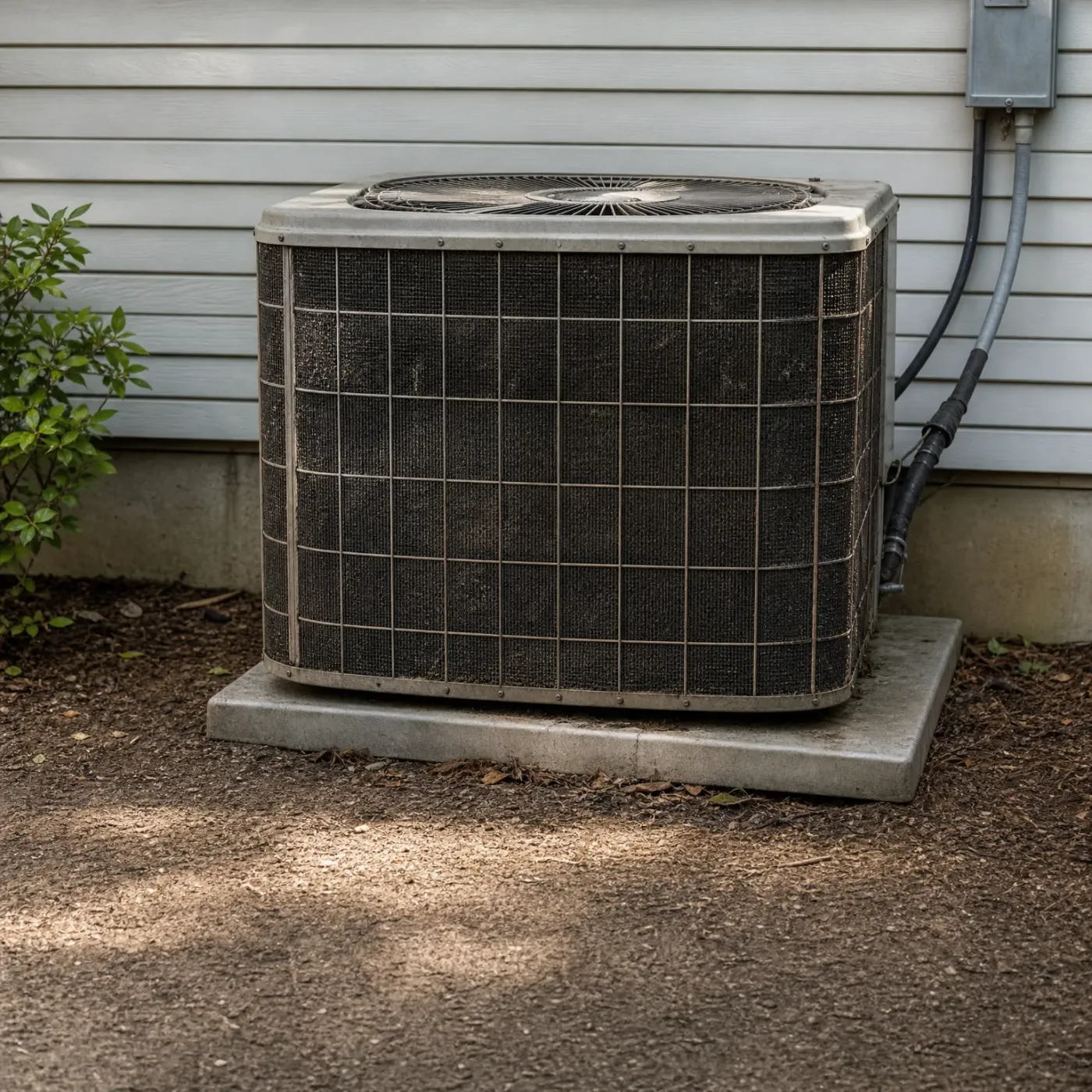
An outdoor air conditioning condenser unit with dusty coils sits on a concrete pad against light horizontal siding, with an electrical disconnect box and refrigerant lines on the wall and a shrub and mulch at left.
Before you get your heat pump maintenance
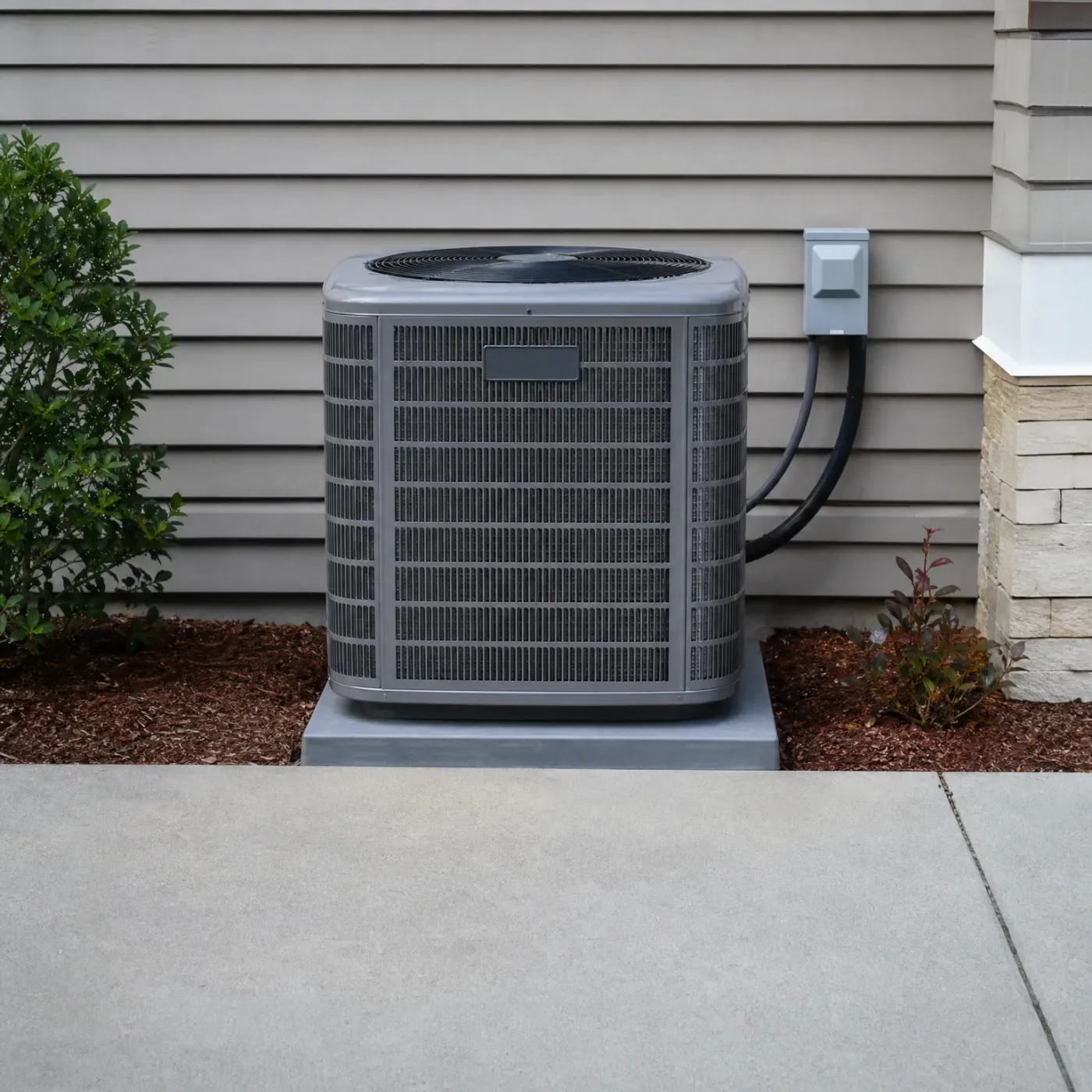
A gray outdoor condenser unit sits on a concrete pad beside a house with horizontal lap siding, with a wall-mounted disconnect box and refrigerant lines, mulched beds and a shrub nearby, and a concrete walkway in the foreground.
After you get your heat pump maintenance

A heat pump does two jobs a furnace never has to, and the tune-up checks both. The reversing valve is what switches the system between heating and cooling, so a technician runs it both ways to make sure it shifts without sticking. Because the unit pulls heat from cold outdoor air all winter, the outdoor coil can ice up. That's what the defrost cycle is for, and testing it means confirming the system senses the ice, clears it, then gets back to heating instead of sitting in defrost too long. Refrigerant gets checked against the specification on the unit's nameplate, since running low or overcharged strains the compressor whether it's July or January. The coil itself gets cleaned, since pollen and dirt sitting on it make the system work harder to pull heat through. Connections and the contactor get a look too, because a heat pump cycles on and off more than a furnace that only runs part of the year. Last, the heat strips get tested on their own, since they sit unused most mornings and only prove themselves when it's coldest outside.
What happens during the visit

  • A technician reverses the reversing valve during the tune-up to confirm it shifts cleanly between heating and cooling modes.
  • The defrost cycle gets tested by checking that the outdoor coil senses ice and switches to defrost without overdoing it.
  • Refrigerant charge is checked against the manufacturer's specification, since too little or too much makes the compressor work harder in both modes.
  • The outdoor coil gets cleaned because dirt and pollen buildup block airflow and make the system pull more heat from the air.
  • Electrical connections and the contactor get checked for wear, since a heat pump cycles on and off far more than a furnace alone would.
  • The auxiliary heat strips get tested separately, because they only kick in on the coldest mornings and can fail unnoticed the rest of the year.
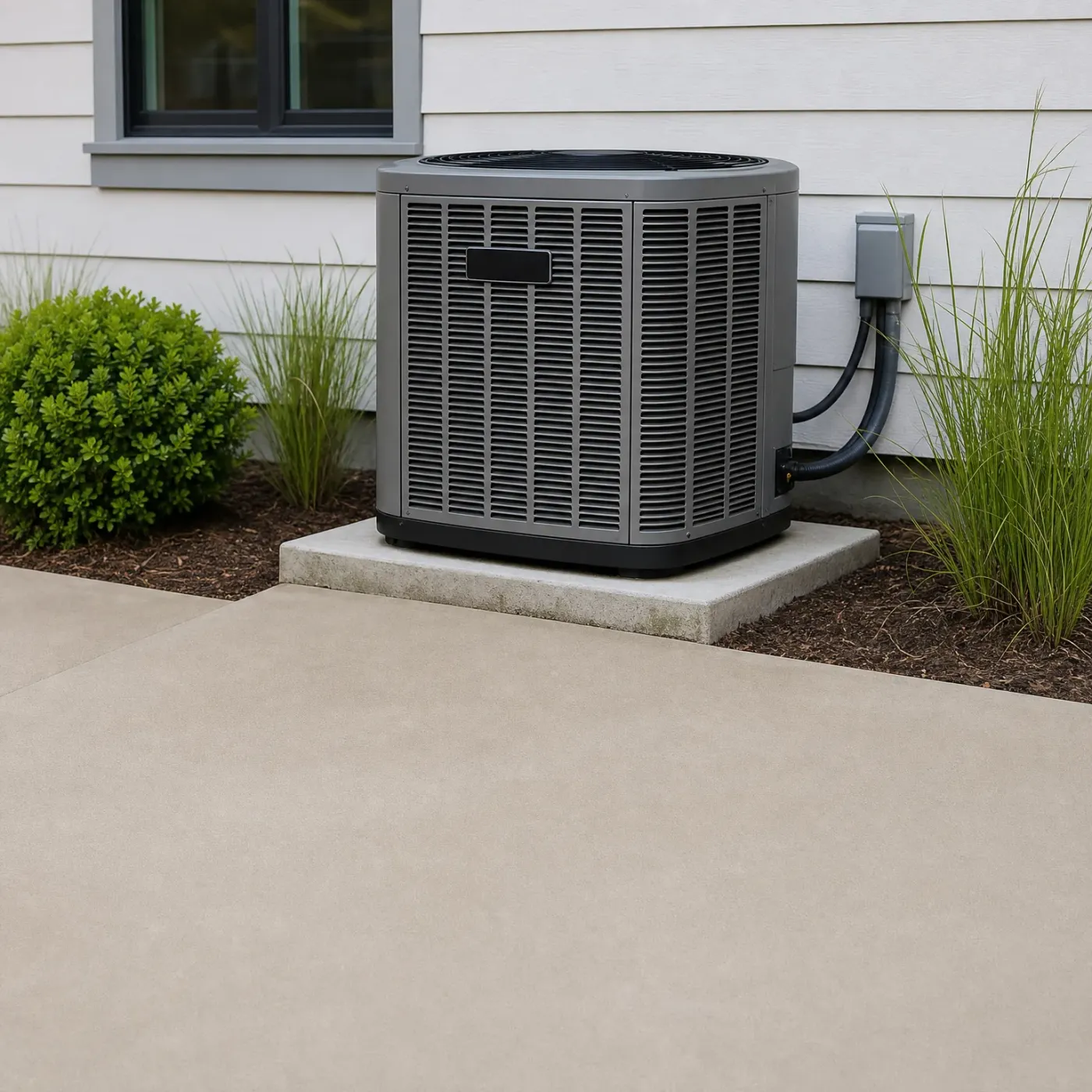
A gray outdoor condenser unit on a concrete pad beside a light-colored horizontal-siding house, with a disconnect box and refrigerant line on the wall, ornamental grasses and a shrub in mulch nearby, and a concrete patio in the foreground.
A heat pump that's kept up sits on a clean pad, coils clear, lines running straight to the disconnect box.
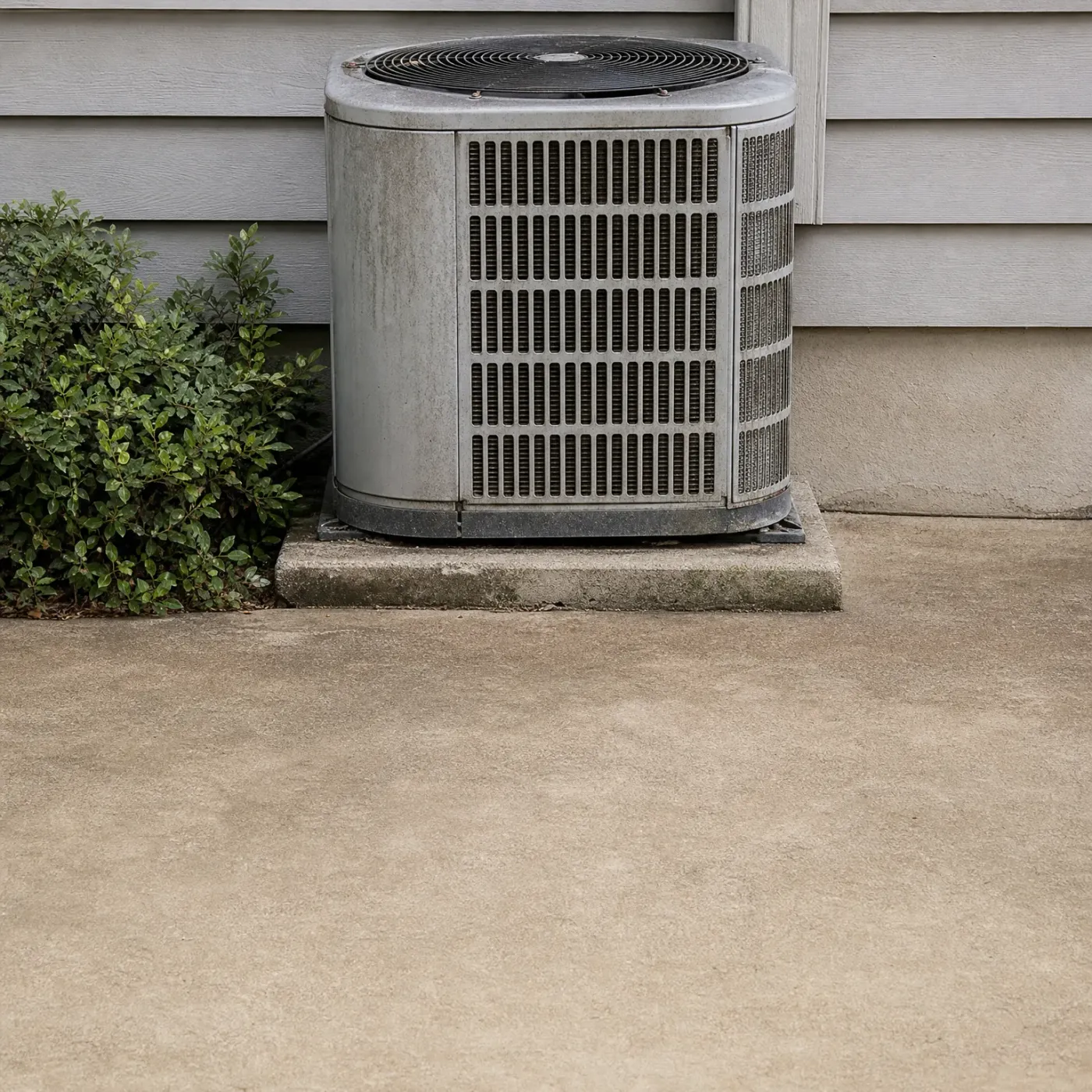
An outdoor air conditioning condenser unit on a concrete pad beside a house with horizontal lap siding, with a green shrub to the left and a wide concrete slab in the foreground.
A heat pump that's skipped a season sits on bare concrete, nothing tended around it, coil doing more work than it should.

Skip It Or Get It Done

Skip the tune-up

  • A weak capacitor or a dirty outdoor coil doesn't announce itself, it just makes the system run longer to hit the same temperature.
  • The defrost cycle can start icing over without tripping anything obvious, so the outdoor unit works harder through those November mornings in the mid-30s.
  • Low refrigerant charge goes unnoticed until the heat pump is running nearly nonstop to keep up, and the power bill shows it before anything else does.
  • A reversing valve that's starting to stick might still work most of the time, until the one cold morning it doesn't switch into heat mode at all.
  • Small problems that go unchecked in spring are still there in July, except now the same system is carrying the cooling load too.

Get the tune-up

  • A technician checks the refrigerant charge against what the system is supposed to have, not just whether it's running.
  • The outdoor coil gets cleaned so the unit isn't working against its own buildup every time it cycles.
  • The defrost cycle gets tested so it switches on ice and off again without running longer than it needs to.
  • The reversing valve gets checked for a clean shift between heating and cooling before the season that needs it most.
  • Catching a worn part in spring means it gets replaced on a schedule you choose, not during the first cold snap of the winter.
  1. Technician checks thermostat settings and cycles the system on

  2. Outdoor coil gets inspected and cleaned of debris and dirt

  3. Refrigerant charge gets checked against manufacturer specs

  4. Reversing valve gets tested for a clean switch between modes

A gray-haired, bearded man in a dark coat dusted with snow stands smiling in a dimly lit room with a lamp, mirror, framed art, and a sofa in the background.
An older man with white hair and a beard, wearing a dark snow-dusted coat and scarf, stands in a warmly lit interior hallway with a framed landscape picture, a table lamp and a potted plant behind him, and a snowy view through a window at left.
An older man in a dark snow-flecked overcoat and scarf stands smiling in a warmly lit home entryway, with a glass-paned door showing darkness outside and a lamp-lit room visible through a doorway behind him.
An older man with gray hair and a beard, wearing a dark snow-dusted jacket and scarf, stands smiling in a warmly lit interior hallway with a lit table lamp, a vase of dried branches, and a framed picture in the background.

Get matched with a heat pump pro in Tuscaloosa County

The pro who gets in touch is licensed in Alabama and works in Tuscaloosa County.

No fee to send it, and nothing to sign.

The reversing valve is what lets one outdoor unit do both jobs, sending refrigerant one way to cool the house and the other way to heat it. It only has to fail in one direction to leave you with a heat pump that cools fine but won't warm the house at all.

A tune-up tests that valve under load in both directions, not just at rest, which is the only way to catch a shift that's starting to stick before a cold night in January finds it for you.


A woman wrapped in a cream textured blanket sits in an armchair beside a lit lamp and a dark window, with an open book in the foreground.
A woman in a cream knit sweater sits in an armchair with her eyes closed and head tilted back, beside a window showing orange autumn foliage and a wooden side table with a mug.

5 months

Heat pump here runs in heat mode from November through March. Skip the tune-up and a weak part or icing coil has all winter to turn into a system that won't warm the house.

Reach a local pro

Your power bill

Power in Tuscaloosa County isn't cheap, and a heat pump working harder than it needs to shows up there first, often before anything actually breaks.

Reach a local pro

Is your heat pump telling you something right now

Stand near the outdoor unit and listen. A rattle, a hum that wasn't there before, or ice building up on the coil even when it's not that cold out are all signs something's off. Inside, you might notice the air coming out feels cooler than it should in heat mode, or the system runs longer than it used to without getting the house comfortable. Some homes see the power bill creep up a few months before anything else changes. None of that means the system is about to quit, but a weak part or an iced coil left alone through a Tuscaloosa winter tends to get worse, not better, and that's how a small repair turns into a system that won't warm the house at all.
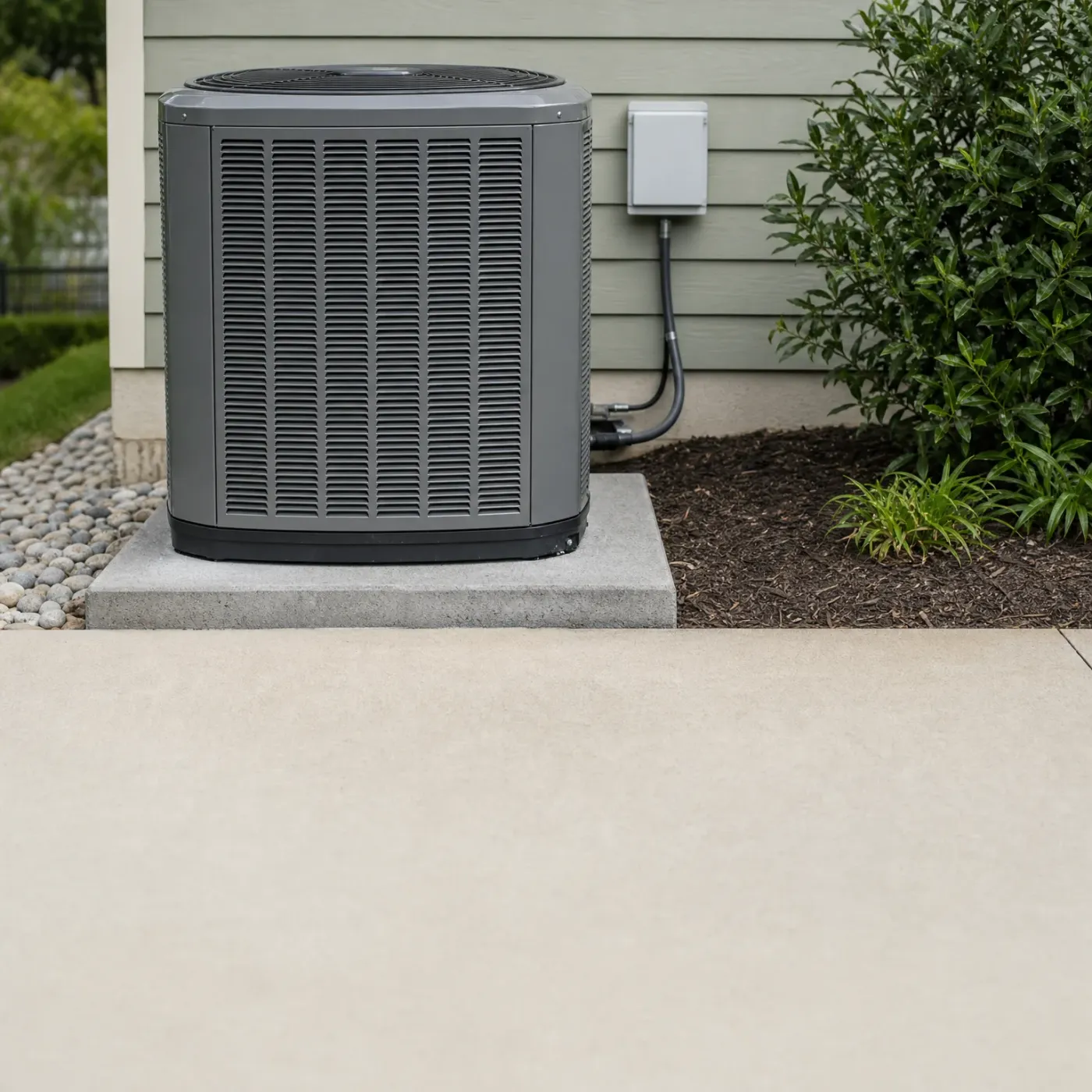
A gray outdoor condenser unit on a concrete pad beside a light green lap-sided house, with a wall-mounted electrical disconnect box, mulch bed with shrubs, river rock, and a paved walkway in the foreground.

Coil clear, pad clean

This is a heat pump that's kept up. The coil fins are open to the air, the pad around it is clear, and the disconnect box on the wall is easy to reach if a technician needs it. Air moves through the way it's supposed to.
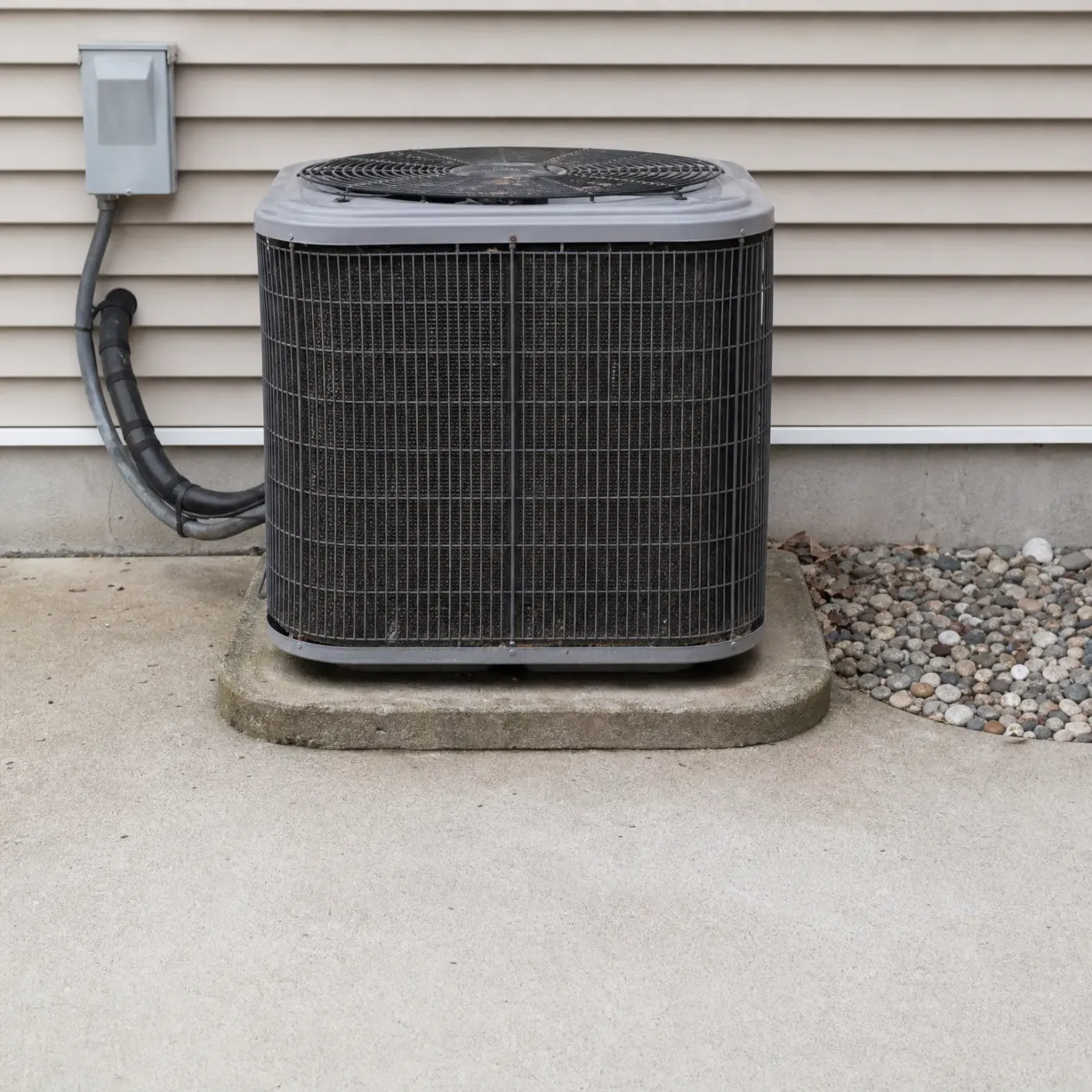
An outdoor air conditioner condenser unit on a concrete pad beside a house with beige vinyl siding, with a gray electrical disconnect box and insulated refrigerant lines on the wall and river rock to the right.

Coil clogged, working harder

Dirt and debris have packed into the coil fins on this one. The unit still runs, but it has to pull harder to move the same amount of heat, in or out, through a coil that's half blocked. That shows up on the power bill before it shows up as a breakdown.

Power here costs 17.62 cents per kilowatt-hour

At 17.62 cents per kilowatt-hour, every bit of extra work your heat pump does shows up on the bill fast. A dirty coil or a weak charge makes it run longer to hold the same temperature, and at this rate that adds up over a full winter. A tune-up keeps it from working harder than it has to.

EIA-861 2025

A woman stands in the open black front door of a white-sided house with a dark shingled roof while a man in a navy jacket approaches along the walkway, with lantern wall lights, a potted shrub, and flowering garden beds nearby.

A heat pump that gets checked on keeps working both ways

One visit a year covers both sides of what your heat pump does. The coil gets cleaned, the charge gets checked, the reversing valve gets tested, and you go into summer and winter knowing the system was looked at before it had to work.

Every heat pump in Tuscaloosa County is a little different, the age of it, where it sits, what's been done to it before. A technician who works on these year-round knows what to check first and what tends to go on this equipment. Once you answer a few questions about your system, you're matched with one local contractor who takes it from there, not a list of companies competing for the job.


A gray upholstered sofa with a beige cushion and knit blanket beside a curtained window, with a white mug and a book on a dark wooden table in the foreground and a lit lamp in the background.
A single-story stucco house at dusk with a lit paver walkway lined by low path lights, desert plants and boulders in front, and distant mountains under an orange and blue sky.

Heat Pump Maintenance

Get your heat pump to the right pro

Step 1 of 3: Equipment
  • A corner of a room with an upholstered wood-framed armchair holding a floral pillow, a round side table with a ceramic lamp, books and a vase of greenery, a framed landscape painting on the wall, a patterned rug, and a sunlit multi-pane window.
    • Get matched with a pro who does heat pump tune-ups in Tuscaloosa County.
    • A local pro who services heat pumps gets in touch about the tune-up.
  • Interior corner with a wood-framed window showing green foliage outside, a framed landscape print on a beige wall, and a rounded stone vase of leafy branches on a wooden cabinet.
    • Send the form and the heat pump tune-up stops being something to remember.
    • Send the form, and lining up the heat pump tune-up stops being yours to chase.
  • A pale ceramic vase holding olive branches sits on a dark wooden countertop beside a carved wooden dough bowl, next to a wood-framed window and a light painted plank wall.
    • One form instead of hunting for a pro who does heat pump tune-ups.
    • Fill out one form instead of calling around for a heat pump tune-up.
  • A dark wood round side table holding a brass lamp with a cream shade, a blue-and-white patterned bowl, and a white textured pot of greenery, beside an upholstered chair with a gray patterned cushion and a white-framed window showing green trees and flowering shrubs.
    • Only one pro gets your request, so you hear from one company.
    • Your request stays with one local pro.