What should I set my heat pump to this winter in Alabama?
Alabama winters don't get brutal, but they swing. Cold snaps hit, then it's back to the 50s a few days later, and most homes here run on electric heat pumps instead of gas furnaces. With power rates what they are, bumping the thermostat up and down to chase comfort feels like the wrong move, but leaving it alone all winter feels wasteful too. You just want a number that works without running up the bill or burning out the system.
Set it around 68 degrees and leave it there
A heat pump works best left at one steady setting, not pushed up and down through the day. Every time you raise the temperature more than a couple degrees at once, the system can trigger backup electric heat strips to catch up faster, and those strips use far more power than the heat pump alone. In Alabama, where winter rarely holds below freezing for long, 68 degrees keeps most homes comfortable without asking the system to work harder than it needs to. If a hard freeze moves in, resist cranking the thermostat up. Small, steady settings cost less over a season than a system fighting to recover from a big swing.
Set it and leave it alone: once you pick a temperature, let the heat pump hold it instead of pushing it up and down through the day.
Bumping the thermostat up several degrees to warm the house fast forces the backup heat strips on, and those run up the bill in a hurry.
Leave your thermostat bouncing around all winter and you will see it on the bill before you see it in the house. Every time the setting jumps up more than a couple of degrees, the heat pump calls on its backup strips to close the gap fast, and those strips run on straight electric resistance, the most expensive way to heat a room you have. In Alabama, where most houses are already heating with electricity, that difference shows up as real money, not a rounding error. You might also notice the air coming out of the vents feels cooler than you expect even while the house is warming up. That's normal for a heat pump, it's not a sign something's wrong, but it's part of why people reach for the thermostat and make the problem worse. A unit that's never serviced tends to lean on those backup strips more often, even at a steady setting, because a dirty coil or a low charge makes the system work harder to hit the same temperature.
Before you get your heat pump maintenanceAfter you get your heat pump maintenance
Matched to your heat pump job
Send the form, and lining up the heat pump tune-up stops being yours to chase.
Say what's going on with your heat pump, and a pro who works on them reaches out.
Asking costs nothing, and the choice to hire stays yours.
What's actually happening when you hit that thermostat
A heat pump doesn't make heat the way a furnace does. It pulls warmth out of the outside air, even cold air, and moves it inside through the refrigerant line. That's why it runs longer and steadier than a furnace would, cycling for stretches instead of short blasts. When the outdoor air gets cold enough, the outdoor coil can frost over, and the system runs a defrost cycle to clear it, pushing cool air inside for a few minutes while it does. That's normal. It's not a sign anything's wrong, and it's not the backup strips kicking in.
What is worth watching is how the system responds when the setting changes. The outdoor unit, the indoor coil, the reversing valve, all of it is sized to meet steady demand, not sudden jumps. A tech who's been inside your unit knows whether it's holding its charge and running the way it should, or working harder than it needs to because of something only a closer look would catch. Getting that checked once before the cold really sets in tells you which one you've got.
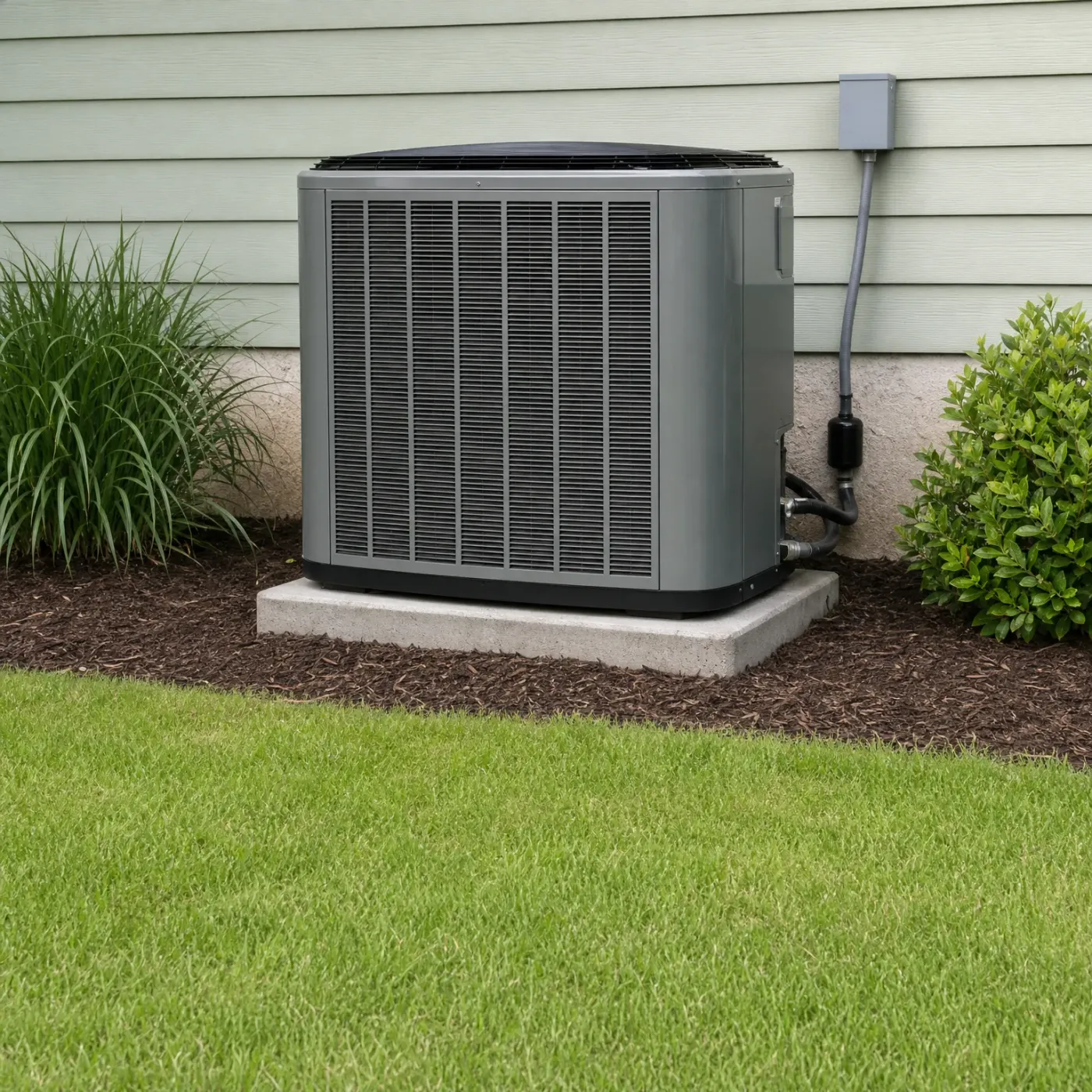
A heat pump kept up
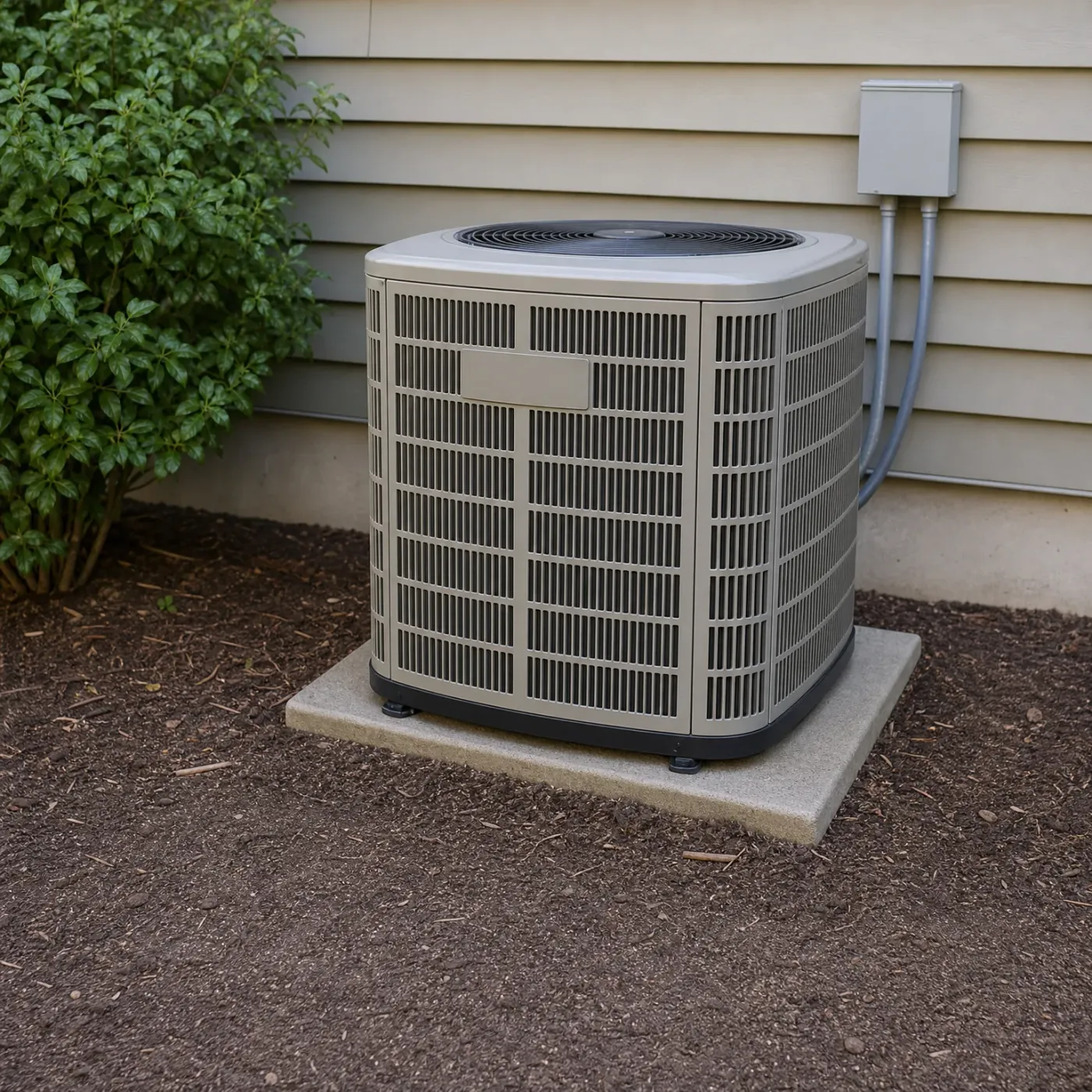
A clean condenser like this one pulls air through the coil without a fight. The fan clears leaves and mulch, the disconnect box stays dry, and the unit holds whatever temperature you set it to without straining through a cold snap.
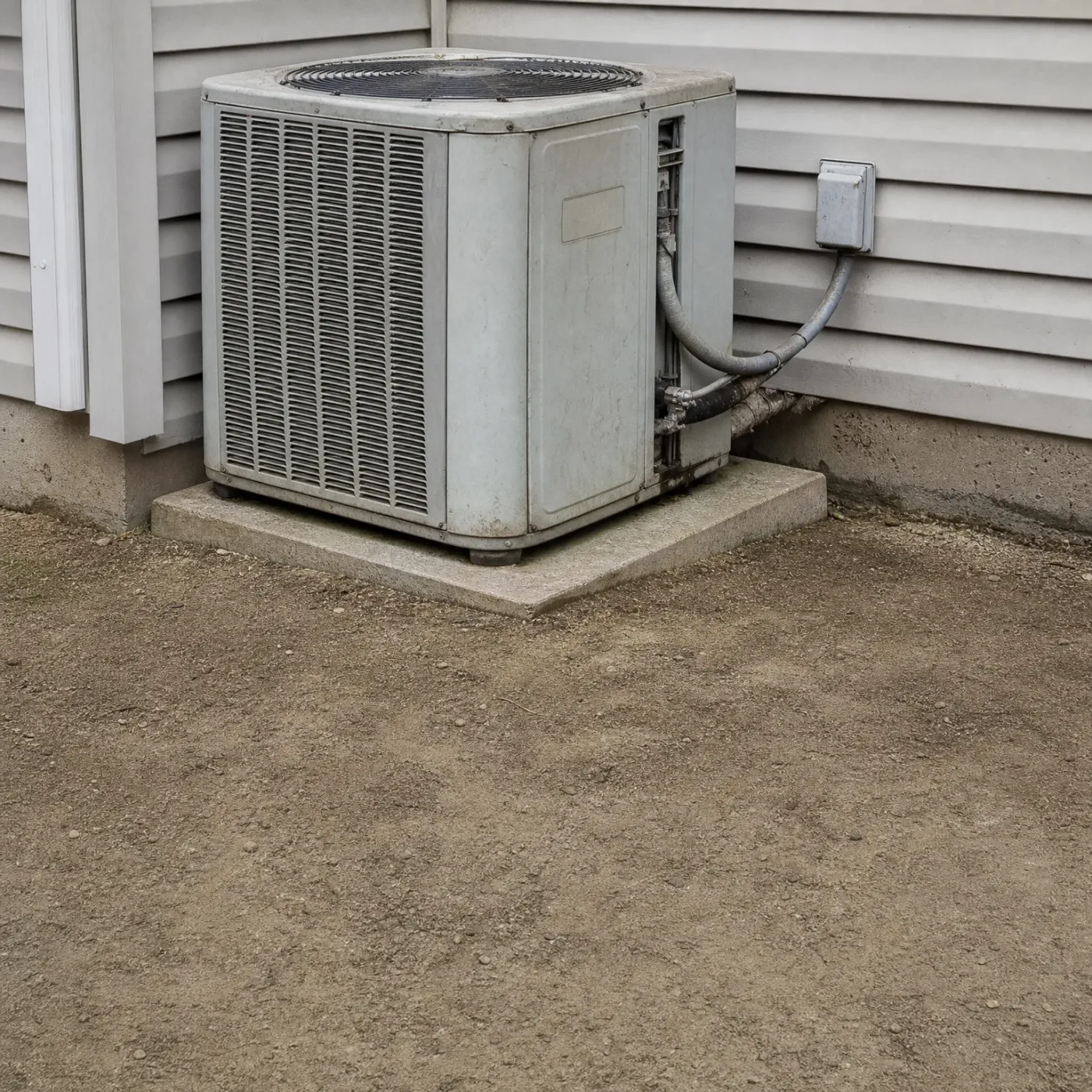
A heat pump left alone too long
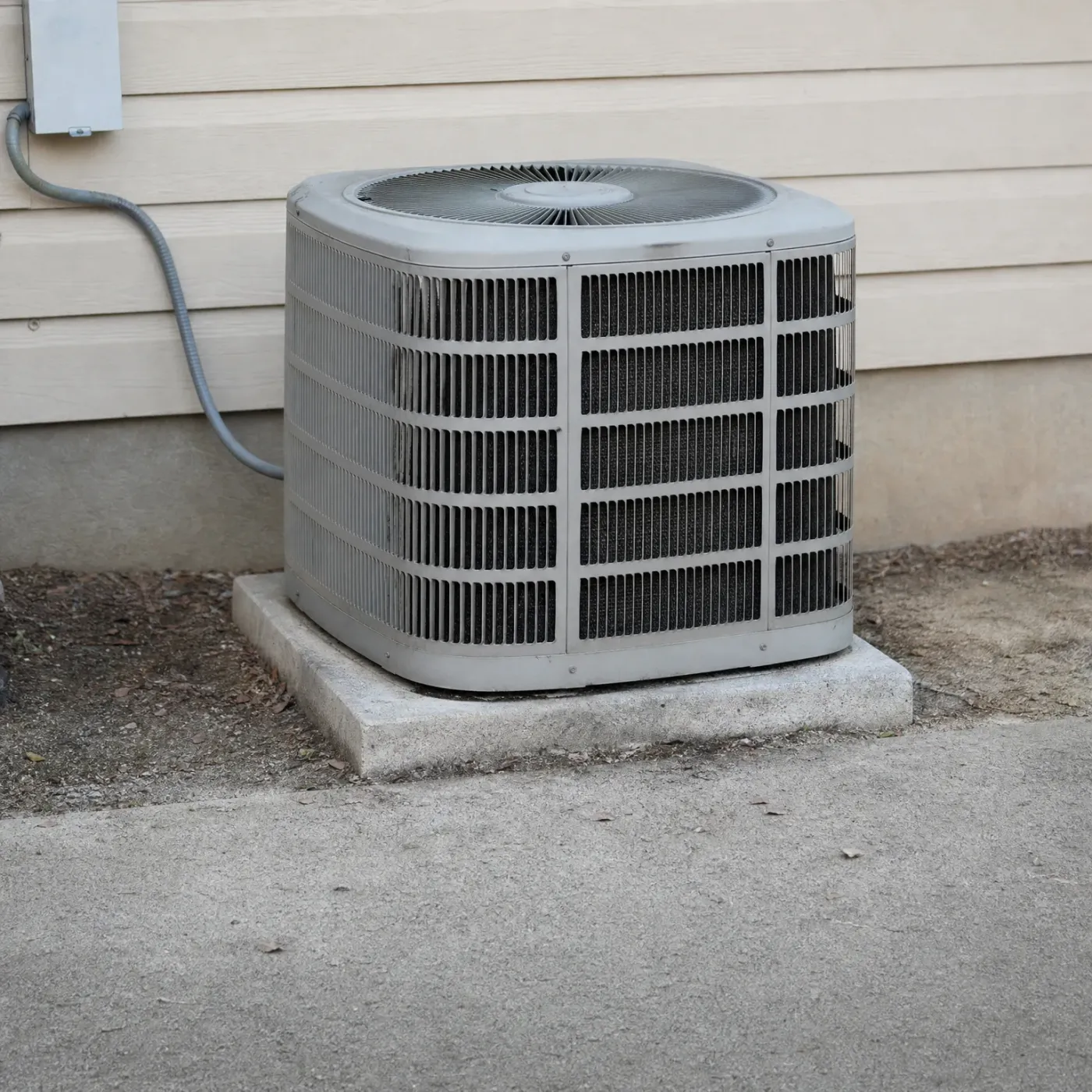
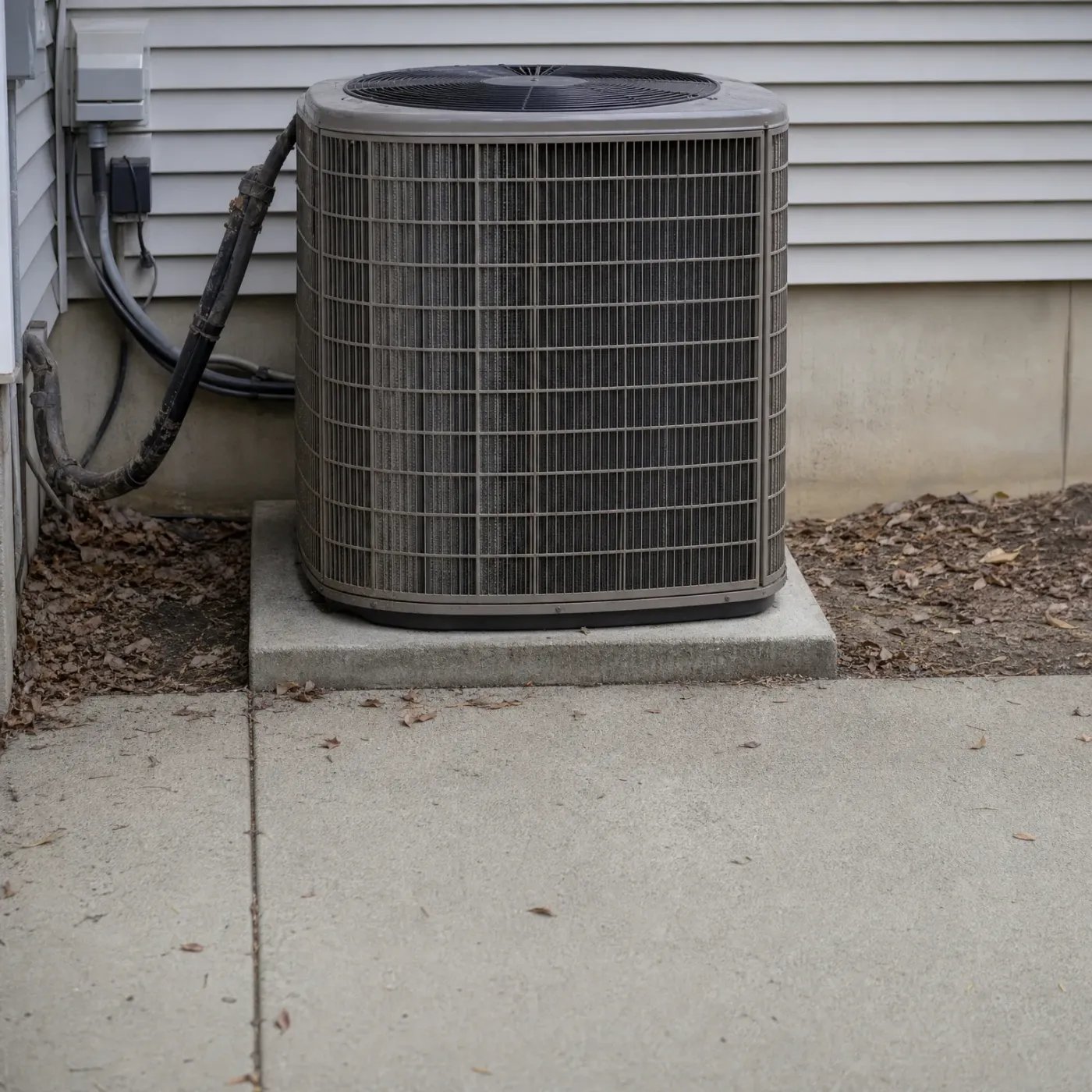
Weathering like this on an older unit usually means the coil underneath has been losing efficiency for a while too. A unit in this shape works harder to hold your setting, and on the coldest mornings it leans on backup heat strips sooner than it should.
Power costs 16.09 cents per kilowatt-hour statewide
At 16.09 cents per kilowatt-hour, every degree your heat pump has to fight for shows up on the bill. That's exactly why holding a steady setting matters more here than in a state with cheaper power. Let the backup strips kick on a lot this winter and you'll feel it.
EIA-861 2025 statewide residential average
One setting, all winter
Pick one temperature for the winter and leave the thermostat there instead of adjusting it morning and night.
Skip the big jumps up in temperature, since those are what force the backup heat strips on.
A steady setting lets the heat pump do the work on its own, pulling warmth from outside air without help.
At over 16 cents per kilowatt-hour, the backup strips running often is what turns a mild winter into a high bill.
A heat pump that's been serviced holds its set temperature through a cold snap without straining.
Cold snaps in Alabama come and go, but the thermostat doesn't need to move with them.
The answer is simple even if Alabama weather isn't. Pick a temperature you can live with and leave the thermostat there from November through March. Your heat pump is built to run long and steady at one setting, pulling warmth from the outside air a little at a time. It is not built to catch up fast, and every time you ask it to, the backup strips are what answer that call. Those strips heat with electric resistance, the same way a toaster does, and at Alabama's power rates that gets expensive fast. A cold snap might push the system harder for a day or two, but it will still hold your set temperature on its own if the unit is in good shape. That's the part maintenance covers. A technician cleans the coil, checks the refrigerant charge, and makes sure the system can still pull its full capacity of heat from cold outside air instead of leaning on the strips to make up the difference. A unit that's fallen behind on that work will reach for backup heat sooner and more often, even on a mild day, because it's not moving enough warmth through the refrigerant line to keep up on its own. Set the temperature once. Let the equipment do what it's designed to do. The weather will swing. Your thermostat doesn't have to.
Heat Pump Maintenance
A heat pump pro near you
Send the request and finding a pro stops being your problem.